 St Joseph (Santo Yusuf) Church is located in Bintaran, Yogyakarta, Indonesia and this has drawn people interest since the very start. The temple is more popular as ‘The First Javanese Church in Yogyakarta’ as this church was specially built for Javanese catholic. In that period, Indonesia was not independent, and most of the church visitors were dominated by European.
Bintaran church was built to accommodate the increasing amount of Catholic followers in Yogyakarta, as Kidul Loji Church could not accommodate them all anymore. In that period, Javanese church was built in emergency term behind Broederan FIC.
Santo Yusup Church was not the first church in Yogyakarta. Few churches were built previously with current structure of the period, though they were opened for all Catholic, but Javanese felt uneasy attending religious ritual in that kind of building. They were not used to sit on bench, as they still wore fabric for men and women, that they were more comfortable sitting on floor.
Javanese nature is quiet and reserved and choose to remain silence in any situation. Fortunately, this could be seen by Father H Van Driessche, the founder of Bintaran Church, and Mr Dawoed. Father A Van Kalken SJ, Regulier Ovreste Jessuit Mission could understand this too. They delivered an idea about church that is suitable for local people. In that time, Javanese catholic participated in mass service jostling in a non adequate room. A narrow, long, inadequate room. Finally, selected a piece of land at Bintaran Village, on the east of Code River for a new church.
The church that was expected to accomodate Javanese Catholic was built in concrete base. The architect of this church was JH Van Oten BNA, and the construction was executed by Holandsche Beton Maatschappij. As recorded, the former church building was 36 meters to the communion bench, the left and right is 20 meters long. The width is 10 meters in the middle and 5 meters on each side width, so 20 meters in total.
The roof of the middle part is 13 meters from the floor. It was white as the surrounding ambiance, and the mass bench only located at the back side. At the front part there are mattress made of bamboo to sit for Javanese Mass Service. The sun can light the inner room, not through window, but through 72 double roosters,.
Formerly, the church had no organ, so in substitution harmonium favored. The church wall is attached with reproduction of color picture, in wooden frame. The pictures were about the life of Jesus. In St Claverbond delineated the official opening of the church as;’ Since early morning, people flocked to Bintaran, the heart of Yogyakarta. The traditional shalom of fathers, that morning yield a special meaning. Because everyone was imagining a big event. The Catholic church leader from Batavia will attend to bless to new church building. It is all was celebrated in a big party’ ‘The church was full of peole. On the mattress, Javanese Catholic sat side by side. On the left side, men sit with their sons, while on the right sat women with their daughters. On the back, fathers, brothers, and European and Javanese upper class sat on bench’
The first father who was incharge in Bintaran was Father AACM de Kuyper SJ, assisted by Father Soegijopranoto SJ. They were in duty in Bintaran parish since 12 October 1933, one year before the church officially opened. In 1936, Father de Kuyper moved to Magelang, and Romo Sogijopranoto substituted him automatically. One year later, he was assisted by B Th Hagdorn, SJ. Father Soegijopranoto only 3 years led the church, as since 1 August he was promoted for Wikeep Diocese Semarang. Father Hagdorn was also moved and substituted by Father Jac Huygens SJ. Since 1941 Father C Martawerdjaja SJ led the church, assisted by Father Reksaatmadja. After 10 years, Father Drijkstra became the predecessor of Father Martawerdjaja. In 1963, Father Kijm assisted by Father Ant Soenarjo. In 1955 Father Kijm was assisted by Father V Soekosoemarto and Father Dibyawahjana and in 1960, he was assisted by Father Poerbohoetomo. In the mid of 1960s, there are four fathers led the church; Father H. Wakkers SJ assisted by Father P. Kijm ST, V. Soekosoemarto SJ and A Sontoboedojo SJ. One year later, Father Wakkers was on duty assisted by Father Ferouge SJ, B. Nissen SJ, Th. van der Putten SJ, V Soekosoemarto SJ dan S. Budyardja SJ. In 1966 led by Father . Oosthout SJ assisted by Father C. Martawardaja, B. Nissen and Soekosoemarto. Until 1967, Father Oosthout was assisted by Father G. Ferouge, C. Mertawerdaja and B. Nissen. And after 3 years shifted to Father B Soemarno assisted by Father Oosthout. One year later, he was assisted by Father J. Mulder SJ and Ign. Natakusuma Pr. In 1972, it was led by father BI . Pujaraharja Pr. In 1984, Father Sudiarta Pr arrived with Father FX Jakapranawa, that Pringgolan church that was initiated and started could be finished.
From July 1935 to June 1936, parish of Bintaran Church was 4.695 in total, consists on 26 European, and the rest were Javanese. There were 1429 children participated in the Sunday School, 234 could join the first communion. At Easter, there were 1.865 people celebrate it. Since 1935 to 1936, there were 98.022 people attended communion. And on that first year, there were 100 mix-marriages with 32 dispensation. On Sunday and great days, BIntaran service started 06.00 with Holy Mass, and at 08.00 Mass without music, and on at 17.30 on astuti celebration.
The church was busy with activities of women, learning, library, and also Javanese magazine initiated by Father Soegijopranoto. In physical struggle in 1942-1949, the situation of parish changed. Few fathers should be imprisoned. But the church activities were moving on somehow.

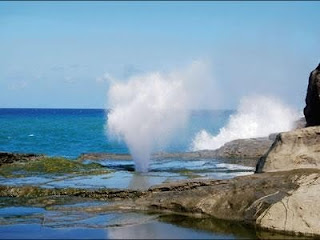 Klayar Beach is one of beaches located at Pacitan, East Java, notably at Donorejo sub District. This beach is considered as still very pristine as there are not many visitors visiting. Klayar has white sand that spans, and the sand is very small and smooth to look and to step on. The beach landscape is dominated by geological scenery of beach morphology influenced by geological structure and the active lifting phenomenon of the southern sea. The lifting phenomenon is showed by the exposure of beach rock sediment that is covered by sea weed.
 Sendang Biru Beach is one of the southern coast of Malang that is free from tumulus wave of Hindian Ocean, and why is that? It is because of the existence of Pulau Sempu that is located only 3000 meters from the beach. Sendang Biru is used as fishery port and debarkation of Fish Auction where fishermen sell the fish catches to Fishery Service and managed by KUD (Village Unit Cooperation ) ‘Mina Jaya pondok Dadap’. Officially, the beach is managed by Government that provides lodges, guesthouse, food stalls, boats, etc.If you want to visit the beach by public transportation, just take ‘Mikrolet’ route Gadang-Turen-Sendang Biru. Sendang Biru is 70 KM south of Malang, located at Tambak Rejo Village, Sumber Manjing Wetan, Malang. Sendang Biru has sandy beach, nice swells, and colorful boats.
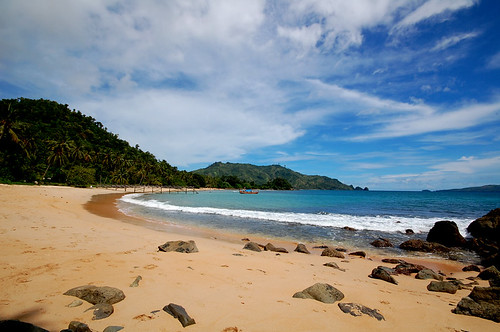 Ngliyep Beach stretched on the periphery of Hindian Ocean, niotably at Kedungsalam Village, Donomulyo, 62 meters from Malang City. The beach can be reached via Kepanjen, Sumbermanjing Kulon or via karangkates, and Dunomulyo. Ngliyep beach is a mixture of steep cliff, forrest and overlay of white sands and waves. As other beaches on the southern of Java, visitors may not swim here. But there are many activities can be done here such as building sand castle, relaxing, enjoying the sunset, and overseeing Gunung Kombang, a small mountain located a bit further to the sea. On the certain month, Maulud (Moslem calendar), Ngliyep beach is undertaken labuhan Ceremony Ritual, every 14 Maulud, by sacrificing heads of livestock (cow or goat) to the sea by local people.
 Jonggring Saloko beach is located 69 meters from Malang city. This beach has big swell of waves. In Wayang Tale, Jonggring Saloko was name of paradise or nirvana where Batara Narada resides. Here located a cave, Gebros Cave that was created by constant abrasion process. The hard sea water that strucks the rock create a hole on the cliff base. The cave has long tunnel that filled ends at small mountain-like ground, as the cave base is as high as sea level, that the cave is with sea water. The main attractions in this beach are Menjangan Bay, Mt pacar and Kondang Towo.
 Balekambang Beach is located 60 meters from Malang city and it takes 2 hours. The road to the location are not completely in good condition, but on the way there are teak trees, sugar cane farms that make the trip not boring. The road is up and down, unlike road to other beach. Balekambang, asministratively located in Srigonco, Bantur , Malang, East Java.
 In the period of Sri Sultan Hamengkubuwono VI, Dalem Suryaputran was the house of GPH Suryaputra, the son of Sri Sultan Hamengkubuwono VI from his queen. This residence was used as Javanese art rehearsal. AFter GPH Suryaputra died, Sri SUltan Hamengkubuwobo VII gave this house to GPH Hadikusuma, that this house is more popular as Dalem Ngadikusuman. In Japanese occupation, the house accomodate youth activities of sport and arts. in July 28th 1952, Dalem Suryaputran was purchased by Nation Security Watch Service, and later used as Police dorm.
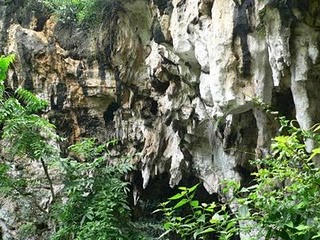 Goa Seropan is located in Semanu, Wonosari, Gunung Kidul, Yogyakarta, Indonesia. This cave had been explored by Acintyacunyata Speleological Club (ASC), and mapped that thi cave is 888 meters long.
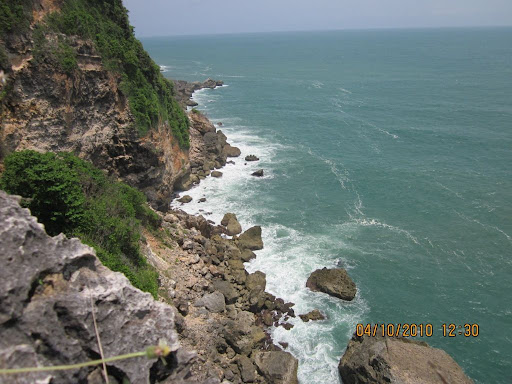 Langse Cave is located on the foot of Parangtritis cliff, has been famous for pilgrimage. Other pilgrimage sites in in the vicinity of Langse Cave are Tapan cave, Beji Spring and Goa Siluman.
 Kiskendo Cave is a natural cave on Menoreh ridge, on 1200 meters elevation with mild temperature. It is situated 35 KM on the northwest of Yogyakarta, north of Kulon progo. Nor far from Kiskendo Cave, located Sumitro Cave that has 2 mouth, one vertical and one horizontal, and has clear underground river. Kiskendo Cave, administratively, is located in Jatimulyao village, 38 km from Yogyakarta and 21 km from Wates.This cave has stalactites and stalagmites just as other carst caves. Local legend tells that this cave was the palace of two giants, Maesosuro and Lembusuro that were defeated by Subali as depicted on reliefs in front of the cave.