
 Candi Plaosan is located in Bugisan Village, Prambanan, Klaten, notably 1.5 meters eastward of Candi Sewu. This temple is an old complex constitutes of two area: Candi Plaosan Lor (north) complex and Candi Plaosan Kidul (south) complex. The carvind on Plaosan Temple is very refined and concise as that in Candi Borobudur, Candi Sewu and Candi Sari. Continue reading Candi Plaosan, Klaten, Central Java, Indonesia
All posts by admin
Candi (Temple) Lumbung, Surakarta, Central Java, Indonesia
 Candi Lumbung is situated southward of Candi Sewu, administratively located in Klaten Regency, Surakarta, Central Java. There is no evidence about the original name of the temple, or whether Lumbung is its original name. Lumbung is given as name for this temple by local people as the architecture looks like barn for paddy. This Buddhist temple is cluster of 17 buildings, constitutes of 1 main temple in the center, surrounded by 16 perwara temple. The complex yard is sealed with andesit blocks.
The main temple is now only remnants, in shape of polygon of 20 sides with 350 m square base. Temple body stands on 2.5 metyers platform. Stairways and entrance located on the east side. The entrance is completed with veranda and hallway to the temple chamber. Outer wall, each side, is decorated with carvings of man and woman with size similar to original human size. Kuwera and Hariti figure flanking the entrance.
North, west and south outer wall are constructed with niches to place Dhyani Buddha statuary. Niches on each side is three, that total niches are 9. At the meantime, none of the statuary there. The roof of the main temple has been collapse, but estimated that the shape is stupa with pointed top, just like the perwara’s roof. The yard of the main temple is surrounded by fence, that only ruins left.
Perwara temple is 16, lining surround main temple. All of the perwara face the main temple, they have 1 meters platform, and basic construction of 3 m square. Temple wall is plain, no decorations presentce. On the wast side, right in front of the entrance, there is a stair with railing. On the entrance decorated with kalamakara without lower jaw.
The roof of perwara temples are terraces cube and the top is stupa. Every angle of the cube is decorated with small stupa. Inside the temple chamber there is a table of stone like statuary pedestal that are sompossed paralleled.
Candi (Temple) Kedulan, Sleman, Jogja, Indonesia
 Candi Kedulan is situated in Tirtomartani village, kalasan, Sleman Regency, Jogja, Indonesia, approximately 2.5 km from Candi Sambisari.
The main temple of Candi Kedulan was discovered on November 24th 1993 accidentally by sand miner at “Tanah Bengkok”, Tirtomani Village. Tanah Bengkok is village land that can be cultivated by village headman during his term of office. The mining stopped, and then proceed with archaeology excavation by the authority. When the excavation was executed, the temple had been collapsed, stone blocks scattered by Merapi lahar and burried 6 meters under the surface. After excavating 7 meters depth covering 4000 meters square, main temple of Kedulan showed up. The temple is square 13.7meters square and height 8.009 meters.
Experts presumes that in Candi Kedulan complex, there was main temple faced east, vis-a-vis to 3 perwara temples on the north to south. This complex is surrounded by fence by the remain of 2 meters block wall from east to west. The opinion based on the similarity between Candi Sambisari and Candi Kedulan, as they both are Hindu temple and also the have similar size. In the middle of the main temple found lingga and yoni. Only Candi Sari faces west and Candi Kedula faces east. Outer fence in Candi Kedulan also exists in Candi Kedulan. In Candi Kedulan found Durga Mahesasuramahardini statue on the north, Ganesha statue on the west and Agastya statue and Mahakala on the south, and Nandi statue on the left and right of the entrance.
Perwara temple was found on the south, located 4 meters from the earth surface. On the excavation found 2 inscriptions with size of 75 cm length, 45 cm width and 23 cm thick. The inscriptions were written in Palawa latters and Sanskrit language. They were made in 791 Saka or 869, accordingly in the period of King Rakai Kayuwangi of Hindu Mataram Kingdom. As the weight of the inscription, deemed that Pananggaran and Sumundul Inscription has been located there. Both inscription cited the use of dam in Pananggaran Village for community interest and that income yielded from the dam was free of tax as it was used to fund Candi Kedulan.
Ongoing excavation is held to discover the complex construction.
Tambi Tea Plantation, Wonosobo, Central Java, Indonesia
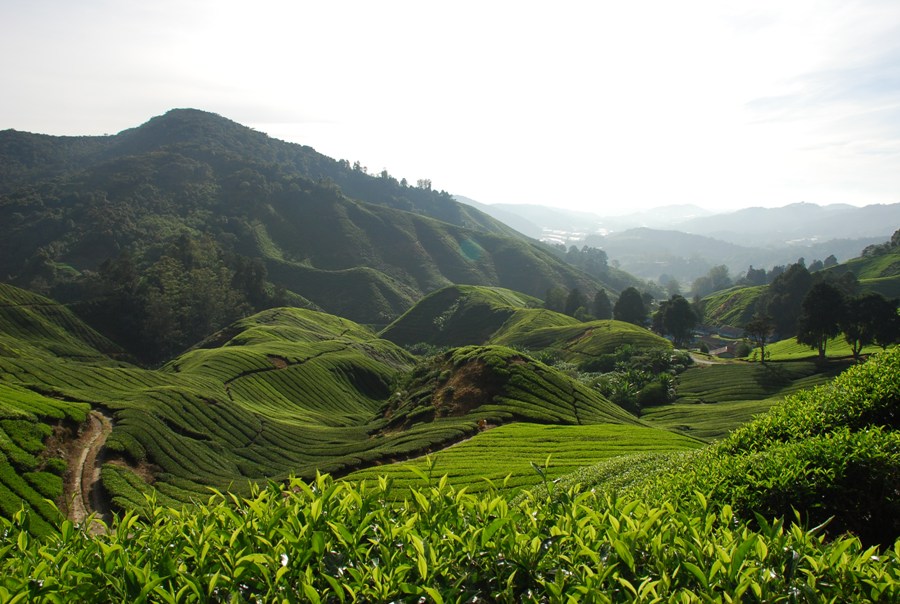 Tambi Tea Plantation is situated in Wonosobo, Central Java, Indonesia, right on the foot of Mt Sindoro. The plantation offers a relaxing atmosphere, span of tea like waves, mild weather. This plantation is accessible from Wonosobo, right on the mainroad of Wonosobo-Dieng Plateau 16 KM from Wonosobo.
Tambi Tea Plantation covers 829,14 ha, consists of 3 units : Tambi Unit, Bedakah Unit and Tanjungsari Unit. It lies on the elevation of 800 – 2000 meters asl with rainfall average 2500 – 3500 mm per year.The tea type is black tea. Continue reading Tambi Tea Plantation, Wonosobo, Central Java, Indonesia
Mi Ongklok: Delicious Noodle Menu from Wonosobo, Central Java, Indonesia
Mi Ongklok has been popular as special menu from Wonosobo, Central Java, Indonesia. According to people, this menu can not be found nowhere else in Indonesia, unlike bakso or mi ayam.
Mi Ongklok is made of noodle (mi), cabbage, and kucai (Allium tuberosum Rottler ex Spreng, A. ramosus, Allium schoenoprasum). Then those ingredients poured by spiced jelly sauce. To eat it we need to stir the sauce with ingredient. Usually this menu is completed with condiments such as soya bean sauce, pepper, chilly, fried shallot and tahu bacem (sweet tofu) slices. And to complete the hot mi ongklok is beef satay , tempe (fermented bean) kemul and geblek or fried starch. Continue reading Mi Ongklok: Delicious Noodle Menu from Wonosobo, Central Java, Indonesia
Candi (Temple) Sambisari, Java, Indonesia
 Candi Sambisari is located in Sambisari Hamlet, Purwomartani Village, Kalasan, Sleman, Jogja. It is 15 km northeast of the city. This temple is Siva temple built in the 9th century by Rakai Garung, mataram Hindu King from Syailendra Dynasty.
This temple was found accidently by local farmer, and then Balai Arkeologi Yogyakarta did research and excavation. In 1966, reported that a temple was buried under sand and stones of Mt Merapi in 1906. Reconstruction and restoration finished in 1987. Continue reading Candi (Temple) Sambisari, Java, Indonesia
Carica Papaya: Delicate Dessert from Wonosobo, Central Java, Indonesia
 Have you ever tried carica in syrup of Dieng Wonosobo? This desert has very unique aroma and taste. Though it is packed in bottle, it has no preservative at all, just contains sugar. This syrup has been developed less 3 decades ago in Wonosobo. Continue reading Carica Papaya: Delicate Dessert from Wonosobo, Central Java, Indonesia
Candi (Temple) Sari, Central Java, Indonesia
 Candi Sari is situated 10 km from the heart of Jogja, and 3 km from Kalasan Temple, notably in Bendan Hamlet, Tirtamartani Village, Kalasan District, Sleman, Jogja. This temple is also known as Candi Bendan.
This temple is estimated built in the 8th century, in Rakai Panangkaran period, same as when Candi Kalasan built. Kalasan and Sari Temple have similarities, regarding the architecture or relief. The correlation of these temples mentioned in Kalasan Inscription (700 Saka 0r 778 ), that the advisers of of Syailendra Dynasty had suggested Maharaja Tejapurnama Panangkarana, estimated as Rakai Panangkaran, to establish a holy building to worship Dewi Tara and monastery for monks. For Dewi Tara, the King built Candi Kalasan, while for the monks Candi Sari was erected. So Candi Sari was utilized as residential or dorm. And this temple is classified as Buddha building for stupa on the top of the building. Continue reading Candi (Temple) Sari, Central Java, Indonesia
Candi (Temple) Pawon, Central Java, Indonesia
 Candi Pawon is located in Borobudur Hamlet, Borobudur District, Magelang Regency, Central Java, Indonesia. Also named as Bajranalan Temple, this is situated 2 km of Borobudur Temple and 1 km from Candi Mendut. Candi Mendut, Candi pawon and Candi Borobudur are located on a straight line, as the base of opinion that those temples have close relations. Beside located in one line, the similarities also shown on the carving motives among them. Carparis sited that Candi Pawon is funerary temple for King Indra (782-812), the father os Samarrattungga from Syailendra Dynasty. And Purbatjaraka stated that Candi Pawon is the upa angga or part of Candi Borobudur. Continue reading Candi (Temple) Pawon, Central Java, Indonesia
Sendratari Ramayana (Ramayana Ballet), Jogja, Indonesia
 Sendratari Ramayana is such a beautiful performance, where audience can enjoy various of Javanese arts such as dancing, drama and music in one single performance. As the name, this performance plays Ramayana Epic written by Walmiki in Sanskrit language.
The Ramayana story resembles as relief story depicted on Prambanan Temple. The relief story similar to the oral story in India. The performance is fragmented into 4 parts, Sinta kidnapping, Hanoman mission to Alengka, The death of Kumbakarna /Rahwana and the reunion of Sinta and Rama.
The story is conveyed in a sequence of Javanese dance movement accompanied by gamelan orchestra. No dialog from the dancers, only monolog to picture the story in Javanese.
The story started when King Janaka holds a contest to decide who will be the husband for his daughter, Sinta, that finally won by Rama Wijaya. The story goes by the adventure of Rama, Sinta and Laksmana, Rama’s brother, in Dandaka forest. In the forest they met Rahwana who wants to have Sinta, as he deems that Sinta is the manifestation of Dewi Widowati, a woman that he has been looking for.
 To get Sinta attention, he shift one of his man as Deer. She was attracted to the deer and asks Rama to get it for her. As Rama does not return for such long time, she asks Laksmana to look for Rama. Laksmana starts his search for Rama after he makes circle around Sinta, so that no danger can harm her as long she remains inside the circle. That circle fails to protect Sinta, after Rahwana shift himself as Durna figure.
In the end, Sinta can be brought by Hanoman from Rahwana Palace. Hanoman is a powerful white monkey figure. Returning from Alengka, Rahwana’s Kingdom, Rama doubts her loyalty and purity as his wife. To prove her loyalty, Sinta is asked to burn her body. Shinta could prove herself as loyalty, that her body is not burnt by flame, instead of making her look more beautiful. Rama accept her as his wife happily.
Beside the stunning dance and splendid music, the lighting also designed to strengthen the scene atmosphere. Dancers make up shows their characters, that audience will easily recognize them though the absence of dialog. Acrobatic show of dancers can be watched when Anoman burn Rahwana’s palace or when Sinta burns herself.
There are two places to see the Ramayana ballet in Jogja, first in Purawisata, located on Jl. Brigjen Katamso, east of Sultan palace. Other place is on Candi Prambanan temple complex, where the ramayana relief depicted. Here visitors can see preparation of dancers at backstage (you need to come earlier for this), and make photographs during the show is allowed. In the end of the show, visitors can take picture with the dancers.