
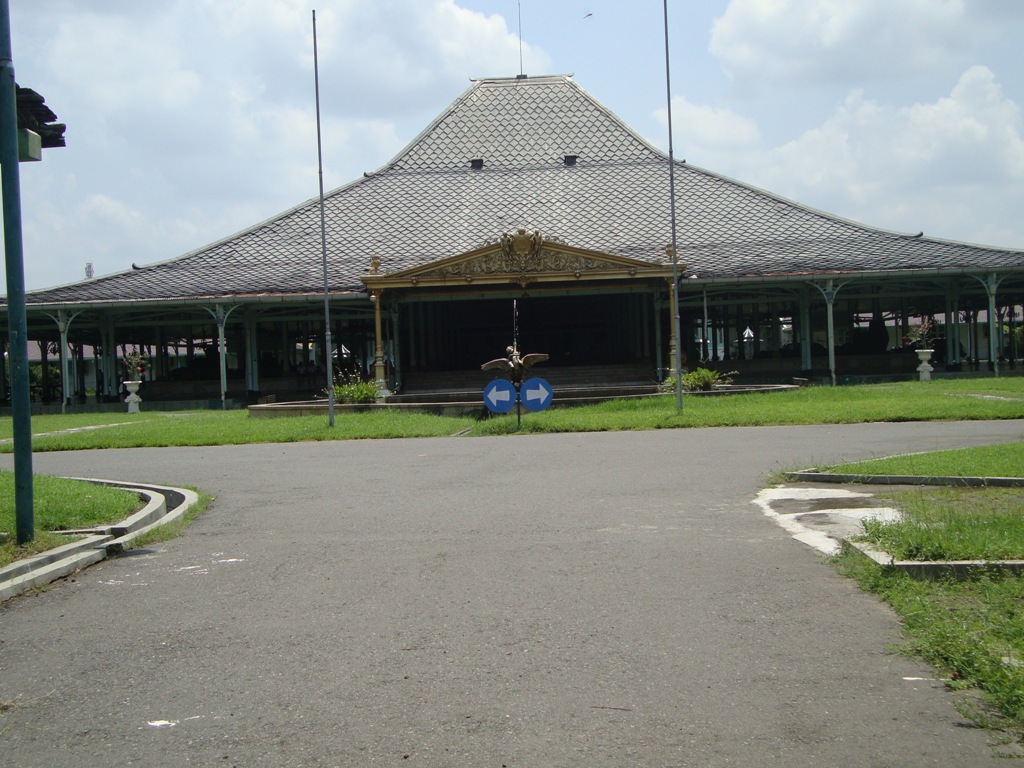
 Pura Mangkunegara is a palace where Sri paduka Mangkunegara dwelled, built in 1757. This building is palace in small size and has same architecture as keraton such as pamedan, pendopo, pringgitan, dalem, and kaputran that surrounded by strong wall. Continue reading Pura (Palace) Mangkunegaran, Solo, Central Java, Indonesia
All posts by admin
Keraton (Palace) Surakarta Hadiningrat, Solo, Central Java, Indonesia
 During 1680 to 1745, Keraton (Palace) Kartasura Hadiningrat had become the center of Mataram Islam Kingdom in Central Java. But as the palace was damaged, since February 17 1945, Susuhunan Pakubuwono II and his family moved to new palace located on a village nearby Bengawan River, Solo village. That palace was named as Keraton Surakarta Hadiningrat, that was built in 1743 to 1746. Literally suro means brave, karto means prosperous, hadi means big, and rat means country. So Surakarta Hadiningrat means a big country that is brave and prosperous.
Keraton was a place with deep spiritual meaning. According to Javanese belief 7 is a perfect number, that was why Borobudur built with 7 stairs, 7 gates. Surakarta palace has 7 yards and 7 gates. The 7 yards are: Pamuraan Njawi, Pamuraan Nglebet, Alun-alun Lor, Siti Hinggil, Kemandungan, Sri Manganti and Plataran. The 7 gates namely; Gladag, Gapuro Pamuraan, Kori Wijil, Kori Brojonolo, Kamandungan, Kori Mangun, Kori Mangarti.
There are many similarities between Kraton Surakarta Hadiningrat and Keraton Yogyakarta Hadiningrat. Both of them have thick wall surrounds small passage and inner yard or kraton. They both have 2 big fields, a mosque, and keraton complex as the center. The difference is that Surakarta has no big street on the north and south for parade.
Entering keraton complex, from the front, one will arrive at north Alun-alun (square). IN the middle of Alun-alun. grow 2 banyan trees that symbolize protection and justice. Also a site called Bangsal Sasono Semowo that faces the Alun-alun, that was used by Susuhuhan or king to send or receive message from his men, and read by patih or prime minister.
Further south, then arrive at Siti Hinggil (high place), where garebeg ritual started. Garebeg is a big event held 3 times a year in Islam great days, namely: Maulud, Fasting month and Idul Fitri and Idul Adha. After passing the main gate, Kori Brojonolo, then enter baluwerti yard. Kori Bojronolo was built in period of Susuhunan Pakubuwono III, at the same time when Baluwerti was constructed. Baluwerti formerly was made of bamboo. Literally, brojo means sharp weapon, and nolo means heart. Entering brojonolo, one should the sharpness of heart or in Javanese ‘landeping rasa’.
Before stepping to the gate, on the left and right side, there are two small rooms, Bangsal Brojonolo, resemble room for guards for Keparak Kiwo and Keparak Tengen. Inside Kori Brojonolo, there are 2 rooms as well, Bangsal Wisomarto, that were utilized as guard post for Keparak Kiwo and Keparak tengen. Wiso means poison, and marto means detoxifying, so wisomarto means all the bad intentions should be left behind when entering palace.
Further south, Kori Kemandungan gate located, where there is a big mirror,where people can see their reflections to check how good you dress up, to make sure that one is ready to enter the palace. Also mirror is a symbol of introspection. After that, then Baluwerti yard or Pelataran Kemandungan. Here, there are javanese building with pyramid shape that were used for city mayors to meet king, and also where officials were inaugurated.
One interest thing, there is an octagonal stage called panggung Songgobuwono. Local people believe that that is the place where Sri Susuhunan maintain his ancestors to meet Kanjeng Ratu Kidul (Queen of the Southern Sea), especially on his coronation day.
Walking southward, then arriving at Kori Sri Manganti gate. The roof of this gate has shape like Semar Tinandu, and upper the door, depicts symbol of Java kingdom, Sri Makuta Raja, while on the left and right are paintings of Kapas Pari (cotton and paddy) that represents prosperity. Before entering this gate, a big mirror welcomes, as symbol that one should do self introspection. Sri means king and manganti means waiting, so this place was a place where visitors should wait to meet Sri Susuhunan, and Sri Susuhunan also uses this place to expect his guests.
And finally, Pelataran Keraton, the main part of Keraton. From east to west, there are several buildings, one of them is Maligi, an old javanese building, with pyramid roof, no veranda, 8 pillars building that was built in 1882. Here is where Sri Susuhunan circumcised his sons. Javanese philosophy says that a woman that is going to give birth to a baby should lie with her head on the west, so baby will face the east, where the sun rises. That is why a kid circumsized in the morning, when sun is rising and the kid should faces east. IN the center of Pelataran Kedaton, there is a big pendopo (pavilion) in joglo style with veranda, that is called Sasono Sewoko. Sasono means place and sewoko means facing one direction, God. This pavilion was used by Sri Susuhunan to meditate, contemplate and pray for his people prosperity, also the place where Sri Susuhunan meets his family, people and officials. Other building in kedaton complex is sasono Handorowino, where Sri Susuhunan accept his guests and dine. Formerly, this building was called as Pendopo Ijo (green pavilion) as it was painted green. Other interesting building here is Pringgitan, a small pavilion for shadow puppet show.
Southward from Kedaton, there is Magangan, an area for officials to meditate, where also located a pavilion where princes meditated. Further south, then arrive at Kori Brojonolo, and south entrance of Siti HInggil, South Alun-alun. The street that surrounds Alun-alun is called as Supit Urang (shrimp claw), a tactic to defeat enemies or intruder. The Alun-alun was used for combat against enemies.
When enemies attack, warriors were prepared at Pagelaran, where formation and combat tactic decided, and spare troop prepared at pelataran Kemandungan.For rest area, Pelataran Sri Menganti was utilized.
Kepanjen Church,Surabaya Oldest Catholic Church with Neo Gothic Style , East Java, Indonesia
 This church is located in Jalan Kepanjen 6, Surabaya, East Java, Indonesia, and it was built to replace the former building located in Jalan Cendrawasih and Jalan Merak approximately, that was damaged and now completely gone.
After the death of Pastor Waanders, Pastor Moonen Pr, one of three priests was invited by Mgr Vrancken to Surabaya after retreat in Jakarta. He concerned about orphans that he found SSV in 1856 or known as Dana Bantuan Santo Vincentius. He also concerned about renovating church from congregation, and government donation. He purchased organ and altar imported from ‘s Bosch, only now the decoration and relief have damaged. The Surabaya mission than continued by Pastor Van Elzen Sj and Pastor Pallinck that arrived in Jakarta on 9 July 1859. They opened first catholic school. And there was a donator gave 20.000 f (25 thousand gulden) to buy Kepanjen sisters land. On May 1862, four brothers Aloysius and 2 Ursulin Sisters on 14 October 1863 landed in Surabaya . They were active in Social and education. Suster Ursulin bought a house at Jalan Kepanjen (SMP Santa Maria).
Continue reading Kepanjen Church,Surabaya Oldest Catholic Church with Neo Gothic Style , East Java, Indonesia
Tebing Sumbing :Cliff of Gunung Kelud, Kediri, East Java, Indonesia
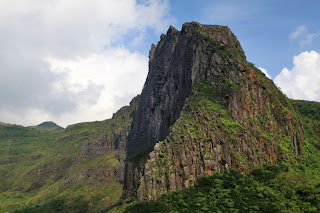 Mt Kelud, Kediri, East Java, one of the most dangerous volcano in Indonesia has a cliff that chalenge rock climbing to conquer it. Cliff of Gunung Kelud or also known as Tebing Sumbing Gunung Kelud is dark andesit stone that shapes like cone with 90 degrees tilt, located on the left of Gunung Kelud tunnel.
 The cillf is 200 meters hight, with pointed peak, and there are other lower peaks with round shape. The andesit rock are not all attached each other firmly, that sometimes when they are drilled or ascend, the rocks fall down, that is whay the rock climers here should wear helmet.
IT can take 2 to 3 days to make route to get to the peak of the cliff, depends on the climbers stamina, tools, and weather.
Radya Pustaka Museum, The Oldest Library in Indonesia, Solo, Central Java, Indonesia
.JPG) Radya Pustaka Museum was built in 1980 by Kanjeng Adipati Sosrodiningrat IV, Pepatih Dalem when Paku Buwono IX and X reigned. This museum is located on Jalan Slamet Riyadi, Taman Sriwedari Complex. This museum keeps the history of RTH Djojohadiningrat II, that founded Paheman Radya Pustaka and the museum. But the realization actualized on October 28 1890. Rsdya Pustaka Museum eternize the founder by naming the eastern wing of the museum as Walidyasana, derives from his childhood name Walid and Asana means place. This land of where the building stands was purchased by Sri Susuhunan Paku Buwana X for 65.000 Gulden from Johanes BUsselaar. To honor KRA Sosrodiningrat, established a statue of him in the middle of museum that was once known as Lohi Kadipolo.
Radya Pustaka Museum was built in 1980 by Kanjeng Adipati Sosrodiningrat IV, Pepatih Dalem when Paku Buwono IX and X reigned. This museum is located on Jalan Slamet Riyadi, Taman Sriwedari Complex. This museum keeps the history of RTH Djojohadiningrat II, that founded Paheman Radya Pustaka and the museum. But the realization actualized on October 28 1890. Rsdya Pustaka Museum eternize the founder by naming the eastern wing of the museum as Walidyasana, derives from his childhood name Walid and Asana means place. This land of where the building stands was purchased by Sri Susuhunan Paku Buwana X for 65.000 Gulden from Johanes BUsselaar. To honor KRA Sosrodiningrat, established a statue of him in the middle of museum that was once known as Lohi Kadipolo.
Continue reading Radya Pustaka Museum, The Oldest Library in Indonesia, Solo, Central Java, Indonesia
Puh Sarang Church : Rich of Javanese Architecture, Kediri, East Java, Indonesia
Puh Sarang Church is located at Puh Sarang Village, Semen, Kediri Regensy, East Java. This church has been catholic pilgrimage site, built in 1926 by an architect and anthropologist that respected Majapahit culture, The architecture is a blend of Hindu, European and Javanese style.
Puh Sarang is a name of village, 10 km south east of Kediri, seems like Kepuh tree is the origin of the village name derives. It lieson the slope of Mt Klotok, Mt Wilis complex, with cold weather and very rocky surrounding. A creek pass the village, and it is full of stones that stone mining is the main occupation of the locals beside farming.
Puh Sarang is very unique in architecture, as it resembles Javanese Hindu Temples in Central or East Java, as propaganda endeavor of Pastor Wolters CM that was faboured by Ir. Henricus Maclaine Pont. The later mentioned was an anthropologist that made research in Trowulan Majapahit Site, no wonder that this church is thick of majapahit architecture.
Physically, the church has been developed as church purchased local lands. This church complex is completed with plaza to contemplate that can accommodate thousand of people. Also replica of Golgota cross. Pilgrims come here to visit beautiful Maria Cave.
This church has been renovated for 4 times, in 1955, 1974, 1985 and 1999, until now the church is used and in a good condition.
This church has an exterior that might look like a ship that attaches to mountain-like building. Other charm is maria cave with its statue with height of 3.5 meters, made in 1999, resembles one in Lourdes. Every Thursday night, people come here to meditate, and on holiday, not only Christians that visit here.
Gunung Muria, Jawa Tengah, Indonesia
 For pro climber, climbing this mountain is not too difficult. Mt Muria is just 1602 meters, such a not-high one. Gunung Muria has few peaks, they are Abiyoso, Argowiloso, Argojembangan, Songolikur Peak.
On Rahtawu Mountain, was discovered an inscription in 1990, from that inscription, experts concluded that this region was a housings in the 5th or 6th century. In 1978 also discovered household items made of clay around oro-oro Ombo gabug Bukit Begawan. As the vast of the savannah, it is presumably that the area was the site of Rahtawun Palace, but the research is not continued. Songolikur Peak is the peak of Mt Rahtawu where 4 statuary located, they are Betara Guru, Narada, Togog and Wisnu that covers 10 x 12 meters. To reach here, can be accessed from Semliro Hamlet through small path to around 700 meters from Songolikur peak.
The peak is a very popular pilgrimage site for Javanese, so climbing this mountain, there will be many companions along the track.
Mount (Gunung) Ungaran, Central Java, Indonesia
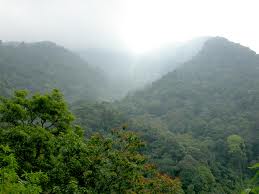 Gunung Ungaran is on of mountain located in Central Java, notably in Semarang Regency, Kendal Regency, and Ambarawa. From the peak of Mt Ungaran, on the north is Java Sea while Mt Merap Merbabu, Telomoyo and Kendalisodo , Rawa pening, Sindoro, Sumbing and Mt Perahu can be seen on the other directions.
Mt Ungaran is 2050 m asl with tropical forest vegetation, and coffee and tea plantation on its slope. Around the mountain there are few attractions such as Curug Lawe, Gedong Songo Temple and Nglimut hot spring, and so on. Continue reading Mount (Gunung) Ungaran, Central Java, Indonesia
Gunung Prau: Least-Known Hiking in Dieng, Wonosobo, Central Java, Indonesia
 Gunung Prau/Perahu is one of mountain in Dieng Plateau. The peak is plain and long just like upside down ship (javanese : prau), that is why this mountain is called as Gunung Prau. Administratively, this mountain is located in Kendal, and Wonosobo regency.
Gunung Prau is the highest peak at Dieng Plateau, standing as it fences Dieng Village. Dieng Plateau is 2.093 meters and Gunung Perahu is 2599 meters, climbing the peak will not require mode of transport.
There are routes to climb this mountain, via Dieng, via Bringinsari village, Sukoharjo on the northeast and via Kenjuran Village, Kendal Regency.
 Via Dieng Village: This route will take 2 hours to the peak.Climbers can start to ascend via hinder or Homestay Dieng and then follow the passage to a school, and then passing farms and forest where the track is getting steeper. Approximately one hour later, ther will be a sign board of 2398 m, that marks out the border between Wonosobo and Batang Regency. Not far from there there is another border sign made of concrete block that says 2560m. Different than other mountains in Indonesia, this mountain offers clear vision by walking along the ridges. The peak is plain with hilly flower garden that resembles Teletubbies Hill, that is why local people call this as Teletubbies Hill. The vast daisies that covered the hills like that of fairy tales. The highest peak of Gunung Prau is Patak Banteng Peak, that sites approximately 2 km away from the radio tower. If weather is friendly, climbers can enjoy the stunning view of peaks nearby, such as Gunung Slamet, Gunung Sindoro, Gunung Sumbing and also other peaks. To descend, the ascend route can be taken or try descend via Patak Banteng Village, located wround 2 km from Dieng Plateau area.
Via Bringinsari Village, trek to the top will take 4 hours.
Via Kenjuran Village, Kendal, will take round 2.5 to 3 hours. Kenjuran can be accessed from Boja-Kendal, Waleri or Ambarawa-Secang. Climbers should report their trip to local official. Ascending trip started from basecamp to post 1 with pine trees and bushes. During the track, Kendal and Semarang can be seen. After 1.5 hours then reaching post 1. From post 1 to post 2, there are singing birds and epiphyte that attach on big trees. 2.5 hours later arrive at post 2. From post 2 to post 3 takes 1.15 hours. From post 3 and the peak. This route will include passing edelweiss garden.
Candi (Temple) Pringapus, Temanggung, Central Java, Indonesia
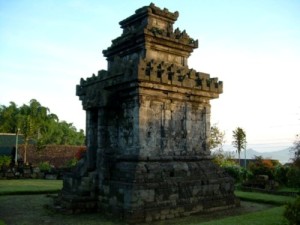 Candi Pringapus is approximately established in 850, situated in Pringapus village, Ngadirejo, Temanggung, Central Java, Indonesia. The village is located on the slope of Mt Sindoro, 5 km from Ngadirejo, 32 km northeast of Temanggung.
This temple is restored in 1930, and regarding the temple architecture, this temple can be classified as Siva temple and a replica of Mahameru, where gods dwell. This opinion is proven by Nandi Bull, Siva vehicle, and trelief of hapsara-hapsari, a figure of semi-god creature. Continue reading Candi (Temple) Pringapus, Temanggung, Central Java, Indonesia