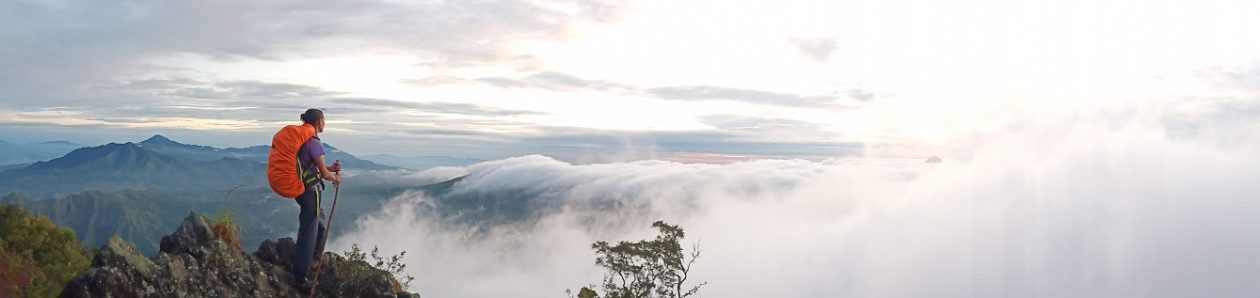
 House of Danarhadi Museum is located in Solo, Central Java, Indonesia. It has ten tousands old batik collections, but only seven hundreds are displayed. Within seven to 9 months, the collections are changed regularly. This museum theme is ‘Batik: Time and Environment Influence’. There are batik from Holland, China, Java. Hokokai, Batik with India influence, Keraton (Palace) batik, Kraton influenced batik, sudagaran batik, peasant batik and batik Danarhadi. Beside seeing hundreds of batik collections, visitors also can see the making of batik cap (stamped batik), batik tulis (painted batik), or batik printing behind the museum. Continue reading House of Danarhadi Museum: Old Batik Collections and Batik Course, Solo, Central Java, Indonesia
All posts by admin
Candi (Temple) Gampingan: Jambhala Worship Temple with Animal Reliefs, Bantul, Yogyakarta, Indonesia
Candi Gampingan is a Buddhist temple located in Gampingan village, Sitimulyo, Piyungan, Bantul regency, Yogyakarta, Indonesia. This temple was discovered coincidentally by red brick craftsman in 1995. It was covered by soil, and the excavation was carried out 3 times, in 1995, 1996 and 1997.
This temple was constructed from 730 to 850, in old Mataram period. This statement was based on the typical of the building that match typical building in the 8 to 9th century and the style of Jamhala and Candra-Lokesvara statue style from same period of Gampingan Temple. This temple is believed to be used to worship god Jambhala (god of fortune, son of Siva)
The temple has not been completely renovated, but it is onvious that this complex has 7 temple building that were made of white rock blocks. The main temple is square 4.6x 4.6 square, and height is 1.2 meters, consists of 4 layers of white rock blocks that were composed with connected or hooked technique. Other technique used here is insertion of block to hollow part hooking one block to another. The other six buildings are currently only ruins.
 According to temple morphology, temple ruins are the foot section of the temple, that consists of the upper and lower platform. The base of the building is flat. The temple body is located in the center and has 11 panels where relief depicted. The foot is decorated with floral motives and strainds of beads. This temple had stairs and railing, that located on the west, so this temple faces west. The stair has 2 blocked layers, 2 layers as the base and 5 on the steps and railing. The end of the stairs is curve and plain.
The temple has well with square shape, 0.98 x 0.99 m and 1.54 m depth. The wall has 5 layers of white block. The buttom is currently dry, soil mix sand. Continue reading Candi (Temple) Gampingan: Jambhala Worship Temple with Animal Reliefs, Bantul, Yogyakarta, Indonesia
Candi (Temple) Morangan: Another Remain from the 9th Century, Sleman, Jogja, Indonesia
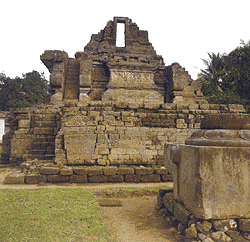 Candi Morangan is situated in Morangan Village, Sindhumartani, Ngemplak, Sleman regency, Jogja, Indonesia. This temple is located at the north most from all temples discovered in the region. Morangan is the closest temple to the phenomenon Merapi Mountain. Continue reading Candi (Temple) Morangan: Another Remain from the 9th Century, Sleman, Jogja, Indonesia
Candi (Temple) Asu, Magelang, Central Java, Indonesia
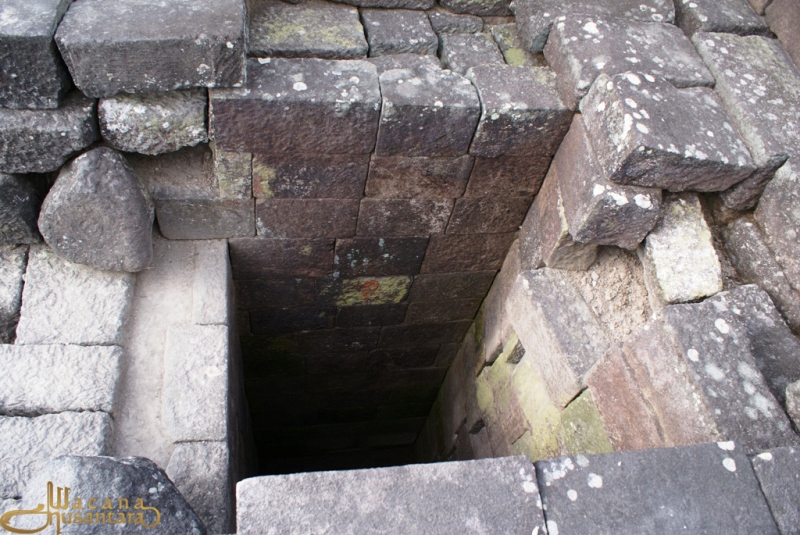 Candi Asu Sengi is an old Mataram remain, from Sanjaya dynesty or known as Mataram Hindu. It is situated at the western slope of Gunung Merapi, on the side of Pabelan river, notably in Sengi Village, Dukuh, Magelang Regency, Central Java, Indonesia, just 5 km from Ketep Pass. Continue reading Candi (Temple) Asu, Magelang, Central Java, Indonesia
Candi Selogriyo, Hidden Hindu Temple on Gugnung Sumbing Slope, Central Java, Indonesia
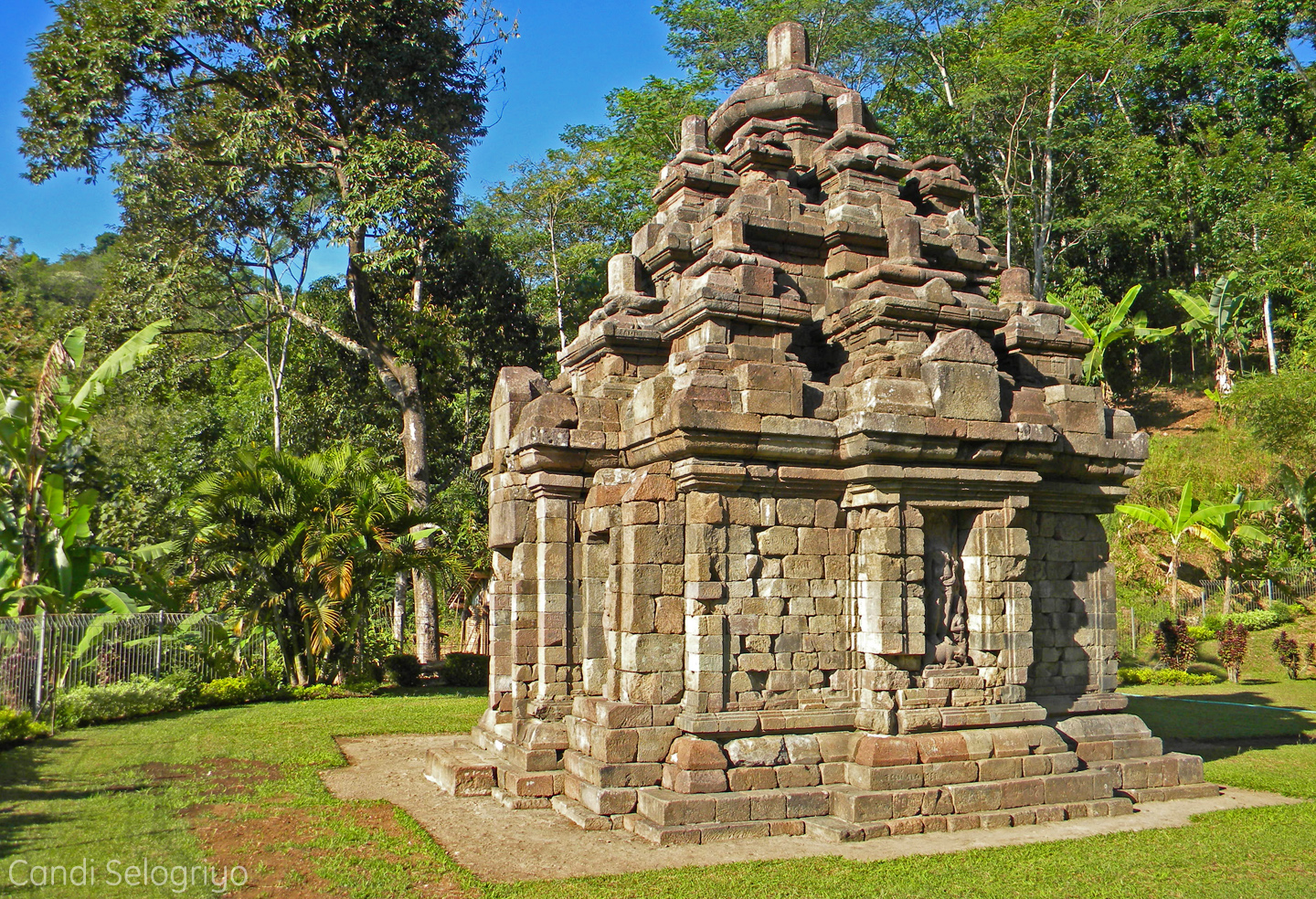 From Selogriyo, one can see Mt Sumbing standing strong on the west, and sometimes the summit is covered by white bloud. While on the east, there is a green terraces of rice paddy field with Gunung Merapi, Gunung Merbabu, Gunung Telomoyo and Gunung Andong as the background. As roading on mountain slope, it is winding. Continue reading Candi Selogriyo, Hidden Hindu Temple on Gugnung Sumbing Slope, Central Java, Indonesia
Masjid (Mosque)Menara Kudus: Blend of Islam, and Java-Hindu Architecture, Kudus, Central Java, Indonesia
 Masjid Menara Kudus has a distinct gate unlike most of mosques in Indonesia. The gate and tower were made of red rock blocks, that may look like East Java hindu temples. In Ramadhan, the fasting month, people flock to this temple. Not only Indonesian visitors, but also international travelers. The mosque area is alse where the tomb of Sunan Kudus located, that pilgrims come here to pray. Continue reading Masjid (Mosque)Menara Kudus: Blend of Islam, and Java-Hindu Architecture, Kudus, Central Java, Indonesia
Masjid (Mosque) Demak, Central Java, Indonesia
 According to legend, this mosque was erected by all of wali songo, nine saints that spreaded Islam over Java, only in one night. Demak chronicle shows that Demak Mosque was built in 1399 Saka or 1477 by candra sankalan ‘lawanh trus gunaning janmi’ while on the turtle figure on depicts on the mosque mihrab,there is a symbol of 1401 Saka or 1479.
The building was made of teak wood with size of 31 meters square and the veranda is 31 meters x 15 eters. The middle roof is supported by 4 gigantic pillars called saka guru, that was made by 4 of the wali songo. The south east pillar was made by Sunan Ampel, southwest pillar by Sunan Gunung Jati, north west pillar by Sunan Bonang and north east by Sunan Kalijaga. The later mentioned pillar is made of blocks of woods, not intact wood, that are bound together. The veranda has 8 pillars as the addditional cuilding in Adipati Yunus period (Pati Unus or Pangeran Sabrang Lor), second Demak sultan (from 1518 to 1521) in 1520.
In the construction process, Sunan Kalijaga held an important role, as he decide the kiblat direction. According to local believe, Sunan Kalijaga achieved antakusuma gift, clothing, from prophet Muhammad. The gift fell from the sky when he was on a meeting in the mosque.
The pillars are decorated with hindu style carving in beautiful design. Carving also decorated the mosque wall that were designed as ornaments.
The main building located main room, mihrab and veranda. Main room is utilized as praying room, located in the middle of the building. While mihrab or imam room, located in front of the main room and faced kiblat (Mecca). The rear of the main room is a veranda.
The roof is three terraces made of wood and the top is completed with dome. The mosque wall is made of stone and limestone. The entrance is decorated with classical painting. And like other mosques, this mosque has bedug (drum), gentong (earthen ware) for wudhu, water pool, podium and chinese ceramics.
Candi Sojiwan, Klaten, Central Java, Indonesia
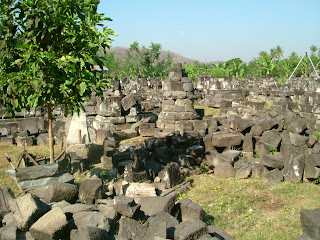 Candi Sojiwan looks like irregularly composed stone blocks that is very vulnerable to collapse. This temple is located not far from Prambanan temple, and the restoration is not finished yet up to now. But the authority targeted that in 2011 this temple restoration will be complete.
This temple is classified as Buddha temple. This temple complex is consists of main temple and several perwara (ancillary) temples. The main temple faces west with square structure. The hallway is located on the temple base and surrounds the temple body. Kalamakara is decorated the entrance. Continue reading Candi Sojiwan, Klaten, Central Java, Indonesia
Losari Coffee Plantation Retreat And Spa: A hideaway in Java, Magelang, Central Java, Indonesia
 Losari Coffee Plantation is located in LOsari Village, Magelang, Central Java, Indonesia. It is a coffee plantation that is developed as resort and spa in 2003. It can be reached from Semarang, through Ambarawa, and then Magelang. To reach this place, visitors pass villages, trees, quiet. Different that other scenery from main road.
Losari Coffee Plantation is 900 m asl, it has mild fresh air, beautiful lansdcape of Mt Merapi and other mountains in the vicinity. Old buildings were renovated for visitors to enjoy the mountains atmosphere. The lobby utilized former construction of Mayong Train Station of 1878.
 The Club House is also old building that has been renovated. This building was established in 1828 by Dutch architect, Van der Swan. It has spacious veranda that is furnished with yesteryear furniture. And, there is a library for visitors to kill time. This library is equipped with coach for more comfortable and relax reading.
Next to the club house, there is a bar, The Plantation Bar. This building was the storeroom for fresh coffee in the harvest time. A billiard table is placed inside the bar room, invites whoever love spending time playing billiard with friends.
Red Java is a joglo structure building, is restaurant that offers Mediteranian dishes and best traditional cuisines from Indonesia. And Java Green restaurant that serves fresh food with spices from the plantation garden that ones can enjoy from the pool side.
 There are 26 villas designed with javanese architecture and interior. Each villa has bedroom, balcony, garden, unique bathroom, and plantation view. Pool in this resort is in octagonal shape and the water source is from the underground river. The Hamam, is ready to spoil visitors with its spa service and Turk style steam spa. The spa provide bath for ladies and gentlemen in separated room for relaxation, Javanese traditional massage with various of spices as lulur with thousand years recipe. If visitor are into yoga, then yoga can be an option.
If one is interested in outdoor adventure, the plantation offers hiking tours to Sekar langit Waterfall, where flora and fauna of Central Java could be found here, and even more visitors can swim in the river.
The making of jamu (Javanese herbs) plus drink this healthy traditional beverage in the morning is also very interesting. And do not forget to stroll along the coffee plantation.
Candi Ijo, Central Java, Indonesia
 Candi Ijo (GReen Temple) is situated on a hill, that local people call the hill as Gumuk Ijo (Green Hill) the highest hill in Prambanan region. This hill is 410 asl, while Candi Ijo is on the height of 357.402 m-395.481 m asl. Looking down the scenery from Candi Ijo location is very enchanting, facing the steep valley. Candi Ijo surrounding is not that fertile as Candi Boko’s.
Candi Ijo is temple complex, constitutes of few buildings with terraces yard. The most sacred parts are the rear and the highest. The terraces is the remain of Javanese megalithic culture, and the date of the construction is still unknown. Yet, temple profile, kalamakara motive and the statuary type and relief style that depicts in naturalistic model, resemble those built in 8th to 10th century, so possibly that this temple was built at the same period.
This site has 17 structures in total, on 11 terraces of punden berundak. The temple yard that utilized as the entrance to the main building is Terrance that lies from west to east. The highest terrace, or the 11th terrace is the most sacred place. In this terrace, found fence that encircles , 8 linggas, and 4 main temples and 3 perwara temples that stand in front of main temple. Restoration has been done to the main temples and middle perwara temple. Entrance of main temples is on the west. Outer walls are completed with niches, where Agastya, Ganesha and Durga placed. But those statues are now displayed in Yogyakarta. Inside the temple, there are lingga and yoni, that symbolize Siva and Parvati, so it can be concluded that the temple is a Sivaistic temple. The worship activities in this temple was to worship Siva in the shape of lingga. Perwara temple is occupied with nandi, the vehicle of Siva.
Other structures in this complex is on the 9th terrace, a platform that faces east. In the 8th terrace located 3 temples, 4 platforms ,and 2 stone block inscriptions. One inscription discovered on the entrance that says GUYWAN means meditation place, while the other inscription is 14 cm high, 9 sm thick that depicts a spell phrase that is repeated 16 times says Om sarwwawinasa, sarwwawinasa. Those inscription has no year depicted, but from paleography it is estimated to be made in the 8th to 9 th century, as Candi Ijo construction period. At the 5th terrace, there is a temple and 2 platforms, at the 4th and 1st terrace there are 1 temple each. On the 10th, 7th, 6th and 3rd, there are no buildings at all.