
Indonesian jamu is inherited form generation to generation. And medicine was always there as human found this for their well being. Historically, Indonesian jamu was recognized since 772 according to the oldest proof depicted on Borobudur Temple, that is also found in Candi Prambanan, Candi Penataran and Candi Tegalwangi.
In 991-1061, herb receipe, extraction from plants were written on palm trees, called as Lontar Usada in Bali. In South Sulawesi herb recipe was written on Lontarak Pabbura.
In Java, receipe of herbs written on Rontal (ron=leaf). Tal leaf is same with lontar or palm leaf. Before independence, J. Kloppenburg-Versteegh dan Martha C. van Wijk-Fransz publish their book “Indische Planten en Haar Geneeskracht” and “Martha Indische Kruiden Recepten Boek”
In Kraton era, Kraton Surakarta codify herb recipe in Bab Kawruh Jampi Jawi published in 1858, that contains 1734 herb formulas. Herbal plants found in forest if not planted on yard. And created idea to cultivate herbal plants. This cultivation is aimed to gain same quality as in its original habitat, forest. Rimpang is best harvested on dry season when it stops growing, leaves and branches dry. And the best time to harvest is at 9 to 11 pm, that recently discovered that in that time interval is the maximum assimilation. And it is better harvested when it is flowering and before the fruits are ripe. Flowers are best harvested before or when pollination ongoing, when bees and butterflies come. And fruits are best harvested before ripe (javanese chilly, kemukus, black peper) or when they ripe (adas manis, white pepper). And seed is best collected when fruits ripe.
Jamu is one of heritage of Indonesia that is still favorite, especially for Javanese. Jamu is liquid and poured into bottle and stacked in cradle. The most marketing method is pretty interesting, by heaved on the back of the seller. Usually the sellers are women, young or old. Bottles in cradle are usually seven to eight bottles. There is a local belief about the number of the bottles carried. If the bottles are in odd number, means that the seller woman is single, never been married or a widow. And if that of even number means that the woman is married.
Jamu has close relation with traditional belief that if any part of human body experiencing illness, the medication should not only heal the certain part but also to other related parts. Accordingly by taking or drinking jamu would do better as jamu comprises preventive ingredients as well. Practice of drinking jamu make body stay healthy, as jamu also benefit as tonic increasing immune system of human body.
According to research, Jamu could heal various illness, as it conceives active components useful to invigorate body and healing sickness. It said that the will to be healed is the main factor that determined the healing process.
Heaved Jamu was originally from Wonogiri Surakarta, and then spread over Indonesia linear with government transmigration program. Jamu was carried to new places such as Sumatera, Ternate, Maluku by Javanese. Jamu also known in Holland. Jamu is inherited from generation to generation. Javanese children are intruduced to Jamu since they were baby. When a child could not eat, mother usually will make or buy jamu from market for the child.
In general, there are 4 types of Jamu that is sold itinerant. They are beras kencur, cabe puyang, pahitan and galian. The later mentioned has few variants: galian putri (foe women), galian singset (slimming herb) and galian for men.
 Beras Kencur favors tiredness and avoid cold. The main ingredients are rice (Oryza Sativa) and kencur (Kaempferia galanga L.) that are added with other herbs as supporting ingredients. The additional ingredients used are cloves (Sysygium aromaticum (L) Merr.
& Perry), adas (Foeniculum vulgare Mill.) and ginger (Zingiber offcinale Roxb.)
Cabe Puyang is useful to heal cold and eliminate muscle pain after work or travel. Its main ingredients are Lempuyang (Zingiber aromaticum Val.) and cabe (Piper retrofractum Vahl. ) and added by supporting ingredients such as for beras kencur.
Pahitan can stimulate or increase appetite, relief blood circulation to refresh body.Its main ingredients are jongrahab (Baeckea frutescens L.) and pule ( Alstonia scholaris (L) R.Br.) added with same additional ingredients as beras kencur and cabe puyang.
Main ingrediants of Galian are jongrahab, pulasari (Alyxia reinwardtii Bl.), mrico
bolong (Malaleuca leucadendra (Stickm.)L .). Galian is differenciate into three depend on the additional ingredients used. Jamu galian puteri, is added with delima putih (Punica granatum L.) and other herbs as natural appetizer and aroma. This jamu increase immune for teenage or young girls. Jamu galian singset is added with Guazuma ulmifolia Lmk.or kencur. This will eliminate excessive fat and rejuvenate and special for women. Jamu galian for men is added with pepper (Piper ningrum L.) to increase stamina and rejuvenate.
Jamu ingrediants are:
Sembung (Blumea balsamifera (L.) DC.)applied as analgesic, antipyretic.
Pegagan (Cantella asiatica(L.) Urb.)applied as antiseptic, diuretic,antihypertension.
Saga (Abrus precatorius L.) applied as stomatitis
Sambiloto (Andrographis paniculata (Burm.f.) Nees) applied as antiseptic, antidiabetic, antidiarrhea.
Pala (Myristica fragrans Houtt.) applied as sedative
Kunyit (Curcuma domestica Val.) appliedas antiseptic, antihepatitis.
Sirih (Piper betle L.) applied as antiseptic
Legundi (Vitex trifolia L.) applied asantiseptic
Jeruk Nipis (Citrus aurantifolia (Christm.& Panz) Swingle) applied as cough relief.
Brotowali(Tinospora tuberculata Beumee) applied as antimalaria, antidiabetic
Dlingo (Acorus calamus L.) applied as sedative.
Tempuyung (Sonchus arvensis L.) appliedas diuretic.
Pare (Momordica charantia L.) applied as antidiabetic.
Ceguk (Quisqualis indica L.) applied as ascariasis
Temu Lawak (Curcuma xanthorrhiza Roxb.) applied as antihepatitis.

 Batu Night Spectacular is relatively new theme park in Batu, East Java, Indonesia. As its name, this theme park opens afternoon to midnight.
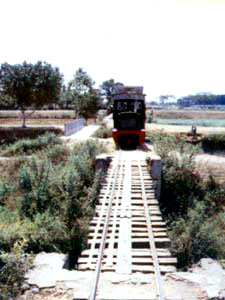 Sugar Factory Semborp is located 35 km west of Jember city and established in Dutch colonialism by Hendeles Vereniging Amsterdam in 1921 covers 2 103 Hectares spread all over west and south of Jember.
 19 September 1945 was a very historical day for Surabaya youngsters. That was when the flag incident happened at Hotel Majapahit. Surabaya youngsters were angry when Dutch flag raised at Hotel Yamato. They went to the hotel and ripped the blue part of Dutch flag into red and white of Indonesia flag.
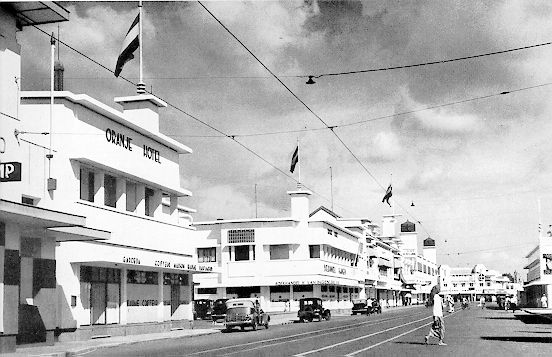 Orange hotel was painted in orange according to its name. This hotel has historical value that is still preserved until today. It has Merdeka Room no 33 and Sarkies Room no 44. Merdeka Room was resided by Dutch Resident when flag incident happened. The room had a secret door when Surabaya youngster entered the hotel to rip the flag. Sarkies room was the Sarkies family room, the hotel founder, to stay when they visited Surabaya. The narration can be read at the rooms.
 When the mass was getting crowded, Resident Soedirman arrived with his black car and the mass gave the car way. He entered the hotel with Sidik and Hariyono and met Ploegman saying that he was the representative of the Allies. Resident Soedirman asked Ploegman to put down the Dutch flag. Ploegman answered that Allies had won the war and Dutch was one of the member, so now Dutch had the right to rule over East Indies. He added “Republic Indonesia? We do not recognize it. ”
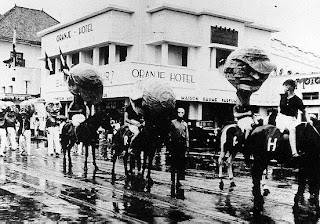 Ploegman went inside and showed up with gun in his hand. He threatened Soedirman and scolded him. Sidik and Hariyono kicked the gun from Ploegman’s hand and it was shot towards above. Hariyono took Residen Soedirman and Sidik fought with Ploegman and smothered him to death. Sidik was died as a Dutchman came and killed him with a saber. Hearing gun shot, Arek Suroboyo outside hotel climbed hotel wall. A young man named Kusno Wibowo put down the Dutch flag and asked his fellows for red and white, but no one could gave him red and white flag. Kusno and Hariyono then rip the blue part of Dutch flag into red and white and raised the flag to the top of the pole.
 Bentoel Museum was a house to sell cigarettes. This business started by Ong Hok Lion in 1925. The business located at Jalan Pecinan Kecil no 32 and now known as Jalan Woromargo. Today the house is used as museum Bentoel, and the factory of Bentoel is located at Karanglo, Malang with new management PT Bentoel Prima.
 This monument is located at Jalan Simpang Balapan, Ijen Boulevard, Malang East Java, Indonesia. The establishment of the monument is the idea of TNI Kobem 083 Baladhika Jaya to honor Mayor Hamid Roesdi for his struggle for Indonesia independence day. The monument was oficially opened on November 10th 1974.
 Different with other tourist attractions, Museum is a riminder to the past. Museum Brawijaya is located at Jalan Ijen no 25 Malang and officially opened in May 4th 1968 that covers 6825 sqm.