 Dieng Temple is cluster of temples located at Dieng Plateau, Wonosobo, Centrak Java, Indonesia. Other name of the temple cluster is Candi Pandawa or Candi Arjuna. Dieng plateau covers 2900 m south -north and 800 meters wide, on elevation of 2093 m above sea level.
Those temples are hindu temples to worship Siva built in the end of 8th century to 9th century period, and estimated as the oldest Hindu temple in Java. There is no written source about the history of Dieng Temple, but experts estimated that they were built as ordered by Sanjaya Dynasty. In Dieng Plateau area found an inscription date back 808, the oldest inscription written in old Javanese letters. All of Siva statues found on the location are now displayed in National Museum in Jakarta. The temple construction was estimated made in two stages. The first stage was from 7th century until the quarter of the 8th century for Arjuna Temple, Semar Temple, Srikandi temple and Gatutkaca Temple. The second stage is the continuation of the first stage, until 780.
The temple was found in 1814 by a British soldier, when the temple was covered by mud. In 1956, Van Kinsbergen led the drying effort of the temple cluster. In 1864, East Indied government cleaned the site and followed with recording and documenting by Van KInsbergen.
The whole complex is 1.8 x 0.8 km square. The complex devided into three clusters and one single independent temple. The three clusters are Arjuna Complex,,gatutkaca Complex, Dwarawati Complex and Bima Temple.
Arjuna Comples is located in the middle of Dieng Plateau, consists of 4 temples lining fron north to south are Candi Arjuna, Candi Srikandi, Candi Yudhistira, Candi Sembadra. In front of Candi Arjuna stands Candi Semar. All of the temples face west except Candi Semar that faces east, vis-a-vis with Candi Arjuna. Those temples are considered as intact compared to other temples in Dieng.
Candi Arjuna looks like temples in Gedong Songo complex with square base or 4 sqm. Temple’s body stands on one meter base. On the west side located stairs to the entrance. The entrance is decorated with corbelled roof, projecting 1 m from temple’s body. Aand Kalamakara is engraved on its upper frame of the entrance. The outer north , south and west wall there are composite of blocks projecting from the temple body, creating frame for a niche to place statue. The lower frame is decorated with pair of dragon head with open mouth. On the upper frame is ornamented with kalamakara without lower jaw. On the left and right of the entrance there is a niche to place statue, but both of them are currently empty. On the south, west and north wall there are niches for statue. The niches are framed with attached decoration and kalamakara. The lower frames are decorated with engraving of dragon with open mouth, and in the middle of the wall there is jaladwara or water pipe. The temple roof is a multilevel cubes, with smaller size on higher level. The peak is broken. Each side of the cube has niche and on every corner there is a round and sharp crown decoration. Most of the decorations are broken. In the middle of of the temple body, stands yoni.
Candi Semar is located right before Candi Arjuna. It has rectangle plan and lays north to south. The base is 50 cm, plain, no decoration. The staur to the entrance is located on the east. The entrance has no corbelled roof. The entrance frame is decorated with attached ornament and dragon head. The upper entrance is decorated with kalamakara without lower jaw. On the lest and right side of the entrance, there is small window ventilation. And there are 2 holes each on the north and south side and on the west therea re 3 holes. The temple room is empty. The roof is limasan shape, and the top has gone that its original designed can not be recognized. It said that Candi Semar was used to save weapons and worshiping equipments.
Candi Srikandi is located on the north of Candi Arjuna. The plan is 50 cm and the design is cube. On the east there is a corbelled roof and stairs on the east side. The north wall is engraved with visnu, the east with Siva and the south with Brahma. Most of the engravings are damaged. The roof is also damaged badly that can not be recognized its original design.
Candi Sembadra has 5o cm base and the design is cube. In the middle of southern, eastern and western side, there is a projecting part, that shape corbelled roof. The entrance is located on the west and decorated with corbelled roof. The corbelled roofs present make the design a bit like polygon. On the yard there is ruin of passage to the entrance. Candi Sembadra slightly looks like multilevel building, as the roof is cube and the size is similar to the body size. The roof is damaged and on every side of the roof there is niche for statuary.
Candi Yudhistira or Candi puntadewa is not so big, but it is taller than other temples. The temple body stands on 2.5 meters base. The stairs is equipped with railing with two levels, adapting the temple base. The roof resembles Candi Sembadra’s, a big cube. The top has damaged, and each side of the roof is completed with tiny niches to place statue. The entrance is decorated with corbelled roof and framed with attached decorations. The room is empty. And each side of the side has window that is decorated as the entrance. The temple was fenced by stone blocks, that now only ruins.
Gatotkaca Comples has 5 temples; Candi Gatutkaca, Candi Setyaki, Candi Nakula, Candi Sadewa, Candi Petruk dan Candi Gareng. Among those temple only Candi Gatotkaca can be seen, and others are only ruins. Candi Gatutkaca stands on 1 meter base that was made in two levels in square shape. The middle of south, east and north side there is a projecting part just like corbelled roof. The entranse is located on the west and equipped with corbelled roof. Stair steps is shaded inside the corbelled roof.
Dwarawati Complex has 4 temples; Candi Dwarawati, Candi Abiyasa, Candi Pandu, dan Candi Margasari. But only Dwarawati that is intact. Candi Dwarawati resemblances Candi Gatotkaca, with square plan corbelled foor on each side. The body stands on 50 cm base. The stairs and entrance are located on the west, and are plain, no decoration. There are niches on the body of the temple, on each side, that are decorated with humble floral motive. Those niches are now empty.
Candi Bima is located on a hill alone. This is the biggest temple among other temples in Dieng Complex. The design is different than other temples in Central Java. The plan is square, but as there are corbelled roof, so it looks as if it is octagonal shape. The front corbelled roof is projecting 1.5 meters from the body, used as room towards the main room. The corbelled roofs on three sides create niches that now empty.
The roof is 5 levels design. Each level has double padma and kudu niches. Kudu is half body statue. This kind of statue can be found at Kalasan Temple. The roof is already damaged.

 Candi Gunungpasir is located in Gunungpasir village, Beji, 18 km from Pasuruan. This temple original name is Candi Keboncandi, but as it is located in Gunungpasir village, local people call it Candi Gunungpasir. There are not much information about the temple that was built in Airlangga period, around 11th century. The temple was estimated constructed earlier time in SIngasari period, The temple is made of red brick, not andesit blocks.
 Candi Bangkal is located in a farmer land, and easily accessed as the location is not far from village street. It is administratively located in Kembangsari village, Ngoro, Mojokerto and in badly damaged condition. The red bricks, the material of the temple are damaged by time. Though so, the temple design can still be seen clearly, only the upper part is not intact.c The relief on the temple foot is visible, and several banaspati statuary on temple’s wall are still attached there. THe total statuary is 6, 3 on the entrance and other three are on each side of the temple. Inside the temple, there is a relief of Betara Suryariding a horse. This relief reminds us to the similar relief at Candi Jawi and Candi Badut. If Jawi and Badut Temple were made of andesit blocks, Bangkal Temple was made of red brick, only those temple have same core theme on the middle upper-middle part inside the temple.
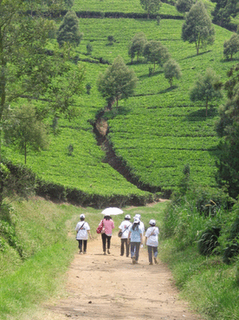 Pagilarang Tea plantation is located in Batang Regency, in Blado, Batang regency, Central Java. In 1840, a Dutchman, E Blink cut the trees for quinine and coffee, and later yielded a no-good harvest and then changed with tea plants. Blink then asked a company in Semarang to commercialized, but later it closed down after the factory burnt.
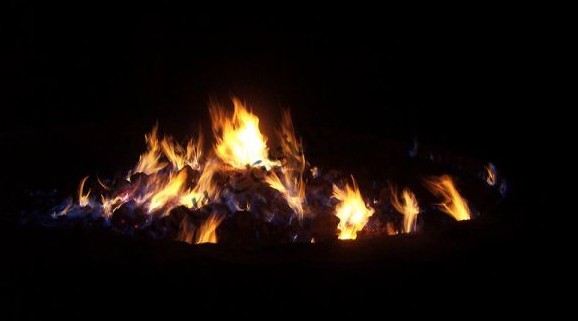 Kayangan Api or Fire of Heaven is located at Bojonegoro regenct, known as the biggest fire source in Asia, according what England Geology Team said. According to local legend, the fire was used by Kriyokusumo or Empu Supagati to make a kris for Majapahit Empire. Until today, the kris became the heritage of Bojonegoro regency.
 Mrapen eternal flame is located in Manggarmas village, Godong, Grobogan, Grobogan regency. This geology phenomenon is flame that appears from the earth surface and never goes out, even in rainy season. The flame has been used for national sport event, and Buddhist too the flame as holy flame every vesak at Borobudur Temple.
 According to legend, the flame appeared after Sunan Kalijaga stick his cane. Sunan Kalijaga and his followers were on a very long journey, and stayed overnight at Mrapen village. His followers were feeling cold, so he stick his cane into the ground and then lifted again, and there the flame appeared miraculously and warmed them. Mrapen derived from prapen or fireplace, so the flame was called as Merapen. Another day, Sunan Kalijaga asked Mpu Supa, who lived not far from Sendang (Spring) Dudo, to make kris. Sunan Kalijaga gave Mpu Supa the material, iron ore with hazelnut size. Mpu Supa laughed, as it was impossible to make Kris with that small iron ore. Well, it seemed that he forgot that he was dealing with Sunan Kalijaga, a powerful man. The small iron ore expanded bigger and bigger as put on fire and he forged it. He brought the iron to Sendang Dudo and plugged the iron in. As the hot iron plugged to the water, the calm water turned to boiling water and turbid. The kris was named as Kiai Sengkelat.
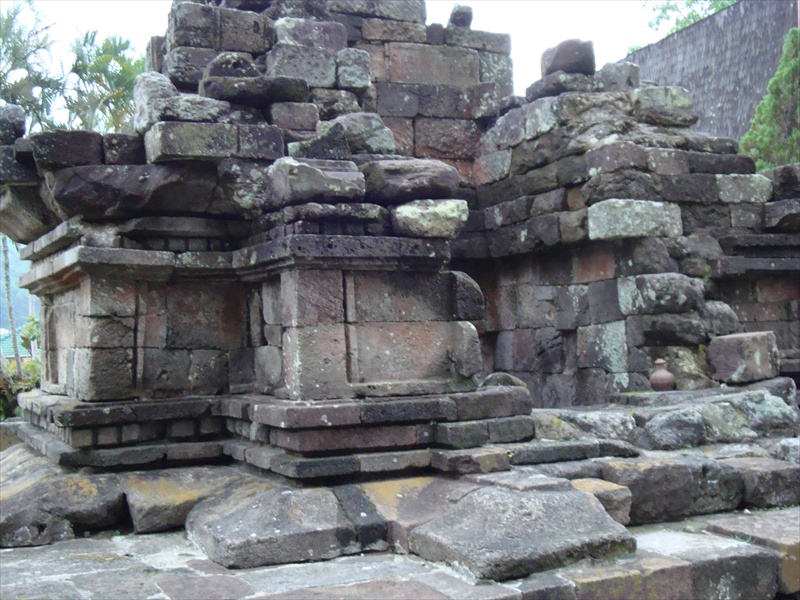 Songgoriti is a hot spring attraction located at Batu city, East Java. But few people know that this area has a temple. The temple only half intact, relief and statue are not intact anymore. The size is not that big, only 14.30 x 10.10 meters and 2.44 meters high, and located behind hotel fence.
 Kasongan viilage is center of ceramics and earthenware, located in Yogyakarta. The occupation of the inhabitants are mostly as ceramic craftsment that make pot, vase, animal statue, chandelier, etc. The daily activities of Kasingan ancestor were squeezing clay that were unbreakable if the clay was attached to each other. Later they made children toys, and kitchen items and handed down from generation to generation until today. Kasongan is 20 minutes drive from Yogyakarta city, on a limestone mountains, notably as Kajen village.
 One of popular ceramics decoration items is Loro Blonyo, a pair of bride and groom sitting side by side in Javanese costume. Loro Blonyo is produced by Kasongan craftsmen adopting Loro Blonyo statue of Kraton Yogyakarta. Loro means two (or pair) and Blonyo means bathing process or dressed up. Loro Blonyo is believed to bring fortune and make family last forever if put inside the house. But foreign visitors love Loro Blonyo for its unique design, that usually they order other Javanese couple in many gesture, such as dancers. And sometimes they order dancer statue without Javanese costume, but typical costumes of various countries, or Balinese or Thailand costumes.