Former De Javasche Bank Will Function Soon

Bank Indonesia opened De Javasche Bank Surabaya Branch for public after 3 years restoration. Darmin Nasution, Bank Indonesia Governor, BI, Darwin Nasution stated that this 102 years old building will function as exhibition venue, meeting, and financial club, a club for financial practitioners chairmen  of East Java. This building conservation is part of developing socio-cultural sector, regeneration and revitalization.

This building is one of preserved buildings in East Java, located at Jalan Garuda, in Jembatan Merah region, Surabaya. This building was restored with 7 Billion Rupiah and took 3 years to finish. Historically, the building was officially used as branch of De Javasche Bank in Surabaya, since 14 September 1829. In 1910, the building was demolished and rebuilt covering 1.000 sqm in neo renaissance design. Since 1953, it was only functioned as storeroom as BI moved to new office at Jalan Pahlawan. .

Surabaya Mangrove Conservation, Batik Mangrove

Surabaya as the second biggest city in Indonesia has a natural set for local peoples to enjoy ocean, mangrove, river, and flora and fauna. Mangrove conservation in Surabaya started by the awareness of locals. Muchson or Sony, is the pioneer of this conservation. He started to clean, observe , investigate and make effort to process mangrove fruit since 1998. He then tried to make something to eat over mangrove fruits, such as syrup, dodol, candies. Also Sony and his mangrove farmer association is cleaning the mangrove area from litters, and empowering mangrove for locals well being. From mangrove species, he had developed mangrove for flour, rice substutition, and cendol. And this man made effort of reforestation and cleaning mangrove with his own expenses.

Mangrove is also useful for natural batik color, kown as mangrove batik and the pioneer is Ms. Lulut. She employs waste from mangrove process by Mr Sony for this purpose. Almost every part of mangrove tree can be used as color material. She can make use of unripe Sonneratio caseolaris that can not be processed into syrup and processes it into natural  liquid shop. She also propagate green life to her neighborhood and become the leader of Environment Care Forum of Rungkut District. This forum invented composting antagonist bacteria that can process garbage into liquid manure, fasten composting,   and omits bad smell.

Liquid soap is made of mangrove Jijibus jujuba species, Aloe vera and lerak. As this is a natural soap, water waste can be used to water plants or flowers. Ms. Lulut has designed 44 batik design with motive of mangrove, leaves, flower, fruit and other sea animals such as fish, crab and shrimp. Every motive has its specific mangrove, with its latin name, local name or even additional name.

Tanjang putih motive, for example, used Bruguiera cylinelrica with additional Rhizophoraceae component. The design is tree from root, leaves and bud become the main motive surrounded by flowerd. This motive is intermittent with Rhizophoraceae flower motive.

Mange motive is from Aegicera floridum surrounded by flower of Myrsinaceae as decorations. Crab, fish, shrimp give this motive coastal design feel. To give Surabaya character that is straightforward, painting technique does not use canting only but partly painted with brush.

Red color is made of Bruguiera gymnorrhiza, red chilly and secang. To create yellow color, he used nyamplung, curcurma and gambir.

In Mangrove Wonorejo, though it is still preliminary stage, visitors can enjoy various of mangrove at the eastern coast of Surabaya. Administratively the eastern coast mangrove is located in Wonorejo village, Surabaya. Mangrove forest in Surabaya is the home of 147 birds species, the 12 species are protected species. There are 44 migrant birds from Australia heading to Europe transit there. Visitors can enjoy boat riding through river and then walk on jetty through mangroves.

Beside seeing mangrove, visitors can see coastal life. Locals live from salt water pond for fish. Cycling through fish ponds can be done as well, if you love cycling. Sometimes birds are swimming in the pond. The fishpond neighborhood is very quiet, unlike what people imagine about Surabaya, only sometimes one or two farmers working at ponds.

Find <a href=” https://www.kayak.com/flight-routes/United-States-US0/Surabaya-Juanda-SUB ” >flights in Surabaya</a> for your stay.

TOUR TO SURABAYA MANGROVE
Surabaya Mangrove Tour
Student Mangrove Program


Tourist Attractions in Bawean

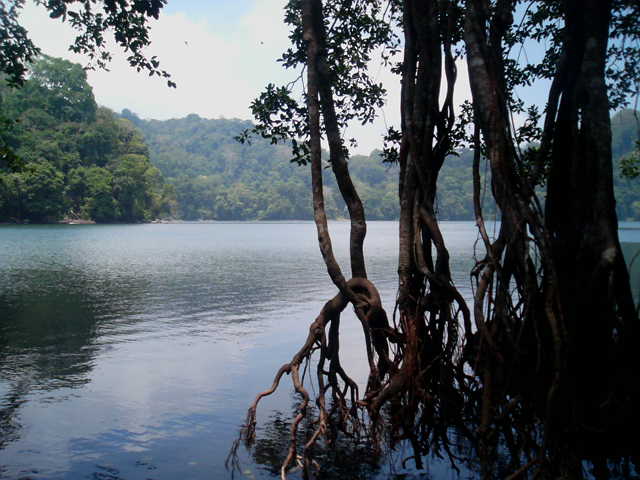
LAKE KASTOBA
Lake Kastoba is located in Tambak district, in Pulau Bawean and still pristine. This lake is not that easily accessed but the lake is very impressive. It takes good stamina to visit Lake Kastoba, the narrow part is narrow, steep and rocky, and can be slippery on rainy season.Visitors should walk for 1.5 km to reach lake Kastoba. The sound of heavy stream can be heard enroute, but the stream itself is invisible. This was because the road to the lake is surrounded by lush forest.
Local people believe that bathing with the lake water will make them forever young and the water is ready to drink as it is very fresh and unpolluted. Few grouses swim on the lake, ans they will fly noticing visitors coming. If you are lucky, there will be Baweanese deer or Axis kuhlii drink lake water.
According to a research, the depth of this lake was 40 meters. Although the access is not easy, visitors frequently visit this lake. Visitors could not enjoy the lake from south east edge as still surrounded by lush trees. It is simply pristine lake.
Researcher estimated that Lake Kastoba was a former ancient volcanic crater. Locals said that the water of the lake changes to red, green and oily. Kastoba derived from kastuba tree (Euphorbia pulcherrima) that i the past overgrew there.
Generally, Kastoba is a very promising attraction, moreover for tourist attraction. This lake is visited by visitors on holiday, other than that period this lake is almost empty and the part is closed by lush grass.
To reach Lake Kastoba can be done by motorbike or coach from Sangkapura port. As the public transport in this island is very limited. Along the way to the lake visitors can enjoy nice scenery of local houses with unique wooden roof to store paddy. Total trip from Sangkapura to Candi Village, Peroman , the closest village to Lake Kastoba, is two hours and the followed by on foot trip.
Kebundaya Hot Spring is a hotcspring contains sulfur that is good for health. The hot spring is developed by locals as public bath. People from various places come here to get the virtue of the hot spring that could heal rheumatic and skin disease.

TAUBAT HOT SPRING
This hot spring is located nearby Sungai Rujing village, not far from Selayar Island. From road it is only 2 km, and the access is adequate.

NOKO ISLET
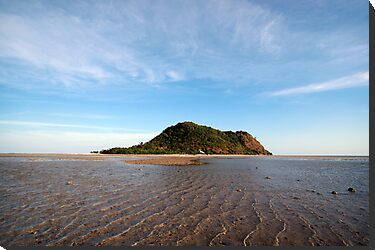
This island is 6000 m2,a nd surrounded by underwater garden, coral reef and colorful fishes. Noko is so beautiful, according to divers. To reach Pulau Noko, visitors should ride by boat for 20 minutes from Bawean Island.


AIR TERJUN KUDUK-KUDUK
This waterfall is the source of water for Sangkapura people, located in Patar Selamat village, Kecamatan Sangkapura, Kabupaten Gresik, Jawa Timur.To reach the waterfall, visitors should walk for 1 km descending a hill. Or if you go by motorbike, it is only 40 minutes from Patar Selamat village.


SLAYAR ISLET
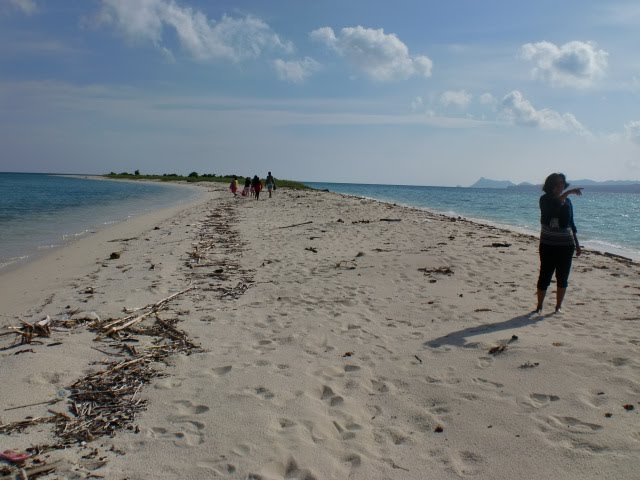
This islet is a mountain in the middle of ocean and separated to Bawean Island. When low tide comes, visitors can walk round the islet that is full of rock and bush, and this can be reached by boat of walk for 4.5 km on low tide.


GILI ISLET
Pulau Gili termasuk bagian dari kawasan Pulau Bawean, yang letaknya terpisah antar lautan. Pulau berpenduduk sekitar 1.500 jiwa termasuk wilayah desa Sidogedungbatu, kecamatan Sangkapura, Pulau Bawean, Gresik.


CHINA ISLET
This islet is one of small island located nearby Bawean Island. This island can be reached by boat that is offered by local people. Like other island, this island offers nice nature with beach and flora and fauna.

LONG GRAVE/MAKAM PANJANG
This grave is located in Tanjung Anyar village.Locals call this long grave as Tinggen. The length is 12 meters. Locals believe that this was where Aji Saka’s weapon burried with Doro’s blood. Ajisaka was in Java to propagate Hindu, he came from Asoka kingdom in India. He was accompanied by his men, Doro and Sembodo.
Before entering Java island, Aji Saka with his men arrived in Bawean Island. One of his men, Doro stayed in Bawean with Aji Saka’s weapon, while Ajisaka and Sembodo proceeded to Java. Aji Saka instructed Doro that the weapon should not be handed down to anyone except by Aji Saka himself.
After Java Island we dpminated by Hindu, Aji Saka remembered that Doro was in Bawean, and he ordered Sembodo to pick Doro and took his weapon. Aji Saka forgot that he ever instructed that Doro should not hand the weapon to anyone except to Aji Soko.
After Sembodo arrived in Bawean, there was misunderstanding between Sembodo and Doro. Doro did not want to give Aji Saka weapon to Sembodo, except by Aji Saka. They both died after fighting. Doro grave is located at Tinggen, known as Makam Panjang Doro while Sembodo grave is located at public cemetery located in Tinggen as well.
In 1950s found an inscription made by Aji Soko to commemorate Doro and Sembodo who died in Bawean. The inscription was written on a big rock in Javanese letter and stamped with left foot of Aji Saka. The inscription was located at Tinggen only it was broken and the stobe was used as Muara village bridge.

TANJUNG GAANG
Tanjung Gaang is very stunning, to reach this site, visitor will pass Tanjung Kima, a frog-like rock. The landscape is very beautiful, clear sea water and amazing rocks. There are two wells in rock. This cape is located in Kumalasa village, 8 km from Sangkapura.

SANCTUARY OF DEER
Bawean deer sanctuary is located at Beto Gebang, Pudakit Barat, Sangkapura, Bawean Island. This sanctuary is owned by individual, Mr Sudirman. Visitors to this place usually think that it has nice panorama as well. Beside developong Bawean deer population, there is salak plantation good for agro tourism.
Bawean deer or Axis kuhlii only exist in this island. This dear is only 60-70 cm high and 105-115 body length, and weight is round 50 kg. This deer has tusks on lower jaw. The color of the fur in brown except on its neck and around its mouth has lighter color than its face and separated by dark line. Front shoulder is lower than rear side. Young deer has spots that disappear after short period of time.

TOURS TO BAWEAN FROM SURABAYA
Bawean Explore 6D/5N
Bawean Island Tour 5D/4N

Grahadi Mansion, Surabaya,East Java, Indonesia

This building is located in the heart of Surabaya, not far from Tunjungan Plasa, notably at Jalan Gubernur Suryo. This building is very easy on the eye, white , huge and beautiful, and called as Grahadi for there is a meeting room called Grahadi located inside this building.

Grahadi derives from Sankrit words graha means house and adi means high class. Grahasi means a house that has high class. Though this house is already old, more than 200 years, it is still stand tall and in its original construction.

For architecture lovers, they will be amazed by this building design that is dominated by straight, vertical and horizontal lines with balance ratio and aesthetic that this building categorized as monumental building that is well conserved.

This two storeys building constitutes of 2016 m2 main building, 4.125,75 m2 ancillary building and located on a land of 16.284 m2. On the first floor is devided into several rooms: guest room, and East Java government meeting.

This building keeps historical stories and can be visited by visitors from 08.00-11.00 from Monday to 13.00, and Friday from 08.00-11.00, on Saturday from 08.00 to 12.00, and closed on Sunday. Behind the building is Kalimas river that offer river tourism to enjoy Surabaya through boat following the stream.

This river tourism opens from Monday to Friday from 17.00 to 19.00. Saturday from 13.00 to 19.00 and on Sunday from 09.00 to 19.00. On the edge of Kalimas located Prestasi Garden where children can play that opens everyday in the afternoon.

This old building looks strong and supported by architectural style and tough building construction. Walls are tall and the rooms are spacious , and built from big red brick without support of concrete and cement. Ventilation and circulation inside the rooms are from big doors and windows that are made of transparent glass. Teak wood is used, except on the doors and windows sills. All rooms upstairs are made of thick teak and used large and long blocks to support the construction. Stairs connecting the ground floor to the first floor is built from teak and is still in original condition. This building is completed with open porch in front of the building and the roof of the porch is supported by Rome architecture.

It was built in 1795 by the sole authority or gezaghebber or Dutch, Dirk Van Hogendorp (1794-1798). The reason he built this building was that his residence in red bridge region, nearby Jembatan Merah, is not suitable anymore with his position. He then chose a land on the edge of Mas River for a representative residence.

The land was called Simpang area (currently Jalan Pemuda), and owned by a Chinese that in the beginning would not give his land to van Hogendorp, bu according to people story, he finally gave the land as Hogendorp said that the land would not be taken by him but be kept (simpan). And the Chinese was given 2.5 cents as compensation. From the word simpan, then Simpang term born.Van Hogendorp built the building for 14.000 ringgit, but he only lived there for 3 years only.

When he was in his position, there were many complaints to the central govt of East Indies in Batavia. One of them was that van Hogendorp was accused to use his power for his own interest. In a new year party, 1 January 1978, he was arrested and sent to Batavia. East Indies General Governor Daendels who was popular as Toean Besar Goentoer did restoration to the building, as he wanted to make the building as palace. Also constructed a bridge on Mas River, located now behind the building. Initially, the building faced Mas River that in the afternoon, the residents could enjoy tea while seeing boats walked down the river. The boats were also used as means of transportation. Later, the building was used as court, Raad van Justitie, for party, and other events.

In 1802, the building then changed, and faced south as today. Across Grahadi was Kroesen park (Currently Taman Apsari) or Taman Simpang, derives from Resident JC Th Kroesen (1888-1896). Behind the park located Joko Dolog statue or Buddha Mahasobhya from Singasari kingdom. Since Indonesia independence, Grahadi was used as residence of RT Soerjo (1946-1948), the first governor of East Java, and his statue is located in the Taman Apsari. Since Governor Samadikoed (1949-1957) until today, Grahadi was used as Gedung Negara to welcome guests, receptions, meetings and governor lives in other residence in Surabaya

Goa (Cave) Rancang Kencono, Gunungkidul, Yogyakarta, Indonesia

Goa Rancang Kencono is located in Bleberan village, Gunungkidul. Yogyakarta. Acording to book of Mozaik Pustaka Budaya Yogyakarta, Gua Rancang Kencono is one of ancient cave as Braholo cave located in Rongkon district, according to artifact and bones found there. This cave is wide with estimated 2 hundreds years Terminalia edulis tree, and used as hideaway of Mataram knights and to arrange strategy to get rid of the Dutch from Kasultanan Yogyakarta Hadiningrat. As the later mentioned use, this cave is named as Gua Rancang Kencono.

To enter the cave, one should descend stone steps that was there since long time ago. A Terminalia edulis that is higher than the cave ceiling welcomes visitors. The cave has a yard that can be used as meeting room. Stalactite decorates ceiling and there are many dead stalactites already. Beside the spacious chamber, there is a dark  narrow room, and to enter this room we should pass through a narrow crack by ducking.

On the other side, there is a tunnel that connects Gua Rancang Kencono with Sri Gethuk Waterfall. To enter this chamber, we should duck as the ceiling is very low. According to the local management, the tunnel has already collapse that it can not be explored. When night comes, Gua Rancang Kencono is showered by garden light, creating a comfy atmosphere with sounds of night bugs .

Air Terjun (Waterfall) Sri Gethuk (Slempretan), Yogyakarta, Indonesia

Sri Gethuk Waterfall or Slempret waterfall is very unique as it has branches on a cliff and appear through cars dry carst. This waterfall height is 80 meters and located at Oyo river. There are 3 spring spurt near the waterfall, Dung Poh, Ngandong and Ngumbul waterfall.

Sri Gethuk derives from locals belief in the past, that gamelan sound often heard from the waterfall, and they believed that it was owned by the Slempret king of goblin, Anggo  Mendura who loves gamelan music. It said that the waterfall was the location of ghost market, in certain nights, locals hear slompret or trumpet from the waterfall direction. But if the sound is heard from closer distance, it will be gone. That was why people call it Slempret Waterfall. In legend, the gamelan instrument that is invisible can be borrowed by powerful people and can be played as normal gamelan instrument. In local legend also, there are few places to sabe gamelan of Anggo Menduro such as Mergangsan and Sri Gethuk. Mergangsan is located beneath Oyo River and called as Mergangsan as it was used to save gongso or gamelan. And Sri Gethuk or Sri Kethuk is called so as it is the place where Anggo Menduro save Kethuk instrument.

This waterfall is located in Menggoran village, Bleberan, Playen, Gunungkidul, Yogyakarta. This waterfall is not far from Rancang Kencono cave.

Gamelan sound from the waterfall is heard especially on rainy or dry season. To reach the waterfall, visitors should pass narrow path in the middle of rice field for 450 meters and then descend a stairs. It is available to take gethek, or traditional bamboo boat equipped with water mill to get to the waterfall. This is a relatively new attraction, and just launch in 1 July 2010, that the infrastructure in this site is not adequate yet.

Selokan (Ditch/Canal) Mataram, Yogyakarta, Indonesia

Mataram canal is one of water ditch made by Mataram kingdom in project called Main Canal of Water System. Other canals projects are Karang Talun (3 km) and Ven der Wijk (17 km). As their names, those canals were constructed for irrigation reason especially on the northern of Yogyakarta so the lands are productive all year long. From those main channel, farmers made smaller ditch to water their sawah and farm lands.

Before the canals constructed, Yogyakarta was a dry land with minimum crops. The irrigation system in that period was only depending on the rain fall for the shortage of water. Rivers and creeks split the Mataram Kingrom area, such as Kali Code, Kali Gajah Wong and Kali Winongo was not enough to rely on.  Those rivers are steep, and the positions were like on the bottom of river, while the farms much higher.

East Indies government that ruled over Indonesia in that period built Van der Wicjk channel in 1909 in Moyudan district , Sleman. Van der Wijk was built to water cane plantation to support sugar industries in Madukismo region, Bantul.

Keberadaan saluran ini tidak banyak membantu masyarakat petani Yogyakarta yang berlokasi jauh dari saluran tersebut. Sebagian besar lahan pertanian di Yogyakarta saat itu masih bersifat tadah hujan. Japan could stop Dutch colonialism in the mid of 1940s and start to built various infrastructures to support war especially war against US. Indonesian recognized it as  labour work called Romusa.

The Japan labor policy in his colonies was applied, including in Yogyakarta. Sri Sultan Hamengkubuwono IX as the king of Mataram tried hard to protect his people from this policy, especially if they should go laboring in other region, so at least they could work as labor in Yogyakarta and they could feel the benefit of their hard work. Maybe as Sri Sultan rememberd advise of Sunan kalijaga, that Mataram would be prosperous if Kali Progo on the west and Kali Opak on the east can be united, he had an idea to build canal that connected both rivers. This idea was accepted by the Japs as it was considered to increase agriculture productivity to support war logistic. In Japanese occupation, Mataram canal stretched 31.2 km and known as Yoshiro canal. As time went by, this canals then called as Selokan Mataram (Mataram canal).

One of the exit canal of Mataram canal is toward Sleman farms. Mataram canal split north of Yogyakarta from west to east, and supported agriculture that those land yielded multiple crops than before. The products increase was because the farms can be planted all year long. Not only farmers, traders also enjoyed the benefit. This created domino effect and moved economy of other sectors. Yogyakarta and surrounding were growing and busier.

Yogyakarta and surrounding were getting more populated. Yogyakarta became popular as city of education. One of the educations clusters was on the border of northern of Yogyakarta and southern of Sleman.

Various universities stand there. At least 90 campuses are lining along Selokan Mataram, especially in Mlati and Depok district. And they influence the growth of services for students from all over Indonesia studying there, such as netcafe, kost, food stalls, and many more. The increasing number of inhabitants, newcomers from different cultural backgrounds and the evolving of non agriculture sectors have made Selokan Mataram alienated.  Farmers admit that now their paddy easily attacked by insect and sometimes broken glass hurt their feet while working for the polluted selokan caused by urban growth.

Increasing Temperature of Ijen Crater

Temperature at Kawah Ijen located on the border of Bondowoso and Banyuwangi raised from 32 Celcius to 42 Celcius.

“There is an increasing activity of crater temperature, but the status is remain Level III” Hendra Gunawan, Chairman at Volcanology and Geology Mitigation Invertigation (PVMBG) said on Thursday. He explained further that quake activity at Ijen declined, but the tremor quake amplitudo is fluctuative, that PVMBG keep monitoring this volcano activity.
PVMBG kept increasing this volcano activity from Level II tp Level III since 18 December 2011 on 04.00 am, that locals and sulfur miners are prohibited to enter Ijen Crater within radius 1.5 Km from this active crater.

Source : tvOneNews

Gua Jomblang and Gua Grubug another Chalengging Vertical Cave, Yogyakarta, Indonesia

Gua Jomblang is one of around 500 caves located in limestone mountain in Gunungkidul. Gua Jomblang is a vertical cave and the height is around 80 meters. To enter the cave will take SRT (Single Rope Technique), this is a technique to explore vertical cave using one rope to ascend and descend.

To enter Jomblang cave, cavers should pick one route from 4 routes available. The first route was the easiest and known as VIP route. In VIP route, the first 15 meters was a steep track, that can still be climbed or stepped. Complete SRT equipments are needed. And 20 meters further cavers can slide through rope. Other routes are more difficult than this, they are 80 meters, 60 meters , and 40 meters.

This cave was first explored by Acintyacunyata Speleological Club (ASC), cavers club from Yogyakarta, in 1984. In 1970s and 1980s, this 50 diameter cave was used as an assassination site for hundreds of communist members that were brought to the cave edge and then shot one by one and fell to the cave bottom. Local people have abundant of spooky stories around this cave.

The bottom of the cave is lush forest, and surrounded by limestone wall that is overgrown with bush. After the rough struggle to descend the cave, this forest can be used as place to rest. From here cavers can continue their exploration through a tunnel that connect Gua Jomblang to other vertical cave, Gua Grubug. The tunnel is 500 meters and easily accessed.

Grubug Cave is a vertical cave with height of more than 80 meters. Once you enter the cave from the tunel you can feel the cold breeze from Grubug cave. The cave has river from Kalisuci Cave. And the most popular feature from the cave is its heavenly light from the cave mouth which looks like it is covered by trees. The light is best seen from 09.00 to 13.00, where it showers the bottom of Grubug Cave. The cave mouth drops water from above by its stalactite, that it drops creates a huge stone which can be use to take pictures. To explore the tunnel it is recommended to have good flashlight, wear good walking shoes as it is slippery and muddy. You can also go down to the river, to enjoy its fresh cold water.

As the track to Jomblang and Grubug is very difficult, especially to to ascend, it is recommended to visit the caves in small group and depart early from Yogyakarta so you will not miss the heavenly light and  finish the trip before its dark.

We organize tour to Jomblang and Grubug Cave Exploration:
4D/3N Night Kalisuci Cavetubing, Waterfall Rappelling and Jomblang-Grubug Vertical Caving 4 Days/3 Nights

no images were found

Nyadran Tenongan Ritual, Giyanti Village, Wonosobo, Central Java, Indonesia

Giyanti village is located in Selomerto, Wonosobo, Central Java. This village is popular as Lengger Dance performance. This village celebrating anniversary, called Nyadran Tenongan annually according to Javanese Calendar.

Since morning, around 8 am, every member of the village was out for the ritual. They gather at the village street. Even mothers and children are involved in this event. They put traditional snacks, fruits into a bamboo containers (tenong) decorated with colorful paper. Everyone wears batik and Javanese traditional outfit.

Not far from the street, performed various lengger dance, barongan and kuda lumping or emblek. Giyanti village is the home of abundant lengger artists. The ritual is started by visiting the grave of Adipati Mertoloyo, the founder of Giyanti village.

Before departing to the founder grave, hundred of villages wearing javanese outfit bring art equipment. The most unique about this sequence is that they carry two effigies of Adipati Mertoloyo and Kiai Monyet as their honor  manifestation to the founder. They are carried to the grave and then followed by praying session. The effigies then carried itinerant through the village street that is already full of people with food in tenong. Afterwards, one by one they follow the pilgrim group itinerant the village. After finished with circle the village, then they gather at a art building established by Ki Hadi Suwarno in 1960. This building was used as artists to learn Lengger dance, the traditional dance from Wonosobo.

The villagers put the tenong along the street and in front of the art house. The leader of the village and one lengger dancer put offering beside banyan tree located nearby the art building and praying with mantra for well being of the people. Afterwards, lenger dance from first period where men dancer dressed as woman and then followed by an old man explaining the pedigree and history of Giyanti village.

Giyanti village was born in the 2 and half centuries ago and young generations in Giyanti always maintain the traditional culture, including lengger dance. People live in peace and arts and culture is the element that attach them together, although they have different occupations and religion. This village inhabitants’ religions are moslem, christian, catholic , pangestu and other religions. Mosque, Pangestu building and Church are standing side by side.

Then the most interesting part for peole is getting blessing water, food and fruits at tenong. They bring plastic bag and glass and  jostling to get food, water that are already blessed and they believe that it brings fortune. After that excited scene, they eat and drink the food they got and then return home.