Category Archives: Indonesia Blog

Han Family Altar House, Surabaya, East Java, Indonesa

Han Family Altar House

Surabaya is indeed has been a magnet for immigrant or traders from overseas in the past, either from Europe, Asia, India and Arab countries. Today there are some evidence can still be seen, especially at the northern part of Surabaya, as the old town of Surabaya.
One of the evidence is Han family altar house located in the Chinatown of Surabaya. This establishment was built in the 1876 by Han Sie Lok, and it was known as Han Sie lok Hian Tjok Biauw. The architecture is very interesting as it adopts Indische Empire style and Chinese style as exterior. Han family initially arrived in Lasem and in China this family was a rich merchant. The descendants moved to Surabaya and involved in business of sugar cane plantation, sugar factory, and weed. Pilars inside the house were imported from Glasgow, the floor is made of marble.

The house has never been renovated. And it is still in good state. Inside the house you can find the original chairs and table and glass. The ceiling is high and open. The doors are made of teak wood, very solid and thick, especially the main door.

PICTURES : Broken Beach , Nusa Penida

Broken Beach located in Nusa Penida Island. The beach is very unique as it is a secluded beach separated by a cliff hole. The beach itself is not accessible, however the view has is amazing that it draws visitors to visit and take a picture of this beach.  Below is the pictures of the Broken Beach, Nusa Penida, Bali , Indonesia. 

And to book trip to Broken Beach of Nusa Penida and Nusa Penida Tour or Bali Tour in general, please contact  Getaway Tours: Indonesia Tour Operator.


Batak House at Samosir Island

There are still some traditional house of Batak exist until today. Not so many left anymore in some areas in North Sumatera. The house has two kinds: Ruma and Sopo. Ruma is a dwelling while Sopo is an establishment without wall which is used as barn or as living room.

The house has 3 major section, the lower, middle and upper. The lower section is the foundation and pillar which support the house and used for livestock. The middle is used as dwelling and the upper to keep weapons.

Ruma and Sopo have steep roof made of grass. The house usually decorated with carving, known as gorga. Gorga is usually made of soft wood which is sunlight and water resistant, such as Ungil wood. The Gorga has three colors: white, red and black. White color is made out of lime stone, red color made out of a red stone and black color is made of plants.

In front of the house there is a stair as entrance. It is a pride for Batak people when the stair is worn out as it is an indication that the house has welcomed many guests and that the owner is friendly.

The door if the house is low, that when one is entering the house must bow which has meaning guest must respect the house owner.

River Cruising at Tanjung Puting National Park

I always love seeing the lush green forest, and river. And i think Tanjung Puting National Park is a very lovely place to visit. Not just to getaway from my mundane environment but also to understand more of the flora, fauna, wildlife and environment.

It is thrilling to enter this park, as it is one of the so called lung of the earth. Cruising through the Sikonyer river, passing nipah trees, pandan trees and some vegetation can be seen from the river. In the afternoon, those proboscis monkey or locally known as bekantan can be seen enjoying afternoon from tree branches. Not only that, macaque sometimes busy eating nipah’s fruit and birds roaming.

Orangutan which attract mainly visitors to come can be seen at feeding area. Usually the tour will include visiting the 3 feeding area, at Tanjung Harapan, Pondok Tangguy and Camp Leaky. Those orangutan can be seen there are semi wild, which once was rehabilitated and then released to the jungle. As the orang utan from rehabilitation is different and automatically could not compete with wild orangutan, feeding is still ongoing.  Beside this will make any disease that maybe will be spreaded through contact from semi-wild to the wild ones. 

The feeding station just located about 1 KM from the camp located at the river bank, which can be reached by about 30-45 minutes walk.  It is such a privilege watching this big apes in their habitat  from close distance. They swing from branch to another and especially when seeing how attached the young orangutan is very clingy to their mother.

The very informative station of Camp Leaky is very interesting. That it can take a while for me to read carefully to learn and understand more about orangutan,  other wildlife, the forest, the research. Camp Leaky was established in 1971 by Dr Birute Galdikas and her former spouse Rod Brindamour and it was named after legendary paleo-anthropologist, Louis Leaky, the mentor and inspiration for Dr. Galdikas.

Other memorable experience at Tanjung Puting National Park was the night we dock the boat nearby nipah tree was were full of fireflies. The whole night was magical with the twinkling bugs. I could not remember when was the last time i saw fireflies, maybe twenty years ago.  According to the guide, few years back, the fireflies was along the river every night. And now, only they are only in some Nipah trees, due to firest and the carbon of the fire affect the fireflies.

Sekonyer River was clear black in color all along. Now the down stream is brown, and it is said to be the effect of mining activities. But upstream is still well preserved. I love the color of the river, so clear and black. The black color was due to the acid from the leaves of the jungle.


Great Wall of Koto Gadang, Bukittinggi, Indonesia


This place of interest imitate the Great Wall of China in simple and smaller size. This was the initiative of local and government to make the stair way more interesting for visitors and for locals to refresh. 

In the past this stairs was already there, since the colonial period and then the locals and govt rebuilt it in 2013. Along the wall, the panorama is beautiful and green. It can be accessed from Panorama Park or from Koto Gadang town. Both places we can see the view of Sianok Canyon, but i think the view from Koto Gadang is more beautiful. 

If you access Great Wall of Koto Gadang via Nagari Koto Gadang, you can also visit silver home industry and weaving. Koto Gadang is also interesting place as it has many old house from the past. If you love architecture you will enjoy passing by the street seeing the houses here.

If having long free time in Bukittinggi, this can be an option to walk from Koto Gadang to Bukittinggi. 


Sianok Canyon, Bukit Tinggi, Indonesia

Bukittingi is a beautiful city, rich of hilly landscapes. And the most prominent is Sianok Canyon. This canyon is a narrow valley surrounded by ravine and engraved with the river flow in the middle. The contour was created by the collapse of earth slab, which yielded as a fault of  deep ravines. 

The canyon stretchs over 15 km from the south of Nagari Koto Gadang to Nagari Sianok Enam Suku, with the depth ranges from 100 to 200 m. 

Sianok fault is part of Semangko fault which cuts across Sumatera Island in two long parts horizontally from Aceh to Teluk Semangko in Lampung. Semangko fault location which creatres Bukit Barisan mountains.  Ngarai Siano is the obvious visual of the tectonic fault movement in Sumatarea Island. The process creating a marvelous fertile land and beautiful panorama.  

There are various activities can be done here, such as trekking, walking and cycling. Visitor can also observe the view of the canyon from Panorama Park.

Bukittinggi Zoo and Fort De Kock, Indonesia

Bukittinggi Zoo is the oldest zoo in Indonesia. It was built by the Dutch in the 1900. It has animals from the eastern of Indonesia as it exchange with Surabaya Zoo. The official name of this zoo is Taman Margasatwa dan Budaya Kinantan. And as its name, it does not only has animals, yet also Minangkabau traditional house where visitors can see the old collections and see the architecture of the house and also take a picture in traditional  costume. 

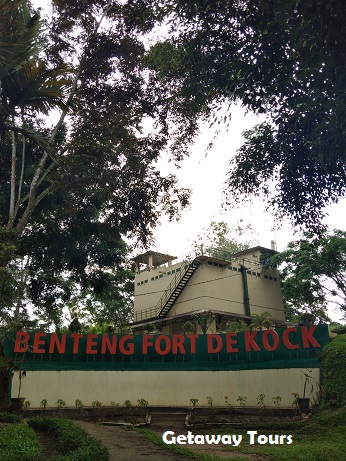
The zoo is connected by a bridge called Limpapeh Bridge, to Fort de Kock. Fort de Kock was established in the the midst of 19th Century as defense fortress against Minangkabau attact during Paderi war.  Taking the advantage of local conflicts, the Dutch was on the side of Minangkabau aristocrats and suppressed the religious people. As it was built by  Captain Bauer, when Governor Hendrik Merkus Baron de Kock reigned and as well as the Military commander. 

Bung Hatta House, Bukittinggi, Indonesia

Bukittinggi is the hometown of Bung Hatta, Indonesia first vice president and also the father of proclamator of Indonesia. Located at the city street, Jalan Soekarno-Hatta No. 37. 

The house has already been renovated in 1994-1995, as per the original design. The original house was collapsed  in 1960s. The house is made  of wood and bamboo. The room where Bung Hatta was born is located at the second floor on the left. The room when he was young is located at the rear part of the house. It has also the original bicycle of his.  The house was opened to public on August 12th 1995, on the birth day of Bung Hatta. 

Next to Bung Hatta’s room is kitchen with typical, yesterday kitchen, when people still cook using woods and you can also find kitchen utensils. The house has horse carriage garage.

Bung Hatta was one of Indonesia’s delegates in Konferensi Meja Bundar in Den Haag, and he was tge first person to announce Indonesian foreign policy : Freedom and Active, which becomes the base of current policy of Indonesia.

He was born on 12 August 1902 from Mr H Muhammad Djamil and Saleha. He lived in this house from 1902 till 1913. Though he lived relatively short time in this house yet, it shaped his character, especially by the discipline, punctuality, hubmleness and love from his grand father, Haji Marah, who was a freelance post office contractor. 

Bung Hatta studied in elementary school in Bukittinggi, Europese Lagere School (ELS), and then continued to Meer Uitgebreid Lager Onderwijs (MULO) and then went to Prins Hendrik School (PHS) in Batavia. He then continued education to Handels Hooge School in Rotterdam from 1921 till 1932. 

He was an activist since he was at school. He established Jong Sumateraned Bond in Padang and Batavia, Perhimpunan Indonesia in Holland and Pendidikan Nasional Indonesia. He was exiled to Digul, Bandaneira and Bangka. 

Visiting this house is not merely seeing the personal life and his career and achievement , yet also see the local architecture. 

Los Lambuang: A must visit for culinary lover, Bukittinggi, Sumatera, Indonesia

Los Lambuang is located at the upper market of Bukittinggi. Los Lambuang derives from the minang, los means alley and lambuang means stomach, so it means the alley to fill stomach. 

It is where you can find Nasi Kapau, local menu from Bukittinggi. The taste is similar to nasi padang. Nasi Kapau consists of many kinds of menus, from chicken, eggs, beef and fish with vegetable and sambal. The menus are arranged on display table that the clients can choose whatever they want with rice and vegetable and sambal. As in Padang restaurant, you you will be provided a bowl of water to wash hands and a glass of water for free. It is a culture to eat with hands here, yet if you want spoon and fork you can ask. 

There are many stalls to pick for Nasi Kapau in Los Lambuang. However there are many other food you can find here, such as soto, Cindua Langkok  and katupek pical.