



A local friend asked me to go together to a new place known by locals only. I did not expect to see this relaxing and rejuvenating place nearby. But viola, it is an amazing place to go during weekend. And if you visit Borobudur Temple you can also stop by at this place.

This waterfall is called Watu Purbo Waterfall, which is a man made waterfall, it is a cascades consists of 6 blocks waterfall. The name derives from the big rocks (watu in Javanese) that were already there since very long time (purbo : in Javanese). It was originally built in 1975 for cold lava of Mt Merapi to flow over .

It takes about 10-15 minutes walk descend to reach the best spot to view the falls. It is suitable for family destination. The best time to visit is during rainy season, when the waterfalls look best , yet must avoid during very heavy rain.

Just about 1 hour drive from Solo or three hours drive from Yogyakarta, you can do getaway to this country nestles on slope of Mt Lawu which soars more than 3000 meters high. There are some decent hotels in this area as well, that it is suitable for family weekend getaway.
There are some waterfalls that we can visit and those located not very far from hotels. The most popular waterfall is Grojogan Sewu Waterfall which is the biggest waterfall here. This can be accessed through stepping hundreds of stairs. And actually there is another entrance to this waterfall that you can reach without stairs, which is suitable if you travel with kids or elders. There are other waterfalls nearby: Jumog Waterfall and Parang Ijo, both can be accessed easily from the parking area.
If you love history and old sites, visiting Sukuh Temple is a must. Sukuh is unique temple which has interesting architecture, and beautiful reliefs. The shape of the temple resembles Mayan temple and there are erotic carving. This temple was approximately to be built in the 15th Century. And the other temple located few km apart is Cetha Temple, a 13 terraces temple also built in the end of Majapahit Kingdom, in the 15th Century, and located on high elevation that you can see the view of Karanganyar from here.
If you love climbing mountain, you can go the base camp of Mt Lawu to reach the summit.
Robet is such a friendly guy. He smiles and speaks very polite with his Javanese accent. He has natural dreadlock hair, and the hair is the longest man hair I have ever seen, it is longer than his body height. He usually wraps his hair over his waist when riding his motorbike. And he usually covers his hair with cotton scarf.

His studio is located outside Yogyakarta city, very tranquil nestled in the middle of green kampong. One thing that i really like is the clumping bamboo grow lushly like a gate to his studio. Jelly tree and pigeonwings plant, betel plant grow wildly in the garden. Robet explains he uses the plants leaf for herb. He even let me join for pigeonwings tea time, as part of his daily activity.
Meditation has been part of Robet’s life, he baths in a natural spring water regularly. In his prayer he always wishes that every creatures are in happiness. And this encourages him to create paintings that send happiness to the connoisseurs.
Most of his works are acrylic on canvas. He uses water from springs around Yogyakarta to mix with the acrylic paint. He says he has made research that water from spring is much better for paint quality than normal tap water. Each painting takes some days to months to finish. His paintings are about his dream, his wishes, his research about nature, and his spiritual experiences. (Lindy Sunghiwima)
ROBET KAN CURRICULUM VITAE1999-2007 BA, Fine Arts Department, Indonesian Institute of the Arts, Yogyakarta
1998-1999 VISI, Yogyakarta
1995-1998 High School of Art and Design (SMSR), Yogyakarta
1999-2007 BA, Fine Arts Department, Indonesian Institute of the Arts, Yogyakarta
1998-1999 VISI, Yogyakarta
1995-1998 High School of Art and Design (SMSR), Yogyakarta
Exhibitions:
2019-2021
Active in various exhibitions
2018:
JAW Jogja Art Weeks
TIDUR ADALAH DASAR MEDITASI,Solo exhibition,deOplet Gallery,Yogyakarta
SEMAR ILANG,Bentara Budaya Yogyakarta
2017:
PRAMBANAN OUTDOOR SCLUPTURE,Taman Wisata Cadi,Prambanan, Yogyakarta
THOUSAND FACES EXHIBITION, First Floor Art Gallery, Kuching, Malaysia
2016:
NITI LAKU PESONA PRAMBANAN, Museum Prambanan, Yogyakarta
TITIK TEMU. THE REAL FIGHTART EXHIBITION, ASCOS, Yogyakarta
IMAGO MUNDI – THE ART OF HUMANITY, Bentara Budaya Bali, Bentara Budaya Yogyakarta
1000 FACES BANYUNIBO, Bale Sigala Gala, Jogja Village Inn, Yogyakarta
DRAWING WAYANG 2016, Taman Budaya Yogyakarta, Yogyakarta
YOGYA ANNUAL ART, Bale Banjar Sangkring, Yogyakarta
GOYANG DOMBRENG, Bentara Budaya, Yogyakarta (with Hitam Manis)
2015:
solo exhibition, THERE IS A GOOD SPIRIT INSIDE YOU. ADA BUDI DI DALAM DIRIMU, Lawas, Yogyakarta
solo exhibition, MEDYTACJE, OKiE Bemowo, Warsaw, Poland
KWENI ART FESTIVAL #1, Rumah Seni Sawah Ladang, Yogyakarta
NANDUR SRAWUNG, Taman Budaya Yogyakarta, Yogyakarta
Pameran ILUSTRASI CERPEN KOMPAS 2014, Bentara Budaya, Jakarta
ART-CHIPELAGO, Galeri Nasional, Jakarta
REBORN EVERYTIME, Sangkring Art Space, Yogyakarta
RAYUAN PULAU KELAPA, Rumah Seni Sidoarum, Yogyakarta
APRIL MOOD, Rumah Seni Sidoarum, Yogyakarta
2014:
solo exhibition, NETES ING ANGIN, Merdesa, Yogyakarta
JAVA ART, Bentara Budaya, Yogyakarta
NANDUR SRAWUNG, Taman Budaya Yogyakarta, Yogyakarta
JAR. JOGJA ART RELIGION, Sellie Coffee, Yogyakarta
IJOL. IN JUSTIFYING OUR LOVE, Sangkring Art Space, Yogyakarta
INDOfest INAUGURAL INVITATION ART AWARD, Nexus Multicultural Arts Centre, Adelaide, Australia
finalist of the INDOfest INAUGURAL INVITATION ART AWARD, Nexus Multicultural Arts Centre, Art Gallery of South Australia, Adelaide, Australia
ISI ISI, Gallery Kemang 58, Jakarta
2013:
curator/artist, ART MIND MIEN GALLERY, Mien Gallery, Yogyakarta
GELAR SENI BUDAYA PESISIR 2013, Tuban
COFFEELICIOUS, Coffeetalk Art Space, Yogyakarta
RUBUH – RUBUH GEDHANG, Bentara Budaya, Yogyakarta (collaboration with Nasirun)
curator/artist, VAN nJAVA, Taman Budaya Yogyakarta, Yogyakarta
3 Pameran Tunggal, Sangkring, Yogyakarta (with Hitam Manis)
SUKA PARI SUKA, Bentara Budaya, Yogyakarta
retrospective exhibition SWEET SEVENTEEN, Via Via, Yogyakarta
KESURUPAN KUDA LUMPING, Bentara Budaya, Yogyakarta
shortlisted in MURAL ART @ UNDERPASSES Competition, Singapore
2012:
HITAM MANIS, Sangkring Art Project, Yogyakarta (with Hitam Manis)
FESTIVAL SALIHARA, Salihara, Jakarta
Group Exhibition ULANG TAHUN BENTARA di JAKARTA, Jakarta
JOGJA FASHION WEEK 2012, Jogja Expo Center, Yogyakarta (with Hitam Manis)
JAVANESE MASK, Via Via, Yogyakarta
OVERNITE SENSATION, Lotte, South Korea
2011:
Biennale Jakarta XIV MAXIMUM CITY: SURVIVE AND ESCAPE, Jakarta
Pameran Besar Patung Kontemporer Indonesia EKSPANSI, Galeri Nasional Jakarta (with Hitam Manis)
Visual Art Exhibition GOENAWAN 70th, Galeri Semarang (with Hitam Manis)
Indonesia Art Motoring MOTION AND REFLECTION, Galeri Nasional Jakarta (with Hitam Manis)
2010:
Exhibition kelompok Hitam Manis, ICC Pandaan, Surabaya (with Hitam Manis)
RUANG BERIKUTNYA, Sangkring Art Space, Yogyakarta
BANK BANK KRUT, Bentara Budaya, Yogyakarta
MAJAPAHIT DALAM SENI RUPA, Museum Pusat Informasi Majapahit, Trowulan, Mojokerto (with Hitam Manis)
DE IDE ART AMPERA, Via Via, Yogyakarta
THE SLAVE ROUTE, Rue Saint Bernard, Brussel Belgium
LEARNING DIFFERENCE, Elgin Art Case, USA
BEAUTY IS, Spa310, Richmond USA
MAIL ART IN THE WORLD 2010, Sinnai Sardegna Italy
International Mail Art Exhibition MY RED NUMBER, Medieval Gallery, Craiova Dolj Romania
MINIATURE MASTERPIECE, Galeri Aswara, Kuala Lumpur Malaysia
TALES FROM THE STREET, Griya Santriyan, Bali (with Hitam Manis)
BAZAAR ART, Pacific Place, Jakarta (with Hitam Manis)
FKY XXII JOGJA MEMANG ISTIMEWA, Benteng Vredeburg, Yogyakarta (with Hitam Manis)
2009:
JAVA RENAISSANCE, Via Via, Yogyakarta
SPRING UP, V-art Gallery, Yogyakarta
JAVANESE FACE, Cstar Cofe, Yogyakarta
HETERO, IVAA Hobby Studio, Yogyakarta
Biennale Jogja X JOGJA JAMMING: PUBLIC ON THE MOVE, Yogyakarta (with Hitam Manis)
RAI GEDHEK, Bentara Budaya Yogyakarta, Bentara Budaya Jakarta, Orasi Surabaya, Perpustakaan Arsip Malang (with Hitam Manis)
PETRUK NAGIH JANJI, Bentara Budaya, Yogyakarta (with Hitam Manis)
Anniversary 8th Galeri Canna CROSS PEACE, Gallery Canna, Jakarta (with Hitam Manis)
BAZAAR ART, Pacific Place, Jakarta (with Hitam Manis)
2008:
PESTA GAGASAN, Ars Longa, Yogyakarta
JEDA, Sangkring Art Space, Yogyakarta
JOGJA DEATHMATCH, Roommate, Yogyakarta
2007:
Biennale Jogja IX NEO NATION, Sangkring Art Space, Yogyakarta
HARLAH ASRI 57, Benteng Vredeburg, Yogyakarta
Exhibition kelompok MEOK, Rumah Budaya Tembi, Yogyakarta
2006:
Exhibition Sanggar GARIS, Medari Sleman, Yogyakarta
2005:
GELAS DAN CANGKIR, Parkir Space, Yogyakarta
DIES NATALIS ISI XXI, Galeri ISI, Yogyakarta
2003:
Exhibition Seni Rupa Alternatif Pratisara Affandi, ISI, Yogyakarta
HUJAN-HUJANAN, Kampus II UAJY, Yogyakarta
2002:
LEMPOENG 98, Benteng Vredeburg, Yogyakarta
FKY XIV, Taman Budaya, Yogyakarta
2001:
Group Exhibition TOMBO KANGEN, SMSR, Yogyakarta
2000:
Group Exhibition kelompok TOEKOEL, ISI, Yogyakarta
1999:
Group Exhibition, Benteng Vredeburg, Yogyakarta
1998:
Group Exhibition, Benteng Vredeburg, Yogyakarta
Other projects:
2003:
Movie INDE


Last Saturday February 27th 2016, was the 5th Java Sea Battle commemoration on the sea location. Though the weather was rough, the three meters tide did not back down the event. It was undertaken on Natuna Express, led by Captain Iwan, depart from Gresik Port, transit in Sangkapura Harbor of Bawean Island for few minutes and then sailed to the sea location.
On the way to Bawean island, Natuna Express stopped by for 1 minute at Boei 1, to scatter flower for Marine Giovanni Hakkenberg.
The commemoration is initiated by V.O.N. (Vereniging van Overlevenden & Nabestaanden van “De Slag in de Java Zee-1942 c.a). The group departed from Gresik Port, crossed to Sangkapura Port and then proceeded to the sea location. Joop Nahuijsen as the founder and chairman of VON opened and led the commemoration. And then it was followed by flower wreath ceremony above seamen grave to honor all marines passed away on the February 27th 1942. One minute silence and “The Last Post” ended the sea ceremony, and then all attendees scattered flower to the ocean.
Cees Huig and Inna Huig attended this ceremony to honor Cees Huig’s father, Marine Jan Huig, a sergeant torpedo-maker of Submarine Hr. Ms. “O 16”, who passed away at South China Sea on December 15th 1941. Other flower wreath dedicated by the family were for: Marine Cor Boers dedicated by his brother Hans Boers, Marine Jacob Bol by his son Henk Bol and Marine Antonie Nahuijsen by his son Joop Nahuijsen and granddaughter Merel. Some enthusiast joining the ceremony were from Sangkapura District of Bawean Island: Mr. Wardhi who represented Sangkapura District Office , Bripta Budiono and Brigadir Deky from POLRI (Police of Indonesia) and Velda Suhariyanto and Sertu Usman from TNI.
After the ceremony Natuna Express returned to Sangkapura Port and then the group took Gili Iyang Ferry from Sangkapura (21.00) to cross to Paciran (06.00). Before leaving Bawean, the group was invited to have dinner at Mr. Iwan’s house, where they felt the incredible hospitality and mingle with the locals, including the Sangkapura Camat and Kapolsek.
The last agenda was visiting Ereveld Kembang Kuning, to lay wreath at Karel Doorman Monument, on the 28th February, after arrival from Bawean,


At night there held blessing ceremony at MBaru Gendang and every room in Mbaru Gendang (Drum House). Afterwards people will return to their houses and hold ritual in their house. Afterwards then they will return to Drum House and perform Sanda, Mbata or Congka, dances and songs until morning.
Tado is located not far from Labuan Bajo, only about 45 minutes’ drive. Though this village is unlike Wae Rebo in term of original housing architecture and landscape, yet this village is very unique.
The locals has some interesting things offered for visitors such as traditional medicine, traditional oil light, pandan weaving, bamboo basket, ancestral spiderweb rice field.
Houses in tado do not use reed as roof anymore due to its shortage. Though using tin roof, they still maintain using bamboo wall. Usually every house has mango and cashew tree.
Arrival in the village visitors will be accepted by locals, and hand over white cock to the locals representative. At night visitors can have dinner outside under the moon and starts with traditional oil light made of kapok and hazelnut oil. And local snack is served, called songkol, made of cassava, coconut and red sugar.
Lingko or ancestral spiderweb ride field is located not far from the village. You can see the spider web formation from up the hill, called Golowesa. It takes about 1 hour trek to the view point. Enroute local guide will tell about trees in the forest used for medicine or even for vegetables. Tado is known for its medicine, and one of the most popular is appendix cure. Trekking is best to do before 6 am when the weather is still mild.
Visitors can stay overnight at homestay, local family houses which are already prepared for visitors. There are about 10 families can accept guest. The room is comfy enough equipped with mosquito’s net.
Locals make pandan weaving such as mat and hat, earthen wares, teak serving spoon, traditional insects repellent, palm fiber ropes.
Currently the village generates electricity from solar panel.
WAEREBO HAMLET

Wae Rebo hamlet is now popular as one of destinations in Flores Island. The hamlet is very unique for its housing, isolated location and its indigenous culture is well- maintained. Administratively Wae Rebo is located in Satar Lenda Village, Satarmese district, of West Manggarai.
The closest village to Wae Rebo is Denge. Yet I think the best option to stay before hiking to Wae Rebo is Wae Rebo Ecolodge located in Dintor. As the location of Wae Rebo is far from schools, Wae Rebo villagers have second home located in Kombo Village, that is where children stay during weekdays for school and return to Wae Rebo on weekend.

Currently road from Denge to Wae Lomba is being constructed, that maybe next year 2016, no need to trek from Denge to Wae Lomba anymore and only from Wae Lomba to Wae Rebo, (about 04 KM). The route is forest, some steep, some are not and normally can be reached by 3-4 hours trek. If you do not bring enough water, you can take water in Wae Lomba, there is a very clear and clean water running there. The long and tough track is paid well when reaching Wae Rebo Hamlet, seven houses of cone shape called as Niang. The village is located in the middle of a bowl surrounded by mountains.
Upon arrival visitors will be accepted by locals, which cock should be given to locals by guests. This ceremony has existed since hundreds years ago. After the ritual, visitors can precede their activities in Wae Rebo, as they are already accepted officially and protected by the locals.

Visitors can sleep in Niang prepared special for visitors, where mat, pillow and blanket are provided. Do not worry, Niang is equipped with shared bathroom as well. All meals are served in Niang on pandanus mat with local produced food.
Menus served are local product, such as vegetable and chicken. And you can have local coffee here. Interestingly, there are 3 species of coffee in Wae Rebo: Robusta, Arabica and Kolumbia. You can also buy Luwak Coffee. Coffee is already packaged as part of community based tourism.
In Niang also prepared local products such as weaving, local honey (Madu Ruang), Mat, other weaving products and coffee.
Visitors can see the activities of local accompanied by local guide, such as: Village tour to see weaving, coffee tour, and Mbata Performance.
Coffee tour will take visitors to the coffee plantation, to know more about how local pick coffee, process coffee, coffee season. The guide will show the difference between Robusta, Kolombia and Arabica Coffee. How those coffee should be treated differently to get good coffee. Local people put coffee beans they harvest in a roto, pandan weaving bag. The coffee beans then dried. Afterwards then roasted on an earthen wares until it dries perfectly and tastes good. Women of Wae Rebo pound the beans using wooden mortar and pestle.
Local honey called Madu Ruang is collected from forest. Best harvest time is in rainy season, it is found under the ground. Visitors can buy Madu Ruang in Niang.
Mbata is a special performance by men with drum instruments consists about 6 persons. The lyrics in Mbata performance contains local wisdom and advice handed down from parents to young generation. It says that father plays Mbata usually to calm crying children.
TOLOLELA HAMLET
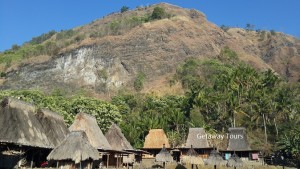
Located the closest to Mount Inerie, Tololela Hamlet offers a very amazing experience for travelers. Whether they want to feel the local culture, hospitality, local architecture, music, or even want to get away from mundane environment.
Administratively Tololela Hamlet is located in Manubhara Village, Jerebuu District in Bajawa. Just 29 KM distance from the city of Bajawa. To reach Tololela from Bajawa, it takes about 45 minutes drive until Bena Hamlet, and then walk about 15 minutes to Tololela. Other route is about 1 hour trekking.
Local people still maintain the indigenous architecture which already exist since thousand years ago. They use thatched for roofing and also room plan and decoration. The room has 1 room which is considered as sacred and private where the kitchen and other tools for hunting placed. This room is also a bedroom for the family. There is a living room where they accept guests and another room next to the private room located.

The door and wooden wall of the room is engraved with chicken, bull horn and dragon-like animals which has special meaning.
There are some activities to do in the village such as:
-Homestay
Visitors can stay overnight in the homestay which gives guest to mingle with locals. The locals are friendly and they do their daily activities such as going to farm, weaving and visitors can also hear about Tololela’s unique culture directly from the locals.
-Culinary
Tololela has some local menus and also fruits that are served or they can learn cooking as well.
-Bombardom Music
This bamboo instrument can only be found in Tololela hamlet. Usually played with bamboo flute orchestra. Both instruments creating very beautiful melody.
As other indigenous hamlet, located in the middle of the village are Ngadhu and Bhaga, small house-like building with different shape as symbol of men and women spirit, the number of Ngadhu and Bhaga show the number of ethnics living in the hamlet. There are also megalith tomb located in the center of the village. Bull horns slaughtered as sacrifice displayed in front of every house. To build a house, to find a wooden pillar, to decorate the house they must sacrifice pigs and bulls.
We went there invited by indecon and the village held ritual to welcome us. We entered the private room and as other village in Manggarai, a cock was given to the guest representative and then returned again to the village representative. The cock then slaughtered in the beak until it died. The woman of the house than took some blood by hand and swipe over some household items and spears in the room. The cock was then burnt to remove the feathers, and be cut to read the heart (intestine) of the cock.
Not long after the cock was cooked with coconut and served with red rice. We ate it using a hexagonal plate made of pandanus called beka. Along the meal, moke, local liquor is served in coconut.
Other traditional hamlets located nearby Mt Inerie are: Bena, Luba, and Gurusina.
Tololela undertakes Reba Ceremony annually on 28 December.
 Like last year event, this year this Java Sea Battle was undertaken on Express Bahari 1C. Bahari express led by Captain Sabarudin sailed to sea location , 06’00’ S.W/ 112’05’ EL, located 60 KM from Bawean Island. Depart at 09.00 AM from Sangkapura Port of Bawean, and arrival at sea location at 10.00 AM.
Unlike last year, this year’s event involved more local people. Local officials from Sangkapura and Tambak district were also attending the commemoration and gave speech. Some students from local primary school, SD Kota Kusuma and SD Sawah Mulia also attend this ceremony.
Mr. Joop Nahuijsen the founder and the initiator of VON gave the opening speech about the history of Java Sea Battle as the background of the commemoration. Afterwards Mr. Abdul Adim and Mr. Gatot Soebroto , respectively Sangkapura and Tambak district head delivered their appreciation that this event revealed the history of Bawean Island and what happened in the past that not many Baweanese knew before and they hoped that this event could benefit Bawean to be known more. The ceremony was hosted by Eko Londo.
The core of the ceremony was casting floral wreath to sea with message “Mariners Never Die, They Only Fade Away.” This year commemoration also gave special honor to some mariners died in the battle initiated by some families who could not participate in this event.
1) Jacob J.Bol ( sergeant of Hr.Ms “Kortenaer”)
2) Cornelis Boers (stoker 1 of Hr. Ms. “De Ruyter.”)
3) Antonie Nahuijsen (telegraphist “De Ruyter”)
In the commemoration, “Ayah” composed by Rinto Harahap as VON Song was played. Ceremony was then closed by moment of silence, playing The Last Post and closing speech by Mr. Joop Nahuijsen.