All posts by admin

Kraton Sumenep

Kraton Sumenep is located in Sumenep, Madura Island, East Java, covering 12 hectares and in the middle located Pendopo Agung with typical ornaments. A big banyan tree grows on the left side, makes the ambiance more sacred and strong. This palace looks like a gigantic photograph in a historical frame.

Although currently Keraton Sumenep is not used as a house for king and his royal family, but the building of more than 200 years, is very preserved. Bureaucratically, Sumenep has been changed and led by Bupati or regent after King Panembahan Notokusumo II (1854-1879). Other building in Keraton compound are not use danymore, except at the back side, facing north, and later used as Regent house. Pendopo is used as meeting venue for government, and also as venue for art and culture performance.

The building is still original only the floor has been renovated. Initially the floor was made of marble and now it is ceramic. The main building has 2 floors. The upper floor was used for princess before marry (pingit = 40 days isolated). There are 4 room at the first floor where king lived, each for king, queen, king’s father room and king’s mother room.

Generally, the architecture of Keraton Sumenep is a mix of European, Arab and China. European style can be seen from the pillars and the curve of ornaments. While Chinese style showed by engravings. The carving of Hong bird was the symbol of splendor that was considered as sacred by Chinese. There is also dragon symbolizes powerful and few pomegranates symbolize fertility, and also red and green color.

One of the palace architects was Lauw Piango, a Chinese, and he was buried in Asta Tinggi compound, where Sumenep kings and their family buried. It said that leader for the palace construction was Ka Seng An, and later the village where he lived was named as Kasengan.

In Sumenep history, king’s palace was moved from place to place. At the beginning, in the period of King Aria Wiraraja, from Singasari, Sumenep Keraton was located at Banasare village, Rubaru, and also had been moved to Dungkek village in the period of King Jokotole (1415-1460). Other regions indicated as Keraton Sumenep are Tanjung, Keles, Bukabu, Baragung , Kepanjing and other regions, before built the last site of Palace that can be seen today.

Panembahan Somala initiated to built Katemenggungan after war with Blambangan, in 1198 H. Keraton was finished in 1200 H or 1780. Not far from the palace located the Jami Mosque, that had been built since Pangeran Anggadipa  (1626-1644 M). The location is on the north of Keraton. THis mosque name is Masjid Laju (Madurese for old). This mosque was exclusively used by royal family. Right in front of the mosque, there is city square, now has been redesigned as flower garden. And at the south, located museum. The current fence is the remains of R Tumenggung Aria Prabuwinata period, before substituted by sharp spear iron, kraton fence was 2 meters high tick wall. The remains of fence can still be found behind kraton, in front of current regent house. The building used as Tourism Dept office was not part of kraton, it was known as Gedong Negeri, although it was located in kraton complex. This european style building built in 1931, in Dutch colonial era.

Air Mata Ibu Royal Cemetery, Bangkalan, Madura Island, East Java

There are numerous stories about love of a mother, and one of them is story from Air Mata Ibu Cemetery, in Madura. Believe it or not, the story will make us respect our parents more. The cemetery is located at Buduran village, Arosbaya district, Bangkalan, Madura. Situated only 11 km from Bangkalan City, the gate of Madura. To get to the cemetery we should step on stairs. This stairs is located 30 meters asl.

Ratu Ibu was a woman, her name was Sarifah Ambani. She was the descendant od Sunan Giri, and a very good wife, and loved her husband, King Cakraningrat, a very well respected king ruled Madura since 1624 under Sultan Agung from Mataram Kingdom. King Cakraningrat was known for his leadership. Sultan Agung Mataram needed King Cakraningrat to help him developing Mataram. Ratu Ibu was left alone often for his work and she felt sad for that.

Ratu Ibu preferred spending her time meditating and prayed that her husband would be save and healthy and their  seven generations would be the rulers of Madura. Oneday, King Cakraningrat returned to Madura, and Ratu Ibu was happy. She also told her husband that she prayed for their seven generations would be the rulers of Madura. King Cakraningrat was upset and disappointed for her prayer, as he did not want only seven generations, but all generations of him became the rulers of Madura.  Ratu Ibu felt guilty for that and sad, when her husband returned to Mataram for work, Ratu Ibu returned to meditate at Buduran village. During her meditation she weeped, until her tears inundated her meditation place, until she died.

In Buduran village also located the cemetery of Madura King from 16 to 19 century. They were the descendant of Ratu Ibu. The cemetery has interesting architecture and the stone  carving makes this cemetery atmosphere sacred and mystical. People flock to this place for pilgrimage.

Toroan Waterfall, Sampang, Madura Island, East Java

Toroan waterfall and beach are located at Ketapang village, Sampang, 4 km east of Ketapang or 88 KM from Kamal. The location is not far from road, only if you rise by motorbike, you should be careful as the track is very steep. Toroan waterfall is the only waterfall in Madura Island, the height is 10 meters.

The Waterfall is nice, especially when it is not dry season. This waterfall pours to the beach directly. It is surrounded by lush trees creating a comfy place to relax under the shade. Big rocks are all over the beach, looks very pristine.

Api Abadi Madura, Eternal Flame at Pamekasan, Madura Island, East Java

One of tourist attraction in Madura is located at Larangan Tokol village, Tlanakan, Pamekasan, 4 km south of Pamekasan. This place is very unique as there are only 2 places like this in Indonesia, an eternal flame. This flame is always on even in rain, the flame is circled by fence. This flame is located in middle of private land.

Once upon a time there was a boy learning Islam, his name was Hadagi and then he propagated Islam in Larangan Tokol village. For his knowledge people gave him nick name Ki Moko. Ki Moko married to a girl from Palembang and the dowry was fish eye he found in river, it was cat fish or juko ketteng in Madurese. When he dedicated the fish eye to his bride, the eye turned to be a pearl. On the wedding party, as it was dark, Ki Moko stick his cane to the ground. Miraculously, fire appear and that became eternal flame that we can see until today.

The flame region contains of sulfur and as it react with O2, resulting flame. There are two site where the flame appear, they are called as Apoy lake (Male Flame) and Apoy Bine (Female Flame). Not far from there there is a water that contains sulfur, but it was gone.

yang sebenarnya cukup unik tersebut.

Kyai Kholil Grave, Bangkalan, Madura Island, East Java

KH Muhammad Khalil bin Kiyai Haji Abdul Lathif bin Kiyai Hamim bin Kiyai Abdul Karim bin Kiyai Muharram bin Kiyai Asrar Karamah bin Kiyai Abdullah bin Sayid Sulaiman.
Sayid Sulaiman was the grandson of  Syarif Hidayatullah or Sunan Gunung Jati Cirebon. Syarif Hidayatullah was the son of Sultan Umdatuddin Umdatullah Abdullah that reigned Cam (Campa). His father was Sayid Ali Nurul Alam bin Sayid Jamaluddin al-Kubra.

KH. Muhammad Kholil was born in 1235 Hijriyah or January 27th 1820in Senenan, Kemayoran village, Bangkalan, Madura, East Java. He came from ullema family and his father sent him to various moslem boarding school. In 1850s, when he was 30 years old, Kyai MUhammad Nir at Pondok Pesantren Langitan, Tuban, East Java. And afterwards moved to Pondok Pesantren Cangaan Bangil, Pasuruan, Pondok Pesantren Keboncandi. During his school time he learnt from Kyai Nur Hasan and settled in Sidogiri, 7 km from Keboncandi. Kyai Nur Hasan actually was his relative.

When the student of KH MuhammadKholol, he had memorize the holy Koran. He could read Koran in Qira’at Sab’ah (seven ways in reading Koran). In 1276 H /1859, KH Muhammad Khalil studied in Mecca , one of his guru was Syeikh Nawawi al-Bantani (also the teacher of Banten ullemas). His guru were Syeikh Utsman bin Hasan as-Dimyathi,  Saiyid Ahmad bin Zaini Dahlan, Syeikh Mustafa bin Muhammad al-Afifi al-Makki, Syeikh Abdul Hamid bin Mahmud asy-Syarwani i.

When he was in Mecca, he worked to copy holy books for students. That was when the idea of writing the principle of pegon letter from Syeikh Nawawi al-Bantani, Kiyai Muhammad Khalil al-Maduri dan Syeikh Saleh as-Samarani. Pegon letter was arabic letter used in Javanese, Madurese and Sundanese language. Returning from Mecca,  he was popular for his Islam knowledge.

Later, he established Pondok Pesantren at Cengkebuan village, 1 km from his place of birth. He was also involved in fighting against Dutch. He was ever jailed by Dutch as accused protecting people who fought against Dutch.

According to KH Ghozi, in 10th November battle, Mbah Kholil with other ullemas such as Bisri Syansuri, Hasyim Asy’ari, Wahab Chasbullah and Mbah Abas Buntet Cirebon. He could throw gravel or corn and it fell and exploded. He was also known to be in two place as the same time. This was revealed when he was giving speech in front of his student, and suddenly, his cloth was  wet. His students were wondering why. Few months later, a fishermen came to visit Mbah Kholil and he said his gratitude as when his boat broke in the middle of ocean he was helped by him. That was the explanation why Mbah Kholil was wet on his speech. Students of Mbak Kholil that are popular are Kh Hasyim Asy’ari (the founder of  Pondok-pesantren Tebuireng, Jombang, and  Nahdhatul Ulama / NU), Kiyai Haji Abdul Wahhab Hasbullah (the founder of Pondok-pesantren Tambakberas, Jombang), Kiyai Haji Bisri Syansuri (the founder of Pondok-pesantren Denanyar); Kiyai Haji Ma’shum (founder of Pondok-pesantren Lasem, Rembang, father of ayahanda Kiyai Haji Ali Ma’shum), Kiyai Haji Bisri Mustofa (founder of Pondok-pesantren Rembang); and Kiyai Haji As’ad Syamsul `Arifin (the chairman of Pondok-pesantren Asembagus, Situbondo).

Kh Muhammad Khalil al-Maduri, died in 29 Ramadan 1342 or 14 May 1923.

Gunung Rahtawu: Rich of Sites from Mahabarata Epic, Kudus, Central Java, Indonesia

Behind this strange name, it has mysterious image and this mountain is popular as Wukir Rahtawu and the peak is Puncak 29/ Songolikur

Rahtawu is actually name of village on slope of Mt Muria, Gebog regency, and for Kudus locals, this mountain keeps mystery. For more than 30 years, Rahtawu was a name of isolated village, cars could not access the village. People should walk on foot for 5 km from Menawan village.

Though the location is not easily accessed, Rahtawu has its own attraction for pilgrims. Rahtawu is rich of wayang /mahabharata characters traces. They are Eyang Sakri, Lokajaya, Pandu, Palasara, Jonggring Saloko and Songolikur peak. This site is interesting for pilgrims from Java. In Rahtawu location, there was a taboo thing to do : performin shadow puppet show or wayang. Though there were many traves from Mahabarata, performing this show that usually plays Ramayana or Mahabharata is prohibited and no one break this. It said that if they break this, there will be disaster. So usually locals perform tayub.

Locals said that Rahtawu means scattered blood  (javanese). According to a myth, Wukir Rahtawu was the meditation site of Resi Manumayasa till Begawan Abiyoso, the ancestor of Pandawa knights. According to chronicle, Javanese kings’ ancestor were from Bharata dynasty.

Kaliandra Sejati

Kaliandra Sejati Foundation was founded by Atmadja Tjiptobiantoro, a Chinese Indonesia, a year after he retired, at the age of 53 in 1996, from the helm of PT Dwi Satrya Group of Companies, relinquishing his position as Group President Director, after having sold all his shares in the Group to his younger brother. This included shares in ICI Paints Indonesia.
Having considered that he had been fortunate with his life, he wanted to do something useful and meaningful, and decided to devote the rest of his life to share some of his good fortune with those who are less fortunate. Atmadja decided to build his home on the slopes of Mount Arjuna, although at that time he was offered a piece of land in Bali, which would be worth about 10x more in value. He chose to settle on the slopes of Mount Arjjuna as he felt that the surrounding communities needed help to improve their livelihoods. Mount Arjuna was also significant, as apart from its beauty, it is also the source of water supply to about 60% of the water needs for about 22 million people as well as habitats in East Java.
It was in 1997 that Kaliandra Sejati Foundation was formed. Also, to promote the rich Javanese culture and reminiscent of the Majapahit era, Kampung Bharatapura was developed, where the layout was reminiscent of the Majapahit era, and the buildings and cottages were designed using Javanese Architecture. Kaliandra became a centre for education of culture and nature. It developed into an eco-tourism resort, and further additions were made to the accommodation in the form of duplex bungalows further up the slopes of the Mountain. To complement the offerings of the resort, outbound, leadership
and team building programmes were developed, complete with high ropes course.
Cultural programmes such as teaching how to play the traditional Javanese musical instruments, Gamelan, was introduced together with art of batik painting and traditional Javanese dances. The intention of such a resort was to provide employment to the communities, and to generate income to fund the Foundation objectives, on a sustainable basis.

Actions taken by Kaliandra Sejati Foundation are illustrated the following examples:-
• A traditional Javanese Village set up at the Eco-Tourism resort, which largely employs the people from the villages. The buildings and cottages, even gardens and landscape are designed using Javanese Architecture. Programmes to promote the rich culture of East Java includes teaching of cultural dances, playing the Javanese Musical Instruments, batik printing using natural dyes, cooking of traditional foods, herbal drinks.
• All the plants, sculptures at our resort are given labels, providing information which includes the origins and some historical background.
• Mount Arjuna as a Tourism Area, with one of the Villages being declared as a Tourist Village
• Provide training for guides and mapping treks around Mount Arjuna so that there are choices of treks from one hour self guided treks to the more challenging 3 days trek up the mountain or around the mountain.
• Homestay Programmes
Conservation Projects including afforestration and reforestration, developing and implementing successfully the “Forest Parenting Concept” which is now adopted by the local Forestry Authorities.
• Organic Farming project with the communities, which supports the communities as well enriches the soils, curbs water and air pollution by not using harmful chemicals. This also provides for more sustainable income for the communities around Mount Arjuna so
that they do not have to depend on the forests on Mount Arjuna for their livelihood.
• Agroforestry Projects, which provides for more sustainable income for the communities and helps in conservation of the forests on Mount Arjuna.
• Bio-Gas Projects
Creating greater awareness on importance of environmental protection, conservation of the forests (with emphasis on Mount 6 Arjuna) through campaigns, use of both electronic, TV and printed media.
• Awareness Programmes on plants, forest conservation, forests habitats and animals
• Collaboration and partnership with other Organisations, both internationally and locally, to promote conservation and community entrepreneurship in order both help the communities and provide them with alternative income rather than living off the forest which cause deforestation
• Organising the communities and training for combat of forest fires.

At Kaliandra Sejati Foundation itself, eco-tourism resort, outbound and
leadership training programmes – about 70% of the jobs are held by the local
people.
• The home stay programmes involves 25 villages homes and their families
• The Organic Farming Project involves currently about 73 farmers and their families of the surrounding villages, and this is expected to expand further.
• The forest conservation project which uses the Forest Parenting concept which directly benefitted about 150 local people, which includes the mix crop planting, bio-gas project and agro-forestry projects. Through their association, there is a total of 400 members who also indirectly benefitted.
• The making of chips (potato chips, banana chips, jack fruit chips, etc), the raring of bees and production of honey, etc benefit many more locals. We also buy snacks and savories from the local communities for guests at the Resort.
• The development of Mount Arjuna as a Toursim area has resulted in the one of the Villages (Tambak Sari) being declared as a tourism village and this has benefitted the people of the village and the surrounding villages.
• The many activities organized to create greater awareness of the people on the importance of the Mount Arjuna, such as downhill cycling, cross country cycling, 5km Mount Arjuna Eco-Walk & Run, Trekking around Mount Arjuna has also benefitted the people.

Various Sources.

Kledung Pass: A Perfect Place to Relax, Central Java, Indonesia

Kledung is located in the border of Wonosobo-Temanggung, notable in the administrative area of Kledung Village, Kledung, Temanggung, Central Java, Indonesia. From Wonosobo it is just 17 Km and 22 km from Temanggung.  This region is located in elevation of 1700 m asl. With average temperature of 16-18 deg centigrade. The coldest period is during dry season from July to August when temperature can drop to 10 deg at night.

The scenery in Kledung is very nice, it is located right in the middle of two major mountains in Java, Mt Sumbing and Mt Semeru. Mt Sumbing (3371 m) on the south and Mt Sindoro(3153 m) on the north. Mt Sindoro has a small mount, local people call it as the daughter or Mt Sindoro, Mt Kembang 2339 m. Mt Sindoro and Mt Sumbing are popular climbers destination. Both can be climbed via Kledung and Garung.

From May to August, the slope of both mountain are green of tobacco plants. And during that season, local people will be busy harvesting and drying the tobacco under the heat of the sun. Go to the tobacco field and you can see farmers working on their fields.

It is superb there, especially on dry season when sky is blue, mountains is clear and the texture is visible. Sometimes we can see white hat of cloud above or on top of the summit of both mountains. Sunrise and sunset moment are pretty to look at too giving romantic feel for whoever enjoying it.
You can enjoy Kledung by stopping on the way from Jogja or Magelang to Dieng Plateau or you can even stay overnight in a hotel located here. There is a hotel located in this place with grandeur scenery overlooking to the mountain and tobacco field. And there are numerous restaurant located nearby the Kledung. Not far from Kledung, there is a tea plantation that is worth visit as well.

Pura Selaka Giri Alas Purwo, Banyuwangi, East Java, Indonesia

When Majapahit Kingdom fell down in the 14th century, Majapahit leaders said ” Majapahit might be destroyed, but wait until 500 years again, and the descendants will rise and ask for the former Majapahit territory”.
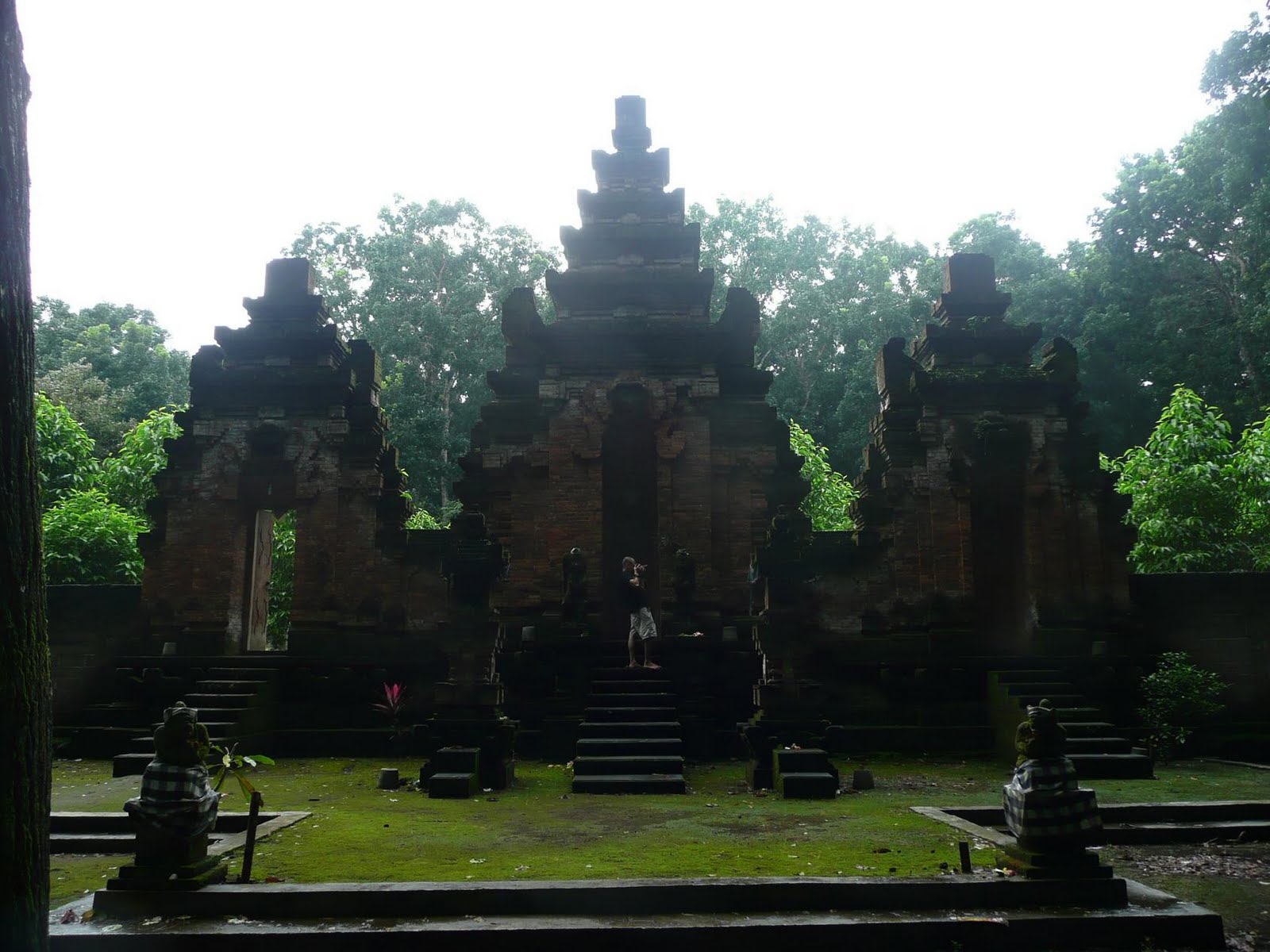
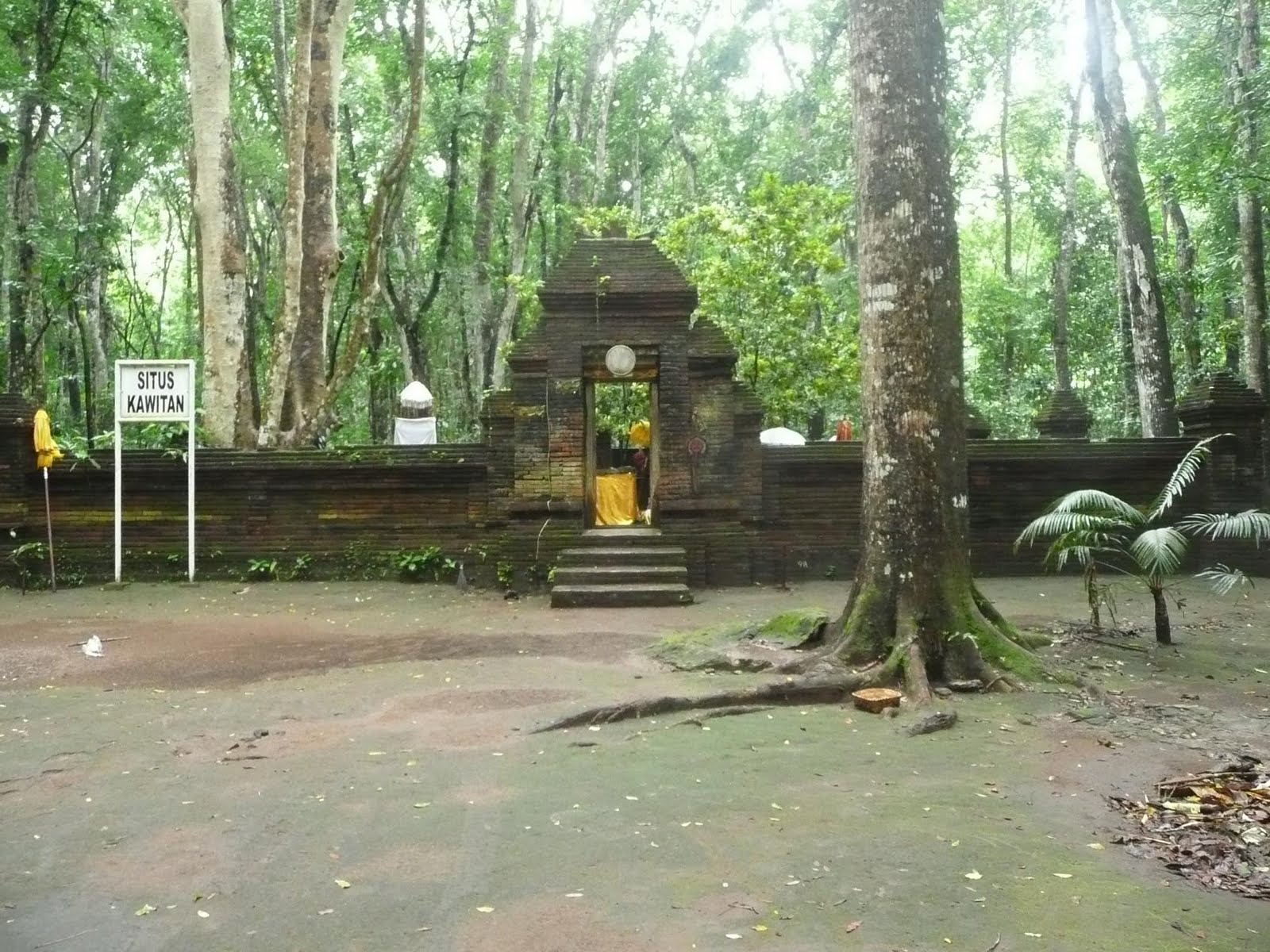
Alas Purwo is a lush forest, and a National Park and the Hindu temple, Pura Selaka Giri Alas Purwo is located one hour from the national park gate. On the left and right side of the road, there are teak trees and only few people live nearby. Hindu people in Tegaldlimo, Banyuwangi go to the temple by riding a traditional transport called grandong, resembles to truck only the machine used is gen-set.

Giri Selaka Temple is located in the middle of jungle, and about 3 km from beach, and no inhabitants there. The national park provides humble inn located one km from the temple. But Hindu people prefer staying at the temple area. The temple covers 2 hectares, given by forestry minister, the authority of national park.

According to elder of HIndu Tegaldlimo, Pemangku Ali Wahono, Pura Giri Selaka was found coincidentally by local hindu in 1967. People in Tegaldlimo, in that very time, was cultivating land around the national park, and a mound was found on where the current location of the temple. They would like to flatted the mound for agriculture but they discovered big blocks of bricks resembled to a small gate. Local people brought the blocks home and used it as house hold such as for fireplace. People that too the bricks got sick and they returned the bricks to its former place. It said that the bricks was the mark of Mpu Baradah site, though there is no record or inscription found about this. Other opinion said that it was Rsi Markandiya site before departing to Bali. Local people also believe that the power and the sacred of this site so they protect it. Archaeological service made effort this site as heritage. And on the other side, Hindu people in Mariyan, believe that that site was their ancestor’s. To avoid conflict, then Hindus built temple 65 meters from that site. And until today the site is remain the same and becomes shrine not only for Hindus. Since 1972, gradually,  Forestry and Plantation Dept policy to take back the region of Mariyan, and did reforestation with teak trees. And Alas Purwo was isolated again in the forest. But Forestry Dept allow people to enter the forest to pray or meditate.

Gunung Penanggungan, Mojokerto, East Java, Indonesia

Gunung Penanggungan is also called as the miniature of Mt Semeru as the summit is a barren. Its height is 1653 m asl, and the summit consists of rock and rarely overgrown by trees, that from far away it looks like a bald head. At night the temperature at the peak can reach to 10-15 deg while at day around 15 to 25 deg. There is a cave, Botol Cave, that was recently found located on Mt Penanggungan that can accomodate 15 people. The cave is located 500 m from the summit on the west direction. There are 2 entrances of the cave. One entrance from upper side. The cave room is in L shape. The entrance faces  north and south and 2 meters depth. This cave is used as shelter for climbers from wind, rain and cold temperature.

From the foot of Mt penanggungan there are several protected forest with trees such as jempurit, kluwak, ingas, kemiri, dawung, bendo, wilingo and jabon. Under the trees grow spices such as turmeric, laos, ginger, and smal flowers. The lush trees cause the area humid, sunlight does not shower the earth surface entirely. The slope is overgrown with Calliandra calothyrsus, Resap, Pundung and Sono. Red Calliandra dominates the slope, though it grows stunted in the middle of grass. On the top, there are only gebutan roots grow through hard rock of Mt Penanggungan.

Mt Penanggungan climbing route is flat, awry, hilly and has ravines. On the foot of the mountain, the track is flat for 2 km and then followed by 30 to 40 deg slope. On the middle of the route, the slope is very steep, 40 to 50 deg for 1 km. Closer to the summit, there are ravines of 50 60 deg, and rocky track fro 2 km. Then followed by avery steep, slippery, and slope track  of 60-80 deg for 1.5 km. At the summit, there are rocks and there is a 4 ha cavity, could be a inactive crater. The cavity can be used as camping site and suitable to enjoy beautiful night. To get to the summit of Mt Penanggungan, there are 4 climbing routes, via Trawas, Jolotundo, Ngoro and Pandaan. If climbers climb via Jolotundo and Ngoro, along the track will pass historical temples.

Trawas Climbing Route
To get to Trawas, from Surabaya or Malang, to Pandaan and then take minibus to Trawas. From Trawas, Mojokerto to Rondokuning village (6 km) by 2 wheels or 4 wheels vehicle. From Rondokuning passing footpath natural forest for 3 hours and along the track there are scenery among calliandra trees, and summit of Mt Bekel, the child of Mt Penanggungan looks very spooky. Houses, factories, sawah can be seen down the mountain.

Jolotundo Route

To reach to Jolotundo from Trawas, we should take another minibus for 9 km. Jolotindo village is one of villages located nearby Mt Penanggungan. This route takes 3 hours to top through jungle and 40 deg slope through narrow path. On the left and right side there are big tress, and be careful here as sometimes will make you lost. After hiking for an hour, there are lush calliandra trees and the track is steep. 30 minutes later, passing Batu talang, a 7 km long rock from the neck of Mt Penanggungan to Jolotundo village and Balekambang village.  From Batu Talang, then proceed deeper to calliandra forest, after 300 meters, you will arrive at Candi Putri remain from Airlangga period in non-intact condition with size of 74×74 m. Candi Putri is surrounded by lush  calliandra forrest. 200 meters from Candi putri, located Candi Pure, a temple made of andesit blocks.  150 meters from Candi Pure lies Candi Gentong, where there is located a table and a barrel made of andesit blocks..  Gentong (barrel)  is 40 cm diamete on its lip and 90 cm on its middle and 15 cm thick. And the table is 175 smx 100 cm and 125 cm high. 50 meters from Candi Gentong located Candi Shinto. This temple is a bad condition with size of 6mx 6 mx 3m and located in area of Seloliman. After passing 300 meters through forest , there are another temple Candi Carik and Candi Lurah, and the the summit of Mt Penanggungan. 

Ngoro Route

To reach Ngoro can be via Pandaan or Mojokerto. The village to start climbing is Genting village, where climbers should pass through forest and thenpassing Candi Wayang and after 2 km there is a very steep track of 70-80 deg. This route is more difficult than via Jolotundo.