Wali Songo are saints disseminated Islam in Indonesia especially in Java Island. They lived on the northern coast of Java from 15th century until the mid of 16th century in Surabaya-Gresik-Lamongan in East Java and Demak-Kudus-Muria in Central Java and Cirebon in West Java.
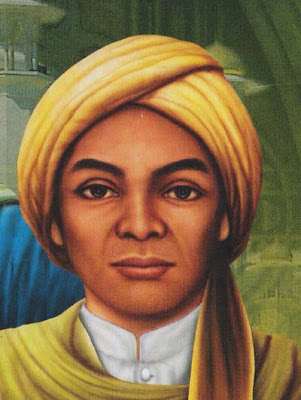
.jpg) They were intellectual and reformer in society in their period. They introduced new civilization: health, farming, trading, culture, arts, and government science. Ampel Denta and Giri Moslem Boarding school were two education institution in Indonesia. Sunan Giri and Sunan Gunung Jati were not only ullema but also government leader. Sunan Giri, Bonang and Kalijaga and Kudus were arts creator and their influenced can still be felt until today. Sunan Muria was the companion of proletariat. Wali Songo era ended Hindu-Budda domination in Indonesia culture and replaced with Islam culture. They are symbol of Islam dissemination in Indonesia, especially in Java. There were other figures involved, only their roles were dominating in erecting Islam kingdoms in Jana, and they put influence in culture to society and they directly propagate Islam that their name were known better. Maulana Balik Ibrahim was the doctor of Majapahit Hindu Kingdom, Sunan Giri known was called as Pope from East by colonialist, Sunan Kailjaga created arts that Islam can be comprehend by Hindu and Budha society. Perhaps most people define wali songo as 9 saints, but there were long history about wali songo with few phases.
They were intellectual and reformer in society in their period. They introduced new civilization: health, farming, trading, culture, arts, and government science. Ampel Denta and Giri Moslem Boarding school were two education institution in Indonesia. Sunan Giri and Sunan Gunung Jati were not only ullema but also government leader. Sunan Giri, Bonang and Kalijaga and Kudus were arts creator and their influenced can still be felt until today. Sunan Muria was the companion of proletariat. Wali Songo era ended Hindu-Budda domination in Indonesia culture and replaced with Islam culture. They are symbol of Islam dissemination in Indonesia, especially in Java. There were other figures involved, only their roles were dominating in erecting Islam kingdoms in Jana, and they put influence in culture to society and they directly propagate Islam that their name were known better. Maulana Balik Ibrahim was the doctor of Majapahit Hindu Kingdom, Sunan Giri known was called as Pope from East by colonialist, Sunan Kailjaga created arts that Islam can be comprehend by Hindu and Budha society. Perhaps most people define wali songo as 9 saints, but there were long history about wali songo with few phases.
First Phase of Wali Songo
Islam has become a religion in Indonesia especially in Java, but i that period only limited to traders married to locals staying nearby harbors. Majapahit and pajajaran Kingdom were very strong, and they were Hindu. This situation was heard by Sultan Muhammad I, who ruled Turk. He then sent message to Islam kingdom in north Africa and Middle East. He asked ullema to disseminate Islam in Java. The message was responded well, and there were 9 ullemas with good Islam knowledge. In 808 H or 1404, those ullemas went to Java. They were;
1. Maulana Malik Ibrahim, from Turk. He disseminated Islam in East Java, he died in Gresik in 1419. He was buried one km from Gresik cement factory.
2. Maulana Ishak came from Samarqand (nearby Bukhara-South Russia). He was a doctor and after his duty in Java finished he moved to Pasai and died there.
3. Maulana Ahmad Jumadil Kubra came from Egypt, he itinerant disseminated Islam and died in Troloyo Mojokerto, Trowulan, East Java.
4. Maulana Muhammad Al Maghrobi, was from Maghrib or Morocco, he did itinerant propagation , died in 1465 and buried in Jatinom, Klaten , Central Java.
5. Maulana Malik Isroil came from Turk, he was an expert of Government science, died in 1435 and his grave is located in Gunung Santri.
6. Maulana Muhammad Ali Akbar came from Persia (Iran), he was a doctor, died in 1435 and buried in Gunung Santri.
7. Maulana Hasanuddin came from Palestine, died in 1462 and his grave is located in Banten.
8. Maulana Alayuddin came from Palestine, died in 1462 and his grave is nest to mosque of banten Lama.
9. Syekh Subakir came from Persia and he was an expert of rukyah for places with ghosts. He got rid of ghosts and the neutral lands were built moslem boarding school. He returned to Persia in 1462 and died 1462 and died there. One of his follower was buried on the north of Blitar bathing place. There is sajaddah made of old stone there.
Second Phase of Walisongo
In this phase, there were two wali replaced 2 wali who died. They are:
1. Raden Ahmad Ali Rahmatullah, came to Javain 1421 replaced Malik Ibrahim who died in 1419. raden Ahmad came from Campa, South of Muang Thai.
2. Sayyid Ja’far Shodiq came from palestine replaced Malik Isro’il who died in 1435. He lived in Kudus and known as Sunan Kudus.
3. Syarif Hidayatullah, came from Palestine came to Java in 1436 replaced Maulana Ali Akbar who died in 1435.
Meeting of Walisongo was held at Ampel, Surabaya. All wali shared assignment. Sunan Ampel, Maulana Ishaq and Maulana Jumadil Kubro were assigned in East Java. Sunan Kudus, Syekh Subakir and Maulana Al Maghrobi were assigned in Central Java, Syarif Hidayatullah, Maulana Hasanudin and Maulana Aliyudin were assigned in West Java.
Third Phase of Walisongo
In 1463 M, there were 4 wali became the member of Walisongo
1. Raden Paku or Syekh Maulana Ainul Yaqin was born in Blambangan, East Java, the son of Syekh Maulana Ishak that married to the daughter of Blambangan KIngdom, Dewi Sekardadu or Dewi Kasiyan. Raden paku replaced his father and moved to Pasai. As Raden Paku lived in Giri, he then known as Sunan Giri, and his grave is located in Gresik, East Java.
2. Raden Said or Sunan Kalijaga was born in Tuban East Java, the son of Adipati Wilwatika of Tuban. Sunan Kalijaga replaced Syekh Subakir who returned to Persia.
3. Raden Makdum Ibrahim or Sunan Bonang, replaced Maulana Hasanuddin who died in 1462. This meeting was held also in Surabaya.
The Fourth Phase of Wali Songo
In 1466, there were 2 wali replaced two wali who died:
1. Raden Fattah (Raden Patah)
Raden Patah was the student of Sunan Ampel, the son of King Brawijaya from Majapahit. On 1462, he was promoted as Adipati Bintoro and built Masjid Demak in 1465 and in 1468 he was officially the sultan of Demak.
2. Fathullah Khan was the son of Sunan Gunungjati, he was chosen as the member of Walisongo to replace his father who was old.
The Fifth Phase of Walisongo
In this phase, there were two members, Raden Umar Said the son of Sunan Kalijaga who passed away. Syekh Siti Jenar or Syekh Lemah Abang was one of Walisongo members but as later he taught things that made people anxious then he was punished dead. Siti Jenar was replaced by Sunan Bayat, the former Adipati of Semarang (Ki Pandanarang) the student of Sunan Kalijaga.
MAULANA MALIK IBRAHIM
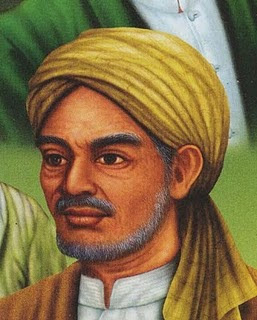 Maulana Malik Ibrahim or Makdum Ibrahim As-Samarkandy was estimated to be born in Samarkand, in muddle Asia, in the mid of 14th century. According to chronicle of Babad tanah Jawi, Meinsma version, Samarkandy was called as Asmarakandy, as it was ueasy pronunce by Javanese. Maulana Malik Ibrahim sometimes was called as Syekh Maghribi. People also called him as Kakek Bantal. He was the brother of Maulana Ishak, well-known ullema from Samudra pasai, the father of Sunan Giri or Raden Paku. Ibrahim and Ishak were the son of Persian Ullema, Maulana Jumadil Kubro living in Samarkand. Maulana Jumadil Kubro was believed to be the 10th descent of Sayyidina Husein, Muhammad SAAS grandson. Maulana Malik Ibrahim ever lived in Campa, now Cambodia, for 13 years since 1379. He married to daughter of king and had 2 sons, Raden Rahmad or Sunan Ampel and Sayid Ali Murtadha or Raden Santri. After finishing his mission in that country, in 1392 Maulana Malik Ibrahim went to Java, he left his family, according to a version he went to Java with few fellows. He first went to Sembalo village, part of Majapahit. sembalo village is currently Leran village, Manyar 9 km from Gresik. His first activity was trading by opening a stall. He sold cheap basic daily needs. Malik Ibrahim also healed locals for free. As traditional healer, he was also invited by king to heal his wife who came from Champa. Probably she was the relative of king’s wife. Mbah Bantal also taught how to do farming and he was close to the lowest kasta in Majapahit. He built a boarding achool in Leran, and in 1419 he passed away. His grave is located at Gapura village, Gresik, East Java.
SUNAN AMPEL
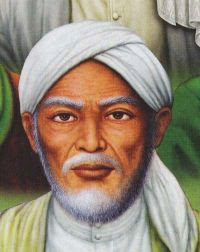 He was the son of Maulana Malik Ibrahim. According to Babad Tanah Jawi chronicle and pedigree of Sunan Kudus, in his childhood, he was known as Raden Rahmat. He was born in Campa in 1401. Ampel name derived from place or village where he lived, in Ampel Denta, part of Surabaya. Few versions say that Sunan Ampel entered Java in 1443 with Sayid Ali Murtadho, his brother. In 1440, before he went to Java, they stopped by at palembang. After 3 years in Palembang, they arrived in Gresik. He then proceed to Majapahit to meet his auntie, a princess from Champa, Dwarawati, who married to king of Majapahit, Prabu Sri Kertawijaya. Sunan Ampel married to a daughter of Adipati Tuban, and he had several sons and daughters, such as Sunan Bonang and Sunan DRajat. When Demak Sultanate (25 km from Kudus) was established, Sunan Ampel was involved the erection of the first Islam kingdom in Java. He appointed his student, Raden patah, son of Brawijaya V, king of Majapahit to be the sultan of Demak in 1475. Ampel, a swamp region was given by king of Majapahit to Sunan Ampel and built boarding school. In the mid of 15th century, the school became center of education in Indonesia and vicinity. Sunan Giri and Raden Patah are two of the students. Students then appointed to disseminate Islam in Java and Madura. Sunan Ampel followed Hanafi Mazhab, yet his students were only given simple lessons in aqidah and ibadah. He introduced MoLIMO term (moh main, moh ngombe, moh maling, moh madat, moh madon), motto to avoid gambling, drinking, stealing, using drug and adultery. Sunan Ampel died in 1481 in Demak and buried on the west of Masjid Ampel in Surabaya.
SUNAN GIRI
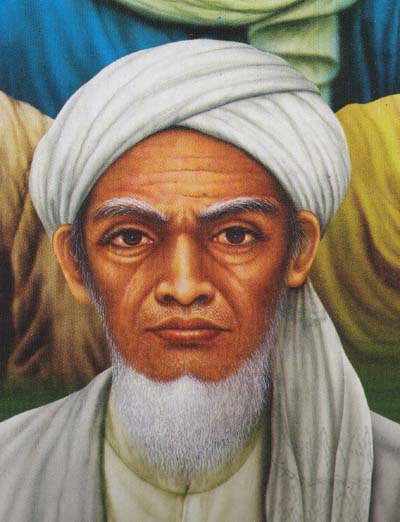 His childhood name was Raden paku, or Muhammad Ainul Yakin. Sunan Giri was born in Blambangan (now Banyuwangi) in 1442. He was also known as Jaka Samudra. His latter mentioned name was related to a name from his childhood of being thrown away by his mother family, Dewi Sekardadu to the ocean (Samudra).
Raden Pake was adopted by Nyai Semboja, according to Meinsma Babad Tanah Jawi. His father Maulana Ishak, was the brother of Maulana Malik Ibrahim. Maulana Ishak could make his wife to convert Islam, but not his parents in law. He then left his family to Samudra Pasai. When he was young, he studied in his cousin boarding school, Sunan Ampel, where Raden Patah also did.He also went to Malaka and Pasai as well. Later he opened new boarding school on hills in Sidomukti village, south of Gresik. IN Javanese hills is Giri then later he is known as Sunan Giri. His boarding school was not only used as education center but also means to develop locals. King of Majapahit worried that Sunan Giri would rebel so he gave him more authority. The boarding school evolved as one of the center of power known as Giri Kedhaton. As the leader Sunan Giri also called as Prabu Satmata. Giri Kedhaton flourished to be politics center in Java in that period. When Raden Patah quit to be part of Majapahit, Sunan Giri was appointed as the adviser and general of Demak Sultanate. Sunan Giri was also recognized as the highest religion leader in Java. Giri Kedhaton could survive for 200 years, one of the predecessor was Pangeran Singosari, known as fighter against VOC and Amangkurat II in the 18th century. All students in Giri school were also known as Islam propagator in other islands such as Bawean, Kangean, Haruku, Ternate, to Nusa Tenggara. Islam missionaries were also went to South Sulawesi, they are Datuk Ribandang and his friends, who were the students of Sunan Giri from Minangkabau. Sunan Giri was known to have good Fiqh knowledge, people called him as Sultan Abdul Fakih. He created arts, children games, sucha s Jelungan, Jamuran, Ilir ilir, and cublak cublak suweng. He also created Asmaradana and Pucung,Javanese tradition with Islam nuance.
SUNAN BONANG
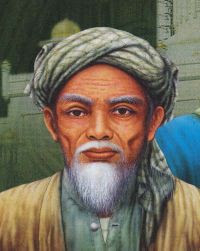 Sunan Bonang was the son of Sunan Ampel, the grandson of Maulana Malik Ibrahim. His childhood name was Raden Makdum Ibrahim. He was born in 1465, his mother was Nyi Ageng Manila, daughter of Adipati Tuban. Sunan Bonang studied religion from his father Sunan Ampel. After he grew up, he disseminated Islam all over Java. He went to Kediri that the majority of the inhabitants were Hindu. He built Masjid Sangkal Daha. He settled in Bonang a small vilklage in Lasem, Central Java, 15 km from Rembang. He built zawiyah and a boarding school , Watu Layar. He later was known as the imam of Demak Sultanate and even the general. Still, Sunan Bonang went to difficult and remote places in Tuban, pati, Madura and Bawean. He died in this island in 1525, and then buried in Tuban next to Masjid Agung after Bawean and Tuban fought for his corpse. Unlike Sunan Giri who introduced assertive Fiqh, Sunan Bonang blended ahlussunah with tasawuf style to ortodox salafiah. He mastered Fiqh, Usuludin, Tasawuf, Arts, Literature and Architecture. Locals knew him as expert to find water source in barren regions. Sunan bonag teachings was about love philosophy, similar that of Jallaludin Tumi. According to Bonang, love is same as iman /faith, intuitive knowledge and obedient to Allah SWT or has al yaqqin. His teaching was conveyed popularly through arts media that are loved by people. Sunan Bonang hand in hand with his students Sunan Kalijaga blend Islam teaching and arts and traditions. Sunan Bonang created few masterpieces one of them is Suluk Wijil influenced by Al Shidiq book by Abu Sa’id Al Khayr from 9th century. Sunan Bonang also created Gemalan Java music that was very influenced with Hindu culture, he created the recent Gamelan Jawa and he invent bonang instrument in gamelan. His masterpiece had dzikir nuance to create love to transcendental life. Tombo Ati song was also one of his songs. IN wayang performance, Sunan Bonang was a very good dalang and he loved to create play with Islam nuance. War between Pandawa and Kurawa was then translated as war between nafi (negation) and isbah (affirmation)
SUNAN DRAJAT
 His childhood name was Raden Qasim, the son of Sunan Ampel, the brother of Sunan Bonang. Sunan Drajat title was Raden Syaifuddin, and born in 1470. Sunan Drajat was assigned by his father to preach on the coastal of Gresik through sea. He was then arrived in Jelog village(currently Lamongan). One year later Suna Drajat moved 1 km southward and established Dalem Duwur, currently known as Drajat village, Paciran Lamongan. He taught with tauhid and aqidah method, as his father did and did not employ traditional culture. He used Suluk art and he created few suluk, such as Suluk advice ‘ give stick to the blind/give food to the hungry people/give cloth to naked people. Sunan Drajat was well known as a humble person and very helpful. He had many orphans and poor people in his house.
SUNAN GUNUNG JATI
 There are numerous non sense story related to Sunan Gunung Jati, one of then was his spiritual trip, like Isra Mi’raj and met Rasullulah Saas, Prophet Khidir, and received testament from Solomon. Those stories showed how amazed people to Sunan Gunung Jati. Sunan Gunung Jati or Syarif Hidayatullah was born in 1448.His mother was Nyai Rara Santang, daughter of Pajajaran King, Raden Manah Rarasa. His father was Sultan Syarif Abdullah Maulana Huda, Egipt officials from Hasyim tribe from Palestine. Syarif HIdayatullah learned religion since he was 14 years from Egypt ullema. He traveled to various countries.
He then establish sultanate in Cirebon known as Pakungwati Sultanate after Demak Sultanate was established. Sunan Gunung Jati was the only walisongo led a government. Sunan Gunung Jati used his power as son of King Pajajaran to disseminate Islam frm Cirebon littoral to Sunda or Priangan. He convert middle east style of preaching. But he also approached locals by building infrastructure , roading to connect regions. With his son Maulana Hasanuddin, Sunan Gunung Jati did expedition to Banten. Local ruler, Pucuk Umum, voluntarily gave his region and later became Banten Sultanate. When he was 89 years old, Sunan Gunung Jati resigned from his position and only only preached. He gave his authority to Pangeran pasarean. In 1568, Sunan Gunung Jati died in the age of 120 years, in Cirebon (formerly Carbon). He was buried in Gunung Sembung, Gunung Jati, 15 km from Cirebon city.
SUNAN MURIA
 He was the son of Sunan Kalijaga with Dewi Saroh, sister of Sunan Giri and the son of Syekh Maulana Ishak. His childhood name was Raden Prawoto. Muria name was used as he lived on the slope of Gunung Muria, 18 km north of Kudus. His teaching was like his father, Sunan Kalijaga only he loved to live in a remote place to spread Islam. He mingled with proletariat, taught farming, trading and fishing was one of his hobbies. Sunan Muria often asked to be intermediary in an internal conflict in Demak Sultanate (1518-1530). He was known as a person could solve the most difficult problem and solution he suggested could be accepted by both partied. Sunan Muria preached in Jepara, Tayu, Juana to Kudus and Pati. He created songs such as Sinom and Kinanti.
SUNAN KUDUS
 His childhood name was Jaffar Shadiq. He was the son of Sunan Ngudung with Syarifah the sister of Sunan Bonang, Nyi Ageng Maloka. Sunan Ngudung was one of Sultan sons in Egypt ad traveled to Java. In Demak he was promoted as commander. Sunan Kudus studied from Sunan Kalijaga. And he traveled to various barren regions in Central Java such as Sragen, Simo to Gunungkidul. He followed the approach Sunan Kalijaga used to preach, very tolerant to local culture. He was very gentle in preaching, he used also the symbol if Hindu and Buddha in his method. This can be seen from the architecture of Masjid Kudus. The same of the minaret, gate and tap were HIndu Buddha building style. Sunan Kudus was very compromised. Oneday he persuaded people to go to mosque by his tabligh. For that he put his cow, Kebo Gumarang, on the mosque yard. Hindu people who worshipped cow became sympathy, moreover when they listened to Sunan Kudus explanation about Al Baqarah verses means female cow. Until today, Kudus people refused to slaughter cow. Sunan Kudus also created tauhid fictions. He made the story in series, that people were interested to know the sequels. This approach is similar that of 1001 nights story in Abbasiyah Caliphate. Sunan Kudus created a close bound to locals and he was also the commander of Demak Sultanate. He was involved when Demak was in war with Adipati Jipang, Arya penangsang, led by Sultan Prawata.
SUNAN KALIJAGA
 He was the most mentioned wali by Javanese. He was born in 1450, his father was Arya Wilwatikta, Tuban regent, descendant of Majapahit rebel, Ronggolawe. Arya Wilwatikta was estimated to convert moslem already. His childhood name was Raden Said. His other names were Lokajaya, Syekh Malaya, Pangeran Tuban or Raden Abdurrahman. There are few version about Kalijaga name derives from. Cirebon people said that Sunan Kalijaga lived in Cirebon and was very close to Sunan Gunung Jati. Javanese related his hobby to soak in river (kali) or jaga kali. But there was a term from arab, qadli dzaqa refers to his holy status as holy prince. He lived until more than 100 years that he was still alive in the end of Majapahit empire in 1478, the end of Demak sultanate, and Cirebon and banten Sultanate, even Pajang Kingdom established in 1546 and the beginning of Mataram Kingdom led by Panembahan Senopati. He was involved in designing Masjid Agung Cirebon and Masjid Agung Demak. The ‘tatal’ pillar was one of main pillars of the mosque and the creation of Sunan Kalijaga. He was the mentor and close friend of Sunan Bonang. He followed Sufism with salaf base, not Pantheistic Sufism. He prefered arts and culture as media to preach. He was very tolerant to local culture and tradition. His opinion was that society would be distance if their principles attacked. They should be approached gradually. Sunan kalijaga believed that if Islam was comprehended, they would leave the old habit. Suna Kalijaga may look liek syncretism in introducing Islam. He used carving arts, wayang, gamelan, sekaten celebration, grebeg maulud, layang kalimasada, and play Petruk Dadi Raja. City landscape with kraton, alun-alun with banyan trees and mosque was estimated to be crated by Sunan Kalijaga. His teaching method was effective for Javanese. Most of Javanese converted Islam by Sunan Kalijaga, such as Adipati Pandanaran, Kartasura, Kebumen, Banyumas, and Pajang. Sunan Kalijaga was buried in Kadilangu village, Demak.

 In 2003, UNESCO stipulated that wayang is world heritage from Indonesia. Wayang as the oldest original culture from Indonesia was mentioned in history sources such as inscriptions.
 There are two opinions about the history of wayang. First opinion, wayang was originally born in Java, notably in East Java. This opinion was stated by researchers and experts from Indonesia and also from western countries. Among experts stated this opinion were Hazeau, Brandels, Kats, Tentse and Kruyt. They have strong reasons, one of them is that wayang art was very closely related to Indonesian socio cultural and religion, especially with Javanese. Punokawan characters, important characters in wayang, Semar, Gareng, Petruk, Bagong are only exist in Indonesian wayang, and their names derive from old Javanese.
 Islam entered Indonesia since 15th century and gave big influence to wayang tradition especially for religion and philosophy of wayang. In the 15th century, in the period of Demak Kingdom, oil lamp (blencong) was started to use in wayang show. Since kartasura period, wayang story based on Ramayana and Mahabarata was getting farther from the original story. Since then wayang lovers knew the pedicree of wayang characters, including the gods characters that began from Prophet Adam. The pedigree then continued until Java kings and later known a standard of wayang story or pakem. Standard of wayang should follow the standard story and wayang carangan is wayang outside the standard story. Also known lakon sempalan, wayang story class that is very far from the pakem or standard.
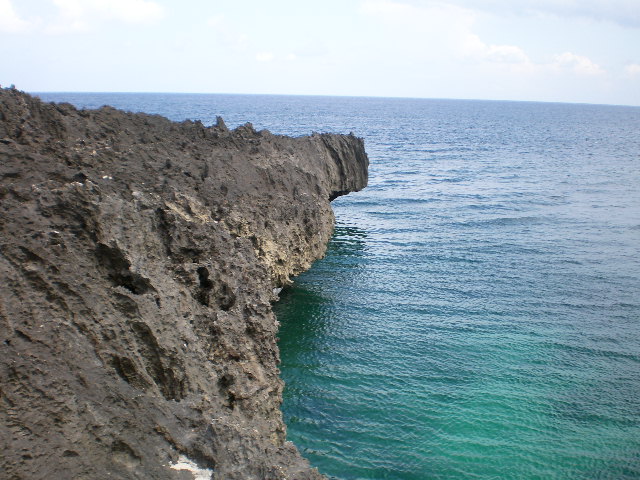 Bawean is similar like Lombok Island, it has few small island nearby, few can be crossed by boat and few can be crossed on foot when tide is low.