Category Archives: Indonesia Blog

Tado Village, Flores : Where you can find true hospitality.

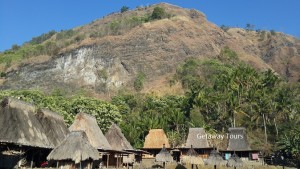
Tado is located not far from Labuan Bajo, only about 45 minutes’ drive.  Though this village is unlike Wae Rebo in term of original housing architecture and landscape, yet this village is very unique.

The locals has some interesting things offered for visitors such as traditional medicine, traditional oil light, pandan weaving, bamboo basket, ancestral spiderweb rice field.

Houses in tado do not use reed as roof anymore due to its shortage. Though using tin roof, they still maintain using bamboo wall. Usually every house has mango  and  cashew tree.

Arrival in the village visitors will be accepted by locals, and hand over white cock to the locals representative. At night visitors can have dinner outside under the moon and starts with traditional oil light made of kapok and hazelnut oil. And local snack is served, called songkol, made of cassava, coconut and red sugar.

Lingko or ancestral spiderweb ride field is located not far from the village. You can see the spider web formation from up the hill, called Golowesa. It takes about 1 hour trek to the view point. Enroute local guide will tell about trees in the forest used for medicine or even for vegetables.  Tado is known for its medicine, and one of the most popular is appendix cure. Trekking is best to do before 6 am when the weather is still mild.

Visitors can stay overnight at homestay, local family houses which are already prepared for visitors. There are about 10 families can accept guest. The room is comfy enough equipped with mosquito’s net.

Locals make pandan weaving such as mat and hat, earthen wares, teak serving spoon, traditional insects repellent,  palm fiber ropes.
Currently the village generates electricity from solar panel.

Wae Rebo Hamlet, Flores, Indonesia: Naturally, Culturally Exotics.

WAEREBO HAMLET

6) Wae Rebo
Wae Rebo hamlet is now popular as one of destinations in Flores Island. The hamlet is very unique for its housing, isolated location and its indigenous culture is well- maintained. Administratively Wae Rebo is located in Satar Lenda Village, Satarmese district, of West Manggarai.

The closest village to Wae Rebo is Denge. Yet I think the best option to stay before hiking to Wae Rebo is Wae Rebo Ecolodge located in Dintor. As the location of Wae Rebo is far from schools, Wae Rebo villagers have second home located in Kombo Village, that is where children stay during weekdays for school and return to Wae Rebo on weekend.

7) Wae Rebo

Currently road from Denge to Wae Lomba is being constructed, that maybe next year 2016, no need to trek from Denge to Wae Lomba anymore and only from Wae Lomba to Wae Rebo, (about 04 KM). The route is forest, some steep, some are not and normally can be reached by 3-4 hours trek. If you do not bring enough water, you can take water in Wae Lomba, there is a very clear and clean water running there. The long and tough track is paid well when reaching Wae Rebo Hamlet, seven houses of cone shape called as Niang. The village is located in the middle of a bowl surrounded by mountains.

Upon arrival visitors will be accepted by locals, which cock should be given to locals by guests. This ceremony has existed since hundreds years ago. After the ritual, visitors can precede their activities in Wae Rebo, as they are already accepted officially and protected by the locals.

8) Wae Rebo

Visitors can sleep in Niang prepared special for visitors, where mat, pillow and blanket are provided. Do not worry, Niang is equipped with shared bathroom as well. All meals are served in Niang on pandanus mat with local produced food.

Menus served are local product, such as vegetable and chicken. And you can have local coffee here. Interestingly, there are 3 species of coffee in Wae Rebo: Robusta, Arabica and Kolumbia. You can also buy Luwak Coffee. Coffee is already packaged as part of community based tourism.

In Niang also prepared local products such as weaving, local honey (Madu Ruang), Mat, other weaving products and coffee.
Visitors can see the activities of local accompanied by local guide, such as: Village tour to see weaving, coffee tour, and Mbata Performance.

Coffee tour will take visitors to the coffee plantation, to know more about how local pick coffee, process coffee, coffee season. The guide will show the difference between Robusta, Kolombia and Arabica Coffee. How those coffee should be treated differently to get good coffee. Local people put coffee beans they harvest in a roto, pandan weaving bag. The coffee beans then dried. Afterwards then roasted on an earthen wares until it dries perfectly and tastes good. Women of Wae Rebo pound the beans using wooden mortar and pestle.
Local honey called Madu Ruang is collected from forest. Best harvest time is in rainy season, it is found under the ground. Visitors can buy Madu Ruang in Niang.

Mbata is a special performance by men with drum instruments consists about 6 persons. The lyrics in Mbata performance contains local wisdom and advice handed down from parents to young generation. It says that father plays Mbata usually to calm crying children.

Tololela Hamlet, Flores, Indonesia: Experience The Exotic Life You Will Find Nowhere Else

TOLOLELA HAMLET

() Tololela

Located the closest to Mount Inerie, Tololela Hamlet offers a very amazing experience for travelers. Whether they want to feel the local culture, hospitality, local architecture, music, or even want to get away from mundane environment.

Administratively Tololela Hamlet is located in Manubhara Village, Jerebuu District in Bajawa. Just 29 KM distance from the city of Bajawa. To reach Tololela from Bajawa, it takes about 45 minutes drive until Bena Hamlet, and then walk about 15 minutes to Tololela. Other route is about 1 hour trekking.

Local people still maintain the indigenous architecture which already exist since thousand years ago. They use thatched for roofing and also room plan and decoration. The room has 1 room which is considered as sacred and private where the kitchen and other tools for hunting placed. This room is also a bedroom for the family. There is a living room where they accept guests and another room next to the private room located.

Tololela2

The door and wooden wall of the room is engraved with chicken, bull horn and dragon-like animals which has special meaning.

There are some activities to do in the village such as:

-Homestay
Visitors can stay overnight in the homestay which gives guest to mingle with locals. The locals are friendly and they do their daily activities such as going to farm, weaving and visitors can also hear about Tololela’s unique culture directly from the locals.

-Culinary
Tololela has some local menus and also fruits that are served or they can learn cooking as well.

-Bombardom Music
This bamboo instrument can only be found in Tololela hamlet. Usually played with bamboo flute orchestra. Both instruments creating very beautiful melody.

As other indigenous hamlet, located in the middle of the village are Ngadhu and Bhaga, small house-like building with different shape as symbol of men and women spirit, the number of Ngadhu and Bhaga show the number of ethnics living in the hamlet. There are also megalith tomb located in the center of the village. Bull horns slaughtered as sacrifice displayed in front of every house. To build a house, to find a wooden pillar, to decorate the house they must sacrifice pigs and bulls.

We went there invited by indecon and the village held ritual to welcome us. We entered the private room and as other village in Manggarai, a cock was given to the guest representative and then returned again to the village representative. The cock then slaughtered in the beak until it died. The woman of the house than took some blood by hand and swipe over some household items and spears in the room. The cock was then burnt to remove the feathers, and be cut to read the heart (intestine) of the cock.

Not long after the cock was cooked with coconut and served with red rice. We ate it using a hexagonal plate made of pandanus called beka. Along the meal, moke, local liquor is served in coconut.

Other traditional hamlets located nearby Mt Inerie are: Bena, Luba, and Gurusina.

Tololela undertakes Reba Ceremony annually on 28 December.

THE 73 YEARS COMMEMORATION OF JAVA SEA BATTLE, FEBRUARY, 27TH 2015 BY V.O.N


Java Sea Battle 2015Like last year event, this year this Java Sea Battle was undertaken on Express Bahari 1C. Bahari express led by Captain Sabarudin sailed to sea location , 06’00’ S.W/ 112’05’ EL, located 60 KM from Bawean Island. Depart at 09.00 AM from Sangkapura Port of Bawean, and arrival at sea location at 10.00 AM.

Unlike last year, this year’s event involved more local people. Local officials from Sangkapura and Tambak district were also attending the commemoration and gave speech. Some students from local primary school, SD Kota Kusuma and SD Sawah Mulia also attend this ceremony.
Mr. Joop Nahuijsen the founder and the initiator of VON gave the opening speech about the history of Java Sea Battle as the background of the commemoration. Afterwards Mr. Abdul Adim and Mr. Gatot Soebroto , respectively Sangkapura and Tambak district head delivered their appreciation that this event revealed the history of Bawean Island and what happened in the past that not many Baweanese knew before and they hoped that this event could benefit Bawean to be known more. The ceremony was hosted by Eko Londo.
The core of the ceremony was casting floral wreath to sea with message “Mariners Never Die, They Only Fade Away.” This year commemoration also gave special honor to some mariners died in the battle initiated by some families who could not participate in this event.
1) Jacob J.Bol ( sergeant of Hr.Ms “Kortenaer”)
2) Cornelis Boers (stoker 1 of Hr. Ms. “De Ruyter.”)
3) Antonie Nahuijsen (telegraphist “De Ruyter”)
In the commemoration, “Ayah” composed by Rinto Harahap as VON Song was played. Ceremony was then closed by moment of silence, playing The Last Post and closing speech by Mr. Joop Nahuijsen.

Nepa Monkey Forest, Bangkalan, Madura, East Java, Indonesia

Nepa forest is a recreational forest surrunded by sea and it is the home of monkeys. Nepa derives from name of coconut-like tree and its leaves can be used as roof. Trees in this forest are not as tall as others. In the middle of the forest there is a creek, there is pathways which makes easy for visitors to explore. It takes to walk about 0.5 km from the main road to forest.

The unique thing about monkeys here are, those monkeys can be called by saying ” Lo Alilo Nyok Lo” means “Where you are, i come to bring victory and show your selves”.  Usually the monkey will show themselves from the trees. Yet is he caller has no good intention, they will not come. Visitors with bad intention will be lost in the forest, and can not find the way out except if they take of their clothes and wear them inside-out.

Long time ago, it is said that white monkeys also could be found here. People come here not just to do leisure travel, but also to meditate. There is a white sandy beach located here as well.

Nepa forest has a legend. Once upon a time, Raden Segoro was on a journey passing the forest, he was the son of Bendoro Gung princess, who was born fatherless. bendowo Gung was the daughter of King Sanghyangtunggal, who exiled her from palace. He and his mother lived happily nearby the forest.  Raden Segoro owned 2 wands which were actually 2 dragons named: Nenggolo and Alugoro, and both are very powerful. One day there was an emissary of King Sangyangtunggal from Medangkawulan Kingdom to pick Raden Segoro up to fight against Chinese army. The king dreamed that only Raden Segoro could conquer the army. Raden Segoro did win the war and  Raden Segoro returned to Nepa forest. He and his mother disappeared mysteriously. Locals believe that they are still living there until today protected the forest. The monkeys are believed to be holy, that no one should kill or hurt them. Both of raden Segoro’s wands are now in Arosbaya King, Prince demang palakaran and became the weapon of Bangkalan.


Gili Iyang, The Forever Young Island, Sumenep, Madura, East Java, Indonesia

Geographically , Gili Iyang is located on the east of Madura Island, at Sapudi Strait. It takes about 15 minutes or 2.41 miles from Dungkek Port by boat. Gili Iyang is 9.15 kilometes square.

Lately this island become topics as according to Balai Besar Teknis Kesehatan Lingkungan dan Pengendalian Penyakit (Technical Center for Environmental Health and Disease Control) of East Java,  this island has 21.5% oxygen level, more than the average level: 20% by taking samples of sea water, fish, air and 20 local who are older than 80 years. Even found local which is older tahn 175 years.

The oxygen level 21.5%, CO2 265ppm from the threshold 387 and noise level 36.5 db. This means the oxygen is above the normal quality which is very good for health. From that fact, people call this island as Island of Forever Young.

This special feature of this island was found out in 2006, when researchers of National Institute of Aeronautics and Space (LAPAN) discovered this from the monitoring of satellite that the oxygen level in this island was high. LAPAN then undertook a 3 months research by situating 8 oxygen measuring instrument in its air. The result is that C)2, CO, NO2, and SO2 in this island is much lower than the threshold. This was measured from transition of dry season to wet season. When rainy season season shift to dry season, the oxygen level is higher.

This high O2 level was caused by the air velocity of the sea around the island. The Island is barely unpolluted.

One factor which caused this is also the existence of caves in this island, according to record there are 17 caves.

Malang Tempoe Doeloe Museum

Though it is called as museum, this is unlike the usual one. Malang Tempoe Doeloe Museum (Malang Yesteryear Museum), has fresh and modern look.

This museum was officially opened in 22 october 2012 by Dwi Cahyono. He is the owner of the moseum and also the chief of Malang Art Council and also who initiate Old Malang Festival to be revived.

The exterior is very modern. The museum concept is New Concept Modern Live Museum. There are many information offered here from paleontology, pre-historic, history and independence struggle of Indonesia.

There are 20 rooms with various concepts. The first room visitors will be taken to the era of 1.5 millions years ago. In this room there are various collections of artifacts and also how to know how old these artifacts are. Visitor will find also informations about Malang which is encircled by major mountains : Mt Kelud, Mt Kawi, Mt Welirang, Mt Arjuna, Mt Bromo, Mt Tengger and Mt Semeru. This information can be enjoyed in video.

Malang 760 AD, there was a kingdom of Kanjuruhan. Ater passing a forest visitors will meet Singasari Kingdom. Ken Arok, the king of Singasari visually doing meditation.

Period of Kediri, and Majapahit Kingdom were also interpreted here. The pedigree of major kings with statue miniature and wax statues. There is also diorama which visualize the kidnapping of Ken Dedes by Tunggul Ametung.

And there are still more other interesting information and collections in this museum. It opens daily from 08.00-17.00.

History of Lasem, Rembang, Jawa Tengah, Indonesia

Lasem is a district located on the Java Northern Coastal Line, about 15 km East of rembang, Central Java. has 73 villages. The northern border is Java Sea, southern border is Pancur district, on the east is Sluke and Kagan district and on the western is Rembang city.

Lasem has been known to be area where Chinese and Javanese mingle in harmony, also mixture of 3 religions: Islam, Christian / Catholic and Buddha. Most of local occupations are farmers, fishermen and trader as it is located on the coastal area.

First time visitors will notice in the city is the beauty of old buildings with Chinese and European architecture. Lasem is also known as ‘The Little Beijing Old Town” by European researcher in the colonial period. The old buildings are located in babagan, Gedong Mulyo, Karang Tri, Sumber Girang, Soditan and Ngemplak. Most buildings are well nurtured though some are abandoned. Since 1986, local government protected the buildings.

Lasem is also known for is Batik with dragon motif, Javanese and Chinese cultre mixture. In 1950s, batik makes are hundreds, yet since 1998, their number is lessen. Beside known as the biggest Chinatown in Java, it is also known as islam pilgrimage city. Chinese dominate economic activity, as trading skill is handed down to generations. As just a district Lasem is more popular than Rembang, the regency city, as it has been trade city since long time ago.

In Majapahit period, Lasem had evolved to be one of the most pivotal area as it is strategically located on coastal and it was once also an important port, which was located in Babagan. Babagan river was a major transportation route connects Lasem city to the port. Sadly, now the river was not functioned as it was.

In the past lasem was part of majapahit Kingdom. In the period of King Hayam Wuruk, formed 7 Supreme Advisory Council called as Bathara Sapta Prabu, which were appointed from King’s family dwelling in seven places :
– Tribhuana Tungga Dewi (Majapahit)
– Sri Kerta Wardhana (Singosari)
– Dyah Wyah Rja Dewi (Dhaha)
– Sri Wijaya Rajasa (Wengker)
– Sri rajasa Nagara (Kahuripan)
– Bhre Lasem (Lasem)
– Bhre Pajang (Pajang)

After Bhre lasem married with Sri Rajasa Nagara, who ruled in matahun and Bhre Pajang married with Sri Singa Wardhana, who ruled in Paguhan, hen the advisory council became 9. This beceomes very strong evidence that in the period of Tri Bhuana Tungga Dewi, Lasem was a sovereign land.

Later in 1354 Lasem became state of Majapahit or Bhre. Bhre lasem, Putri Indu name became  Putri Indu Dewi Purnama Wulan. During that time, Bhre Lasem had two major ports: Pangkalan (west) and Labuhan (east) and port in Lasem (Babagan area). The ports were visited by traders from China and Campa.

Putri Indu died and replaced by her son, Raden Wardana. In his period Lasem became kadipaten (regency). This means that Raden Wardhana was not one of Bathara Sapta Prabu replacing his mother, yet became the first adipat (regent) in Lasem.

Raden Wardana was replaced by his son, Wijaya Badra. Wijaya Badra was replaced by his son Badranala. Badranala married with a princess from Campa and he had two sons: Wira Bodro and Santi Bodro.

Wira Badra replaced his father and became adipati and Santi Bodro was a guru and a HIndu religious leader in Lasem. He ruled for 9 years, in 1496 he moved the capital nearby coast, in Binangun and port in Pangkalan was moved to Buinangun Bay. In this period Islam entered Lasem. Wira Badra converted Islam and asked a lady ullema, Nyai Ageng Maloka, daughter of Sunan Ampel. Her brother, Makdum Ibrahim, also came with her to Lasem.

After Nyai Ageng Maloka taught Islam in Binangun in 1470, she married to Bodro Negoro the first son of adipati. in 1474, Wiro Bodro passed away and replace by his oldest son Bodro Negoro. He died when he just rule Lasem for 5 years, and replaced by his wife, Nyai Ageng Maloko. She was assisted by her brother Maulana malik Ibrahim or Sunan Bonang.

The the period of Nyai Ageng Maloka, the capital was moved to Lasem again. She was the last adipati in Lasem as after that Lasem was under Demak Kingdom. That was when Islam Kingdom in its glorious day and Majapahit was fading.
Lasem was a sovereign area. Its area stretch from pacitan, until estuary of Solo river: Sedayu. Lasem was very large compared to Rambang regency currently.