Images: Ubud Luwak Coffee and Swing, Bali, Indonesia
To book tour to this Luwak Coffee and swing please contact Getaway Tours: Indonesia Tour Operator.



Images: Ubud Luwak Coffee and Swing, Bali, Indonesia
To book tour to this Luwak Coffee and swing please contact Getaway Tours: Indonesia Tour Operator.
Lemo is located not far from Ketekesu Village. You can walk along the big limestone located nearby the village. The grave is made by making hole on the side of the rock. The bigger and the higher the hole is depends on the social status of the dead. Usually one family has one hole for every member of the family. The tao-tao, an effigy of the dead which is places in front of the grave.
Tao tao is made on wood, and the hair off is made on pineapple fiber.


Mentawai Tribe Sikerei are enjoying pork for ritual.

Making poison to hunt monkey, deer and pig. The poison is made of plants in the forest, such as chilly, tuba and tree skin. This knowledge has been handed t=down through generations.

Making kabid, bark cloth made of baiko tree. The inside tree bark is pounded until the bark is soft to be worn

Uma, the house of Mentawai Tribe made of wood and the roof is made of weaved sago tree.

Mentawai women usually is very skillful to make weaving from rattan they found in the jungle.

Wrapping sago into sago leaves to be cooked on fire. Or sago can be put inside bamboo, which usually tastes better.

The trekking path in jungle to Mentawai Tribe
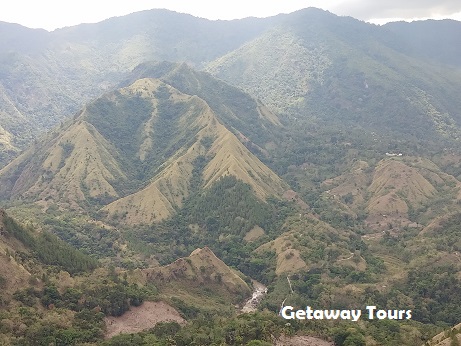
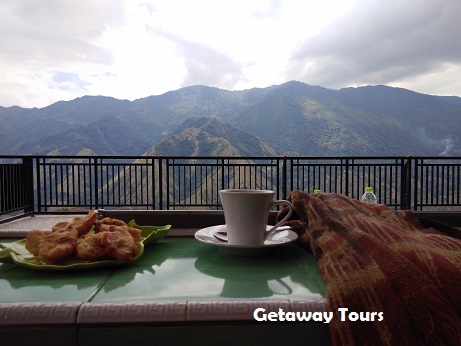
If you visit Toraja, on long drive from Makassar, Ujung Pandang, you can stop by at Enrekang. With a view of the mountain and sipping coffee or tea with fried banana. The mountain has the shape of women genital, which is called as Gunung Nona.

In the outset Ubud was one of regions of Sukawati Kingdom which was ruled by its first king Dewa Agung Mayun (1710-1745). The second king of Sukawati, Dewa Agung Gede (1745-1770) and his queen Ni Gusti Agung Mengwi was the relative of I Gusti Agung Putu Agung Mengwi.
When Dewa Agung Mayun reigned, Sukawati was safe and prosperous. He, then retired and his son succeeded him, and he made a resting house at Patemon village, located about 15 km Northeast of Sukawati Palace. His two sons, Dewa Agung Gede and Dewa Agung Made has fight often that it made him sad.
Dewa Manggis Api of Beng village served Dewa Agung Gede Mayun, and always kept him entertained. When the king felt his death was near, he called his both sons, but due to the conflict, they did not attend, until the king died.
Dewa Agung Made wanted Sukawati to be devided into two, yet his brother did not agree. The people were also divided. Meanwhile, in Ubud which was region of Sukawati, there was two big families, I Gusti Padang tegal and I Gusti Taman. Both had different opinion about what was happening at the kingdom. I Gusti padang Tegal was on the side of Dewa Agung Gede to replaced his father, yet his brother did not agree as Dewa Agung Gede was too clumsy and ignored people aspiration, and he believed that Dewa Agung Made was wiser. Both than prepared their own army. I Gusti Padang Tegal assumed that Sukawati army was on Taman’s army, while Taman’s army thought the opposite that both worried and escaped to cross Ayung river and stayed there. The village resided by Taman’s people now called as Taman Village, while village resided by Padang tegal is now called as Punggul Village. To avoid same conflict in other areas, Dewa Agung Gede then secured other villages such as Peliatam, Ubud, Petulu and Gentong. And there was no other conflict happened in Sukawati.
If you stay overnight in Ubud area and would like to do something physical whether it is cycling, jogging or just walking. It is located just nearby the main street, located about 100 meters from Campuhan River, if you visit Blanco Museum maybe you can walk to Campuhan Hill.

You can follow the route from Villa Ibah leading to Campuhan Hill. The route is not so far, perhaps just about 45 minutes if you walk slow. The path is developed with concrete for 1.5 meters. It is an easy path and definitely not steep either. The air is fresh, the scenery is green, the atmosphere is quiet. Not just foreigners, you will meet locals walking along this hill as well, especially on weekend.
Best time to walk here is during the morning or in the afternoon for sunset. Or if you stay in Ubud area you can come everyday for jogging. There are some restaurants and villa along the way.
The highest peak has rice beautiful rice terraces. When i visited there the rice paddy was already yellowish, perhaps it took only 30 days until harvest. Unfortunately i did not take picture of the path of Campuhan Hill as usually seen on the internet. I think it is okay, i am thinking it is the memory not the picture.

A friend i met, recommended this Museum few months ago, located nearby her house, in Ubud, Bali. She said it is a great museum set in a Javanese traditional houses. And i loved it there.

Indonesia is rich or arts, including mask. Each area has its own characteristic. Some areas have very raw carved of mask, which are my favorite.
Setia Darma House of Masks and Puppets is located in Jalan Tegal Bingin, Mas, Ubud, Kemenuh, Gianyar, Bali. I find it a little bit hidden. Yet it is worth the effort, the museum is very quiet and set in a beautiful area and the entrance is free.

The main buildings are 3 joglo buildings, Javanese wooden traditional house. The houses were old houses transported from Java to house the masks and puppet collections. There are about 6,900 masks and puppets collections displayed here.
There are masks from various parts of Indonesia, also from overseas such as from Japan, Africa, China and Korea. From Indonesia, we can see the collections from Madura, Bali, Jember, Ponorogo, Yogyakarta, Cirebon, Wonosobo, Papua, Sumatera Island and Kalimantan. You may have been very familiar with some of the masks, but there are some that will be new to you. For me masks from Papua are very interesting, also from Sumatera and Borneo, similar to that of Africa.

The museum has open stage overlooking rice terraces. And visitors can site and enjoy the coconut trees view from the restaurant which offers various menus.
Even though the entrance is free, you can also support the museum by giving donation.
by Wid Saija

Blanco Museum is located in Campuhan area of Ubud, located just by the main street of Ubud, overlooking Campuhan River. The entrance has a gate with Antonio Blanco name on it.

There are bout 300 artistic authentic paintings displayed in the museum. Most of the paintings showing the maestro admiration for women body, whether its his wife or women around him. It is said that eventhough Blanco was a women admirer, he was a faithful husband. Whenever he painted a model, he asked Ni Ronji to accompany him.


Contributor: Wid Saija
I purchased ikat weaving from East Nusa Tenggara few months ago. It has nice yellow color decorated with hand made embroider of various contrast color. It is so soft and warm for cold time. Most of all, i really appreciate and admire the intricacies and the patience of the weaver which might take to 7 days to make such an intricacies pattern.
After several times i wore it to the cinema, to hang out and other several occasions, i thought i would like to wash it. And honestly, i did not even check the correct way to wash it. I think i forgot the the lady who sold it told me not to wash it with detergent but something softer like softener or klerak. So yes, i washed it with detergent and soaked it for few minutes. Ha, wrong big time.
Once i checked to wash the decoration color badly dyed the main color of the weaving. Devastated, i think what i did wrong. I tried to remove the dye by rubbing it using my both hands, but it did not work. I searched online for the solution and could not find one similar case. Some online cases are dye on one color fabric, usually white. I kept on reading though and figured it out myself from the references.
Finally i could remove the dye though, even the whole color is not as good as new. It is much better than letting the weaving decorated by unwanted dye. People usually do not notice, i removed 90 percent of the dye, it is very subtle now, people would not even think it was a disaster.
This is what i did. I boiled water, pour on a container and put 2 teaspoon of acid crystal, and then soaked the weaving for few minutes. I repeated this stage 2 times and then washed with detergent manually also using hot / warm water. The dye was already removed after this. And then i use softener. A friend of mine suggested that this kind of colorful weaving must not be dried by hanging, yet by laid on the ground, to avoid the color to dye worse. In this case i laid the weaving between two chair and tied the four corner ends to the chair. To make it dry quickly, i blow hairdryer over for some 30 minutes. After i was sure it was not wet and dye, i hang nearby air-condition exhaust , to make it dry quickly without hairdryer. And viola, within 2 hours later it was dry and looks good, ready to accompany me for a stroll at night.
Below is the suggestion to care weaving that might be helpful for you.
Dwi
Trunyan Village is located remotely across Batur Lake. It takes about 3 hours drive from Denpasar or 2 hours drive from Ubud. As some other mountain tribes in some parts of Indonesia, they still preserve their indigenous tradition. For Trunyanese, they have distinctive belief, custom, tradition than other areas in Bali, especially on how to treat dead bodies.
Road from Lake Batur rim to Trunyan Village is winding, some steep and narrow, when i went there the road uncountable potholes. Arrival at the village, you will sense the different life than Kuta Area or Ubud area. The electricity has already light the village, it has also phone signal and internet. Trunyanese are farmers, they grow vegetables, like cabbage, chilly, garlic, onion and bean. They also do fishing at Batur Lake and some work in tourism as boat crew taking tourist to Trunyan Cemetery. Yet, there are only small amount of visitors visiting Trunyan Area compared to other popular tourist destination on the island.
Cock fighting is very common activity in Trunyan. In the afternoon some cocks in the cage in front of the houses. Kintamani dogs roam nearby the lake. Metal roof houses of Trunyanese are not fully decorated like Balinese house. Trunyan has been inhabited since the 10th Century, as written on Trunyan Inscription date back 833 Saka (0r 911 AD), that reveals permit to erect a seven levels temple to worship Batara Da Tonta, or after Hinduization, called as Ratu Sakti Pancering Jagat. And the village has been there even longer. Trunyanese are Bali Mula, or the oldest community living in Bali, and still preserves their neolithic customs (pre-Hindu custom). They are not primitive tribe at all, they are just conservative and avoid having outsiders or new values. Even though Trunyan is a tourist destination , locals do not prepare lodging, homestay or restaurant. You can only find small stalls selling mineral water nearby the lake.
From Trunyan harbor, you will need to ride boat to the cemetery. The boat has no engine, 2 people rowed the boat. This boat also used by locals going to cemetery and temple next to the cemetery. Visitors will be given life vest for this boat ride. I enjoy this 15 minutes non-engine boat ride, as i feel the quietness of the lake and moving slowly on a paddle pace give me time to enjoy the vista more and imagining how local do it for their funeral. I saw some visitors using speedboat which are very noisy.
The cemetery area is not a big area, it is located right on the edge of the lake under the shades. When i went there the boat man informed us that we can take pictures or videos, and it is not allowed to take anything from the cemetery. He also mentioned that there were 3 new dead bodies laid there. Trunyan Tree looks like Banyan tree (genus : ficus) . This tree (is believed to) absorbs the bad odor. Trunyan derives from Taru means tree and Menyan means fragrant. According to the legend, in the past unlike now, Taru Menyan was so fragrant across the island that might attract outsider to find the tree, the village leader asked his people to not bury the corpse, but just laid under the tree, to neutralize the fragrance.
Under the tree there are skulls placed on shrine. And about 10 meters from the shrine are some bodies covered by clothes and then caged by bamboo, to prevent animals attacking the body. When i arrived there i saw 3 monkeys sitting on those cage. The cemetery looks dirty with various goods, such as flip flops, plate, spoon, mat, and other household items, which are dedicated by the family to the dead for their life after death.
All in all visiting Trunyan was an amazing experience, even though it was organized poorly still. Enhancing the life of Trunyanese by education can be like contradiction, which can also endanger the local unique traditional value and custom with modern value on the other end.
And beware of insects when you visiting the cemetery, though the insects are not dangerous and leave a tiny red bump, it will be more convenient if those insects do not bite you. A friend of mine got bitten by an insects that we do not know the name is, it just flied to him, and made two bites (or probably stings) that made him panic as it was like electric shock.
CONTRIBUTOR: Surabaya
Pictures:


